 11
11
If you’re anything like me, the idea of building a home used to feel daunting. I imagined endless months of waiting, sky-high costs, and a never-ending list of contractors, supplies, and inspections.
But, in 2025, the housing market is undergoing a quiet revolution, thanks to 3D printing. The game-changing tech that has transformed industries like manufacturing and medicine is now reshaping the very way we build homes.
Gone are the days of relying solely on traditional construction methods. With 3D printing, homes are no longer a long, stressful project — they’re turning into faster, cheaper, and more sustainable investments. Let me take you through how 3D printing is changing the housing market and why it might just be the future of homebuilding.
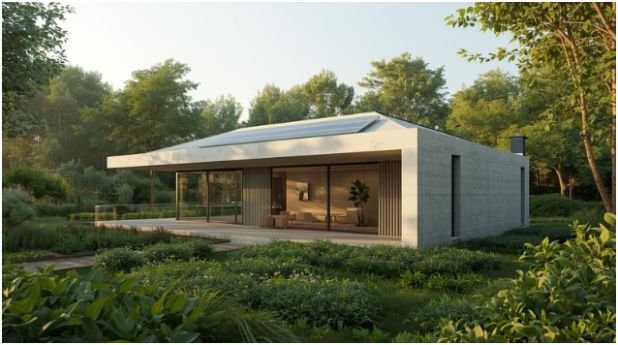
Before I go on, let’s take a step back and break down exactly how 3D printing works in the context of building homes. Essentially, 3D printing in construction involves using large-scale printers that deposit layers of material (like concrete) to create the structure of a house.
Instead of traditional methods where workers spend months framing and laying down each brick, 3D printers print the house, layer by layer, in just a matter of days. Yes, days!
The materials used are often a form of concrete or cement that can be tailored for durability and energy efficiency, and there’s minimal waste generated — a stark contrast to traditional construction that tends to leave mountains of debris behind. The result? A home that’s affordable, quick to build, and eco-friendly.
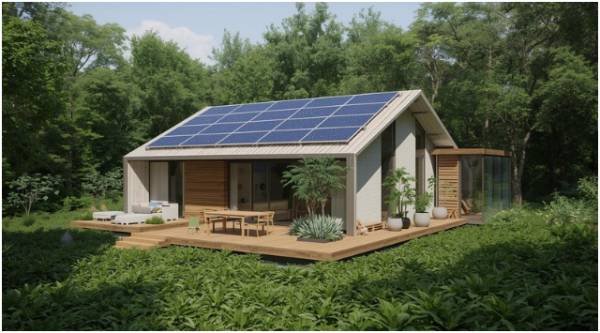
When I first heard about 3D-printed homes, I thought, “Okay, but what’s the big deal?” It sounded too futuristic. But after learning about how it’s actually changing the housing market, I started seeing why this is a game-changer.
Anyone who has built a house knows how long it takes. The typical timeline can stretch months or even over a year depending on the size and location. With 3D printing, that timeline gets cut down significantly. For example, a 3D-printed home can be built in just 24 to 72 hours — yes, you read that right! Imagine moving into your dream home in days instead of months.
This speed benefits more than just homeowners — it could also reduce housing shortages by enabling faster construction in areas that need homes the most. Think about how this could transform disaster recovery zones, where homes need to be rebuilt quickly, or remote areas where housing infrastructure is typically lacking.
We all know that housing prices are skyrocketing. For many, owning a home feels like an impossible dream. But 3D printing might be the key to changing that. Studies show that 3D printing can reduce construction costs by 10% to 30% compared to traditional methods.
The biggest savings come from labor — printing eliminates the need for many workers. With fewer people required for physical labor, costs drop, and homes can be sold at more affordable prices.
For example, a 600 to 800 sq. ft. tiny home could cost as little as $4,000 to $10,000 for the shell, compared to the $40,000+ price tag of a traditional build. And it’s not just tiny homes; 3D printing is also making standard suburban homes more affordable. I saw that a 1,400 sq. ft. home in New York was listed for $299,999 — 15% below the local market average.
We’re all more conscious of our environmental footprint these days. 3D printing offers an innovative solution to reduce waste. Traditional construction often leaves behind 25% to 30% waste — think excess concrete, offcuts of wood, and other unused materials. But with 3D printing, the process is additive, meaning material is only used where it’s needed, and nearly zero waste is generated.
And it’s not just waste that’s reduced. 3D-printed homes can be made to be more energy-efficient by using materials like concrete, which has thermal mass — meaning it helps regulate the interior temperature naturally. Homeowners have reported 45% to 60% savings on their energy bills. Pretty impressive, right?
So, let’s talk about how you can actually buy a 3D-printed home. If you’re looking for a quick fix, you may be disappointed — it’s not just a matter of placing an order for your dream home tomorrow.
Step 1: Find the Right Builder
You’ll need to find companies offering 3D-printed homes, like ICON, which is currently working on the Genesis Collection at Wolf Ranch in Georgetown, Texas.
They offer pre-planned homes and specialized collections, such as a luxury 3,500 sq. ft. home in Wimberley, TX. Prices start just under $400,000, which is relatively affordable given the size and the speed of construction.
Step 2: Pick Your Location
The next step is to pick your location. Many 3D-printed homes are being built in planned communities rather than as one-off, standalone homes. If you’re open to a community-based lifestyle, you’ll have many options.
For example, Alquist 3D is focusing on large-scale projects and commercial builds, partnering with major companies like Walmart to construct commercial structures. As of 2025, it’s more likely you’ll find a community of 3D homes rather than a single, custom 3D-printed house.
Step 3: Finalize Design and Payment
Once you’ve chosen your builder and location, you can design your home using online configurators offered by companies like Azure Printed Homes.
These platforms let you customize your new home based on your preferences, such as floor plans, finishes, and other features.
Keep in mind that, while 3D printing is generally more affordable, you’ll still need to budget for equipment, site preparation, and finishing touches like roofing and HVAC.
Technically, yes, but most 3D printing companies are now focusing on large-scale developments rather than custom builds. If you’re set on a private, standalone house, you may want to explore local builders or check if any of the larger companies offer custom services in your area.
A 3D-printed home can cost 10% to 30% less than a traditional build. However, the biggest savings are in labor costs, as 3D printing eliminates much of the manual work involved in construction.
Yes! 3D-printed homes are often stronger than traditional homes. For example, 3D-printed concrete walls can be 350% stronger than wood-frame homes, and they are more resistant to fire, termites, and extreme weather conditions like 200-mph winds.
3D printing is changing the housing market, but it’s still in the early stages. The real game-changer will come when the technology scales up, and more buyers get the opportunity to experience the speed, affordability, and sustainability of 3D-printed homes.
If you’re looking for a futuristic yet practical living space, a 3D-printed home might just be your ticket to the future.
Tip: If you’re ready to take the plunge, I’d recommend starting with a community project, like those from ICON, as they are much more feasible and cost-effective than individual, one-off homes at this stage. Keep an eye on this market — it’s only going to grow!