Hiring skilled construction workers is crucial to the success of any project, but with a labor shortage in the industry, it’s more competitive than ever to find the right workers. As of 2026, nearly 439,000 additional construction workers are needed in America. To meet this demand, you need a strategic approach, leveraging multiple channels—from digital sourcing and staffing agencies to local networking and referrals.
We’ll go over how to properly screen applicants, where to hire construction workers, and important factors like safety and licensing. This post will assist you in hiring the best people for your construction projects, regardless of whether you are a contractor or a business owner.
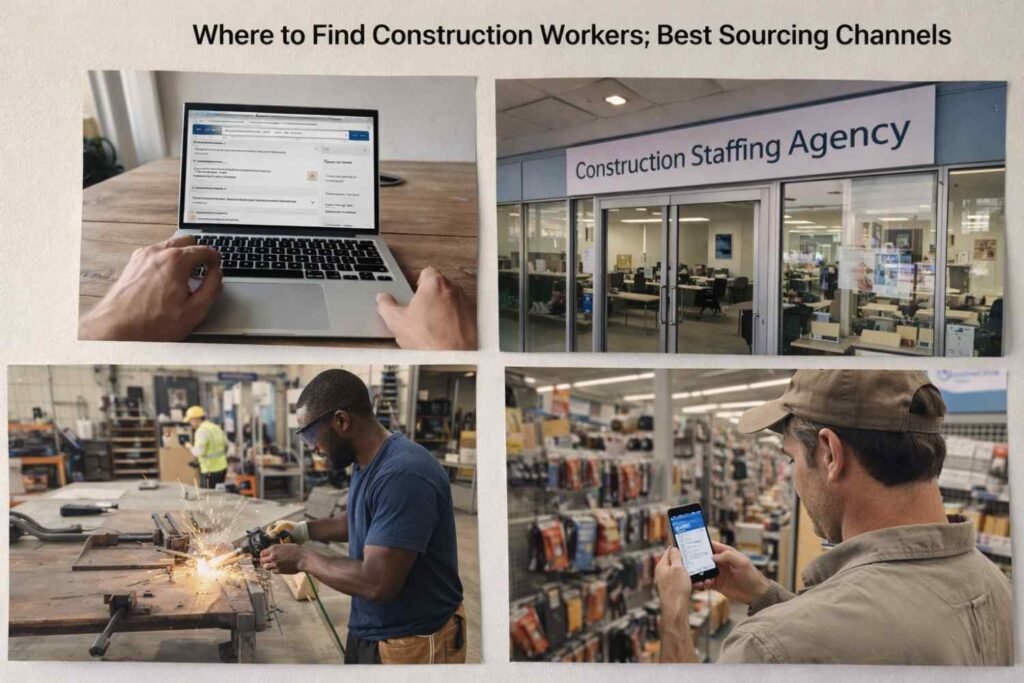
Where to Find Construction Workers: Best Sourcing Channels
Specialized Construction Job Boards
While general job boards like Indeed and LinkedIn are widely used, specialized construction job boards offer a more targeted approach to finding skilled workers:
- ConstructionJobs.com: This premium job board focuses on commercial, residential, and heavy civil trades, making it one of the best places to find qualified workers.
- iHireConstruction: Known for its “job wrap” technology, this site automatically syncs postings from your website, increasing visibility without extra effort.
- Skillit: An AI-driven platform that maintains a database of vetted craft workers, Skillit helps streamline the hiring process by also handling interview scheduling.
- Path to Pro: A free tool by Home Depot, this platform is great for finding skilled tradespeople at the start of their careers.
- RoadTechs: If you’re looking for workers in industrial, energy, or heavy construction, this board specializes in these niche roles.
Construction Staffing Agencies
When you need workers quickly or for a specific project, staffing agencies can save you time and effort by pre-screening candidates:
- Tradesmen International: Ideal for finding high-quality, permanent craft workers.
- PeopleReady: Uses the JobStack app to allow you to request workers on-demand, providing flexibility in staffing.
- Aerotek: Suited for large-scale projects requiring high-volume staffing, Aerotek also provides on-site management.
- Labor Finders: Operates nearly 200 local offices and specializes in temp-to-hire trials, so you can test workers before making a permanent commitment.
Local & Organic Sourcing
Tapping into local networks can also be a great way to find trustworthy workers. Here’s how:
- Referral Networks: Ask current employees, material suppliers, and clients for recommendations. Referrals are often a reliable way to find qualified workers.
- Trade Schools & Vocational Colleges: Reach out to local schools like Build California for entry-level talent. Students often have hands-on experience and industry-specific training.
- Leasing Labor: Some companies may offer workers on a temporary basis during their off-peak times, allowing you to “lease” labor.
- Social Media & Online Platforms: Platforms like Facebook Groups and Craigslist can help you find independent crews or pieceworkers.
How to Attract and Hire the Best Construction Workers
Write Clear, Engaging Job Listings
The success of your hiring process starts with a well-crafted job listing. Be sure to:
- Clearly define the job role: Make the expectations and responsibilities clear to attract the right candidates.
- List necessary experience and certifications: Specify what qualifications and skills are required.
- Highlight your company culture: Emphasize safety practices, growth opportunities, and any benefits that make your company a great place to work.
Offer Competitive Pay and Benefits
Construction workers are in demand, and offering competitive pay is essential to attract top talent. Make sure to:
- Research market wages to ensure your pay rates are in line with industry standards.
- Offer benefits such as healthcare, retirement plans, and paid time off to increase your appeal.
Focus on Safety and Job Security
Construction workers want to know they’ll be working in a safe environment. Make sure your job listing and interviews reflect your commitment to safety. Offer ongoing safety training and ensure workers know the measures you take to reduce risks on the job site.
Screening and Interviewing Construction Workers

Once you’ve attracted qualified candidates, the next step is to screen and interview them effectively. Here’s how to do it:
Perform Background Checks
In the construction industry, safety and trust are paramount. Perform thorough background checks to ensure candidates are reliable. This should include:
- Verifying employment history to confirm previous construction experience.
- Checking for any criminal history that could pose a safety risk.
- Ensuring candidates hold the necessary certifications, such as OSHA or specialized trade certifications.
Conduct Skills Assessments
For specialized roles (e.g., welders, electricians), it’s essential to assess the practical skills of candidates. Use assessments or practical tests to evaluate their ability to perform job-specific tasks. This will ensure the candidate’s skills match the job requirements.
Ask the Right Interview Questions
During the interview, ask candidates about:
- Previous experience: Look for examples that demonstrate their problem-solving abilities and how they handle challenges on-site.
- Teamwork: Construction is a team effort, so assess how well the candidate works with others.
- Safety awareness: Ask about their approach to safety and any safety programs they’ve been a part of in previous jobs.
Licensing and Certifications: What to Check

In construction, it’s important to verify that your workers are properly licensed and certified, depending on the type of work. Here are a few key certifications and licenses to check:
- OSHA Certification: Workers who operate heavy machinery or work in hazardous environments should be OSHA certified. OSHA’s 10-hour or 30-hour training courses are essential for ensuring that workers understand safety regulations.
- State-specific Licenses: Many construction trades (e.g., electricians, plumbers) require state-specific licensing. Verify that workers have the appropriate credentials for their trade.
- Union Memberships: If you’re hiring union labor, confirm the worker’s membership and standing with their respective union.
Summary of Hiring Fees
Here’s a breakdown of the typical costs you can expect when hiring construction workers:
| Hiring Method |
Typical Cost/Fee |
| Specialized Boards |
$200 – $800 per 30-day post |
| Temporary Staffing |
40% – 65% markup on hourly wages |
| Direct Hire Fees |
15% – 35% of the worker’s first-year salary |
Frequently Asked Questions (FAQs)
1. What’s the best way to find skilled construction workers?
Use specialized job boards, staffing agencies, and local networks like trade schools and referrals to find qualified workers.
2. How much does it cost to hire a construction worker?
Depending on the method, you can expect to pay anywhere from $200 to $800 per posting, or 15% to 35% of the worker’s first-year salary for direct hires.
3. What should I look for when hiring a construction worker?
Look for relevant certifications, previous experience, and references. Always perform a background check and consider conducting a skills assessment for specialized roles.
4. How can I ensure the safety of construction workers?
Invest in safety training programs, provide personal protective equipment (PPE), and maintain a zero-tolerance policy for unsafe practices.
Conclusion
Hiring the right construction workers doesn’t have to be a daunting task. By using the right sourcing channels, offering competitive pay and benefits, and focusing on safety and skill assessments, you can find and retain the best talent for your project. Remember to verify qualifications, ask the right interview questions, and make sure you’re offering a work environment that values growth and safety.

 1
1