 11
11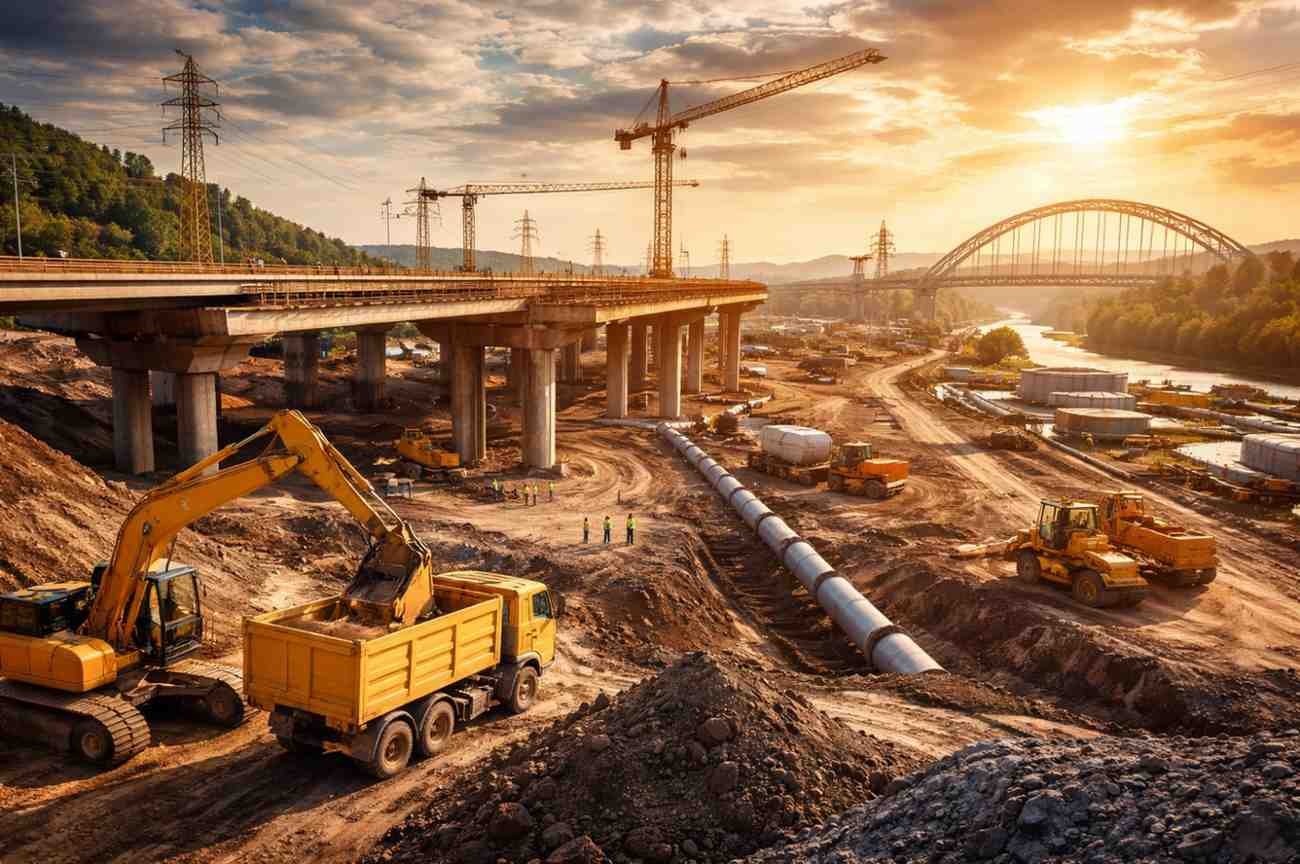
Heavy civil construction is a specialized field that plays a vital role in building and maintaining the essential infrastructure that supports modern life. This type of construction involves large‑scale public works projects like highways, bridges, dams, airports, and water systems, all of which serve the public interest.
Unlike residential or commercial building projects, heavy civil construction focuses on complex, long‑lasting infrastructure that provides critical services and ensures the long‑term functionality of communities.
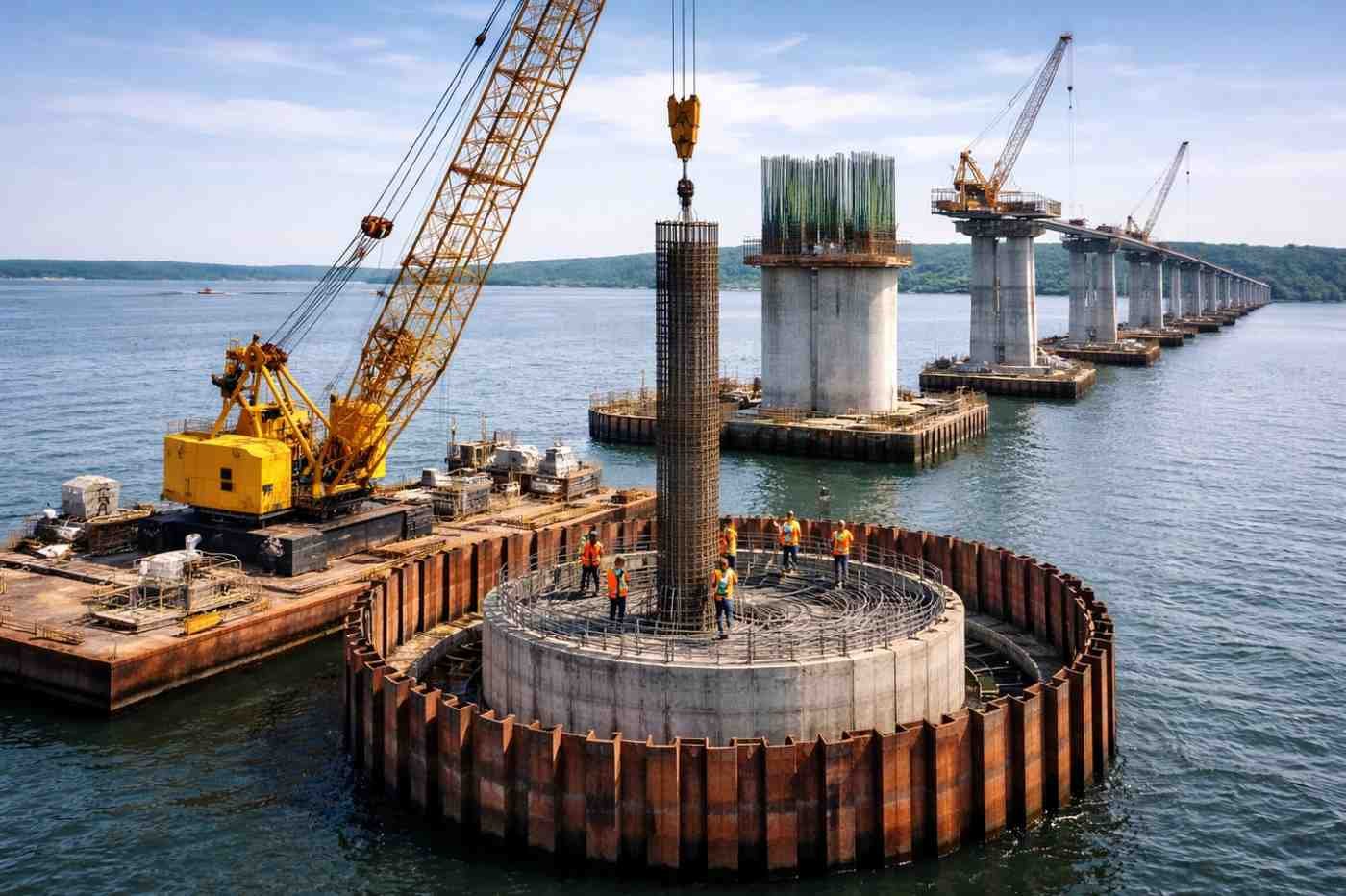
Heavy civil construction encompasses some of the most ambitious and intricate projects within the construction industry. This specialized sector is centered on large‑scale projects that provide long‑term benefits to the public, economy, and environment. Projects in this category require significant planning, coordination, and expertise across a variety of fields, including civil engineering, construction management, and environmental science.
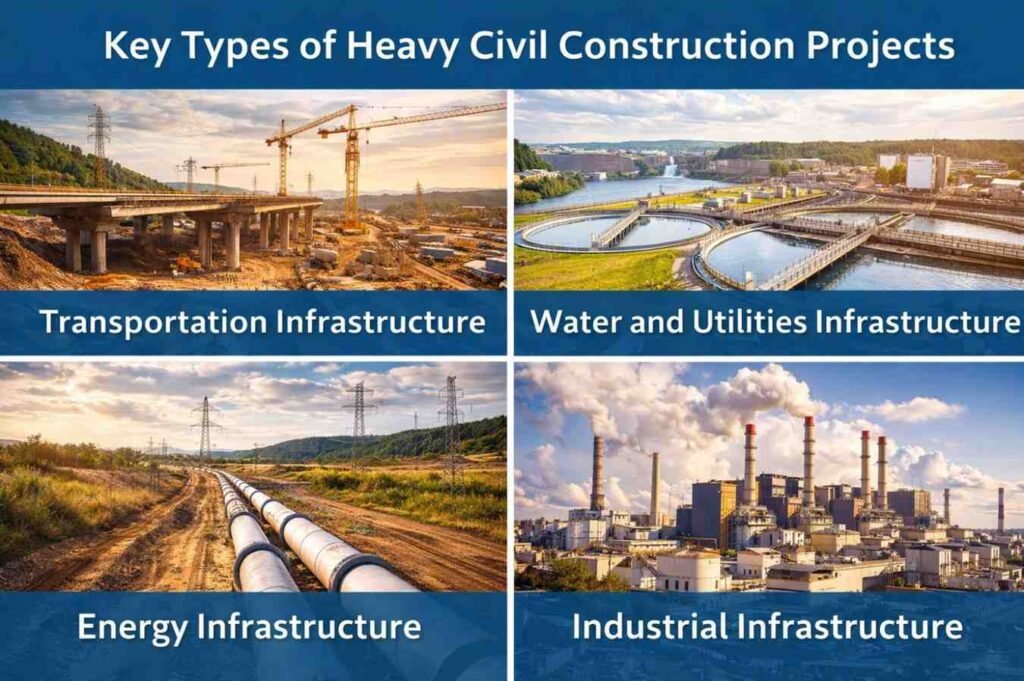
Heavy civil projects vary widely but are united by their size, complexity, and public focus. Here are a few common types of heavy civil construction:
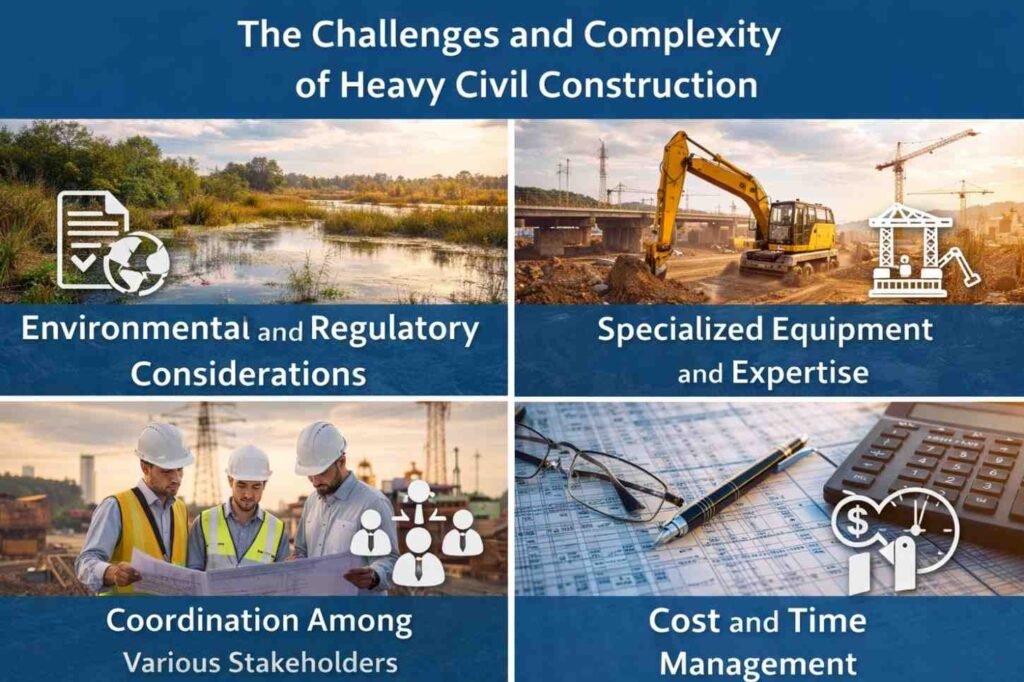
Heavy civil construction projects are highly specialized, and as such, they come with their own set of challenges. These large‑scale projects are typically complex and require multiple teams working together toward a shared goal. Here’s a breakdown of the most significant hurdles faced in the sector:
Heavy civil projects must navigate stringent regulations and environmental considerations. In many cases, these projects require permits, environmental impact assessments, and compliance with both local and federal laws. This regulatory landscape is critical to ensure that projects do not negatively impact natural ecosystems or local communities.
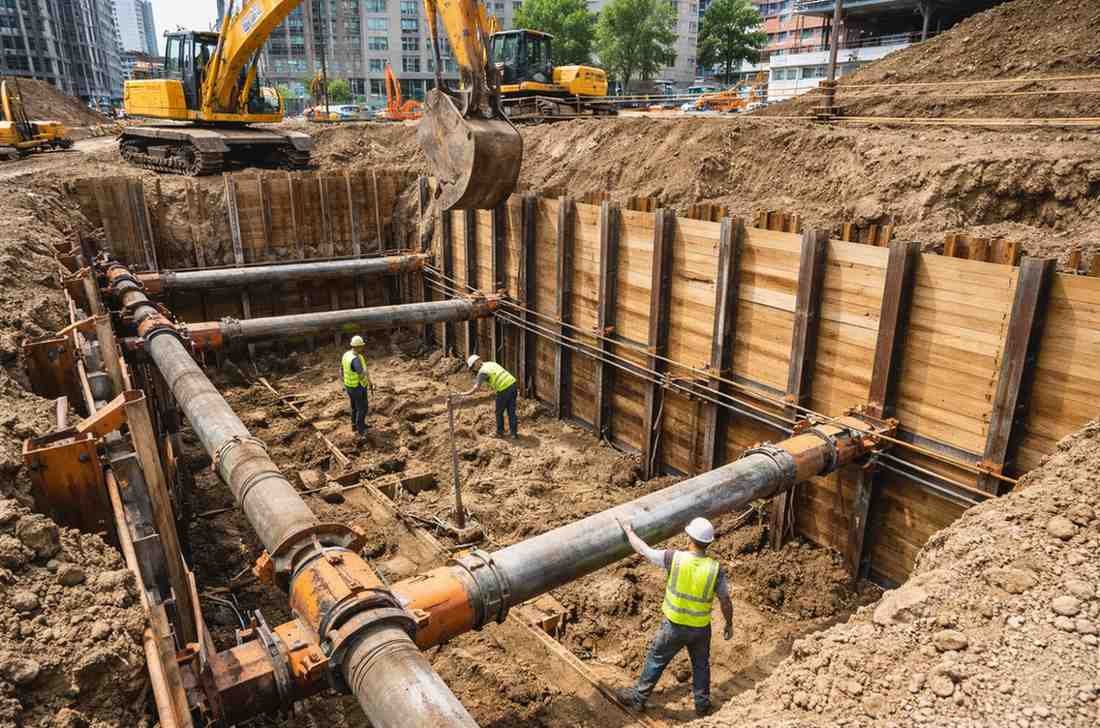
Unlike residential or commercial projects, heavy civil construction demands highly specialized machinery such as cranes, bulldozers, and excavators, along with skilled operators. Teams must be able to handle equipment safely and efficiently while working on vast sites with complex infrastructure.
Heavy civil projects involve multiple stakeholders, from government agencies to contractors, engineers, and environmental consultants. Effective communication and project management are crucial for ensuring that all teams stay on the same page and that projects are completed on time and within budget.
The scale and complexity of heavy civil projects mean that costs can quickly escalate. Keeping a project on track requires careful planning, monitoring, and management to ensure it stays within budget. Long timelines and unexpected delays are common, making cost control and scheduling critical to project success.
Heavy civil construction is distinct from other construction sectors like residential and commercial building, which focus primarily on creating living and business spaces. The key differences include:
| Construction Type | Main Focus | Examples |
| Heavy Civil Construction | Large‑scale infrastructure | Highways, dams, airports |
| Commercial Construction | Business facilities | Offices, retail spaces |
| Residential Construction | Housing | Single family homes, apartments |
| Light Civil Construction | Small‑scale civil work | Sidewalks, local utility repairs |
While heavy civil construction deals with public infrastructure, residential and commercial construction focuses more on the construction of buildings and interior spaces.
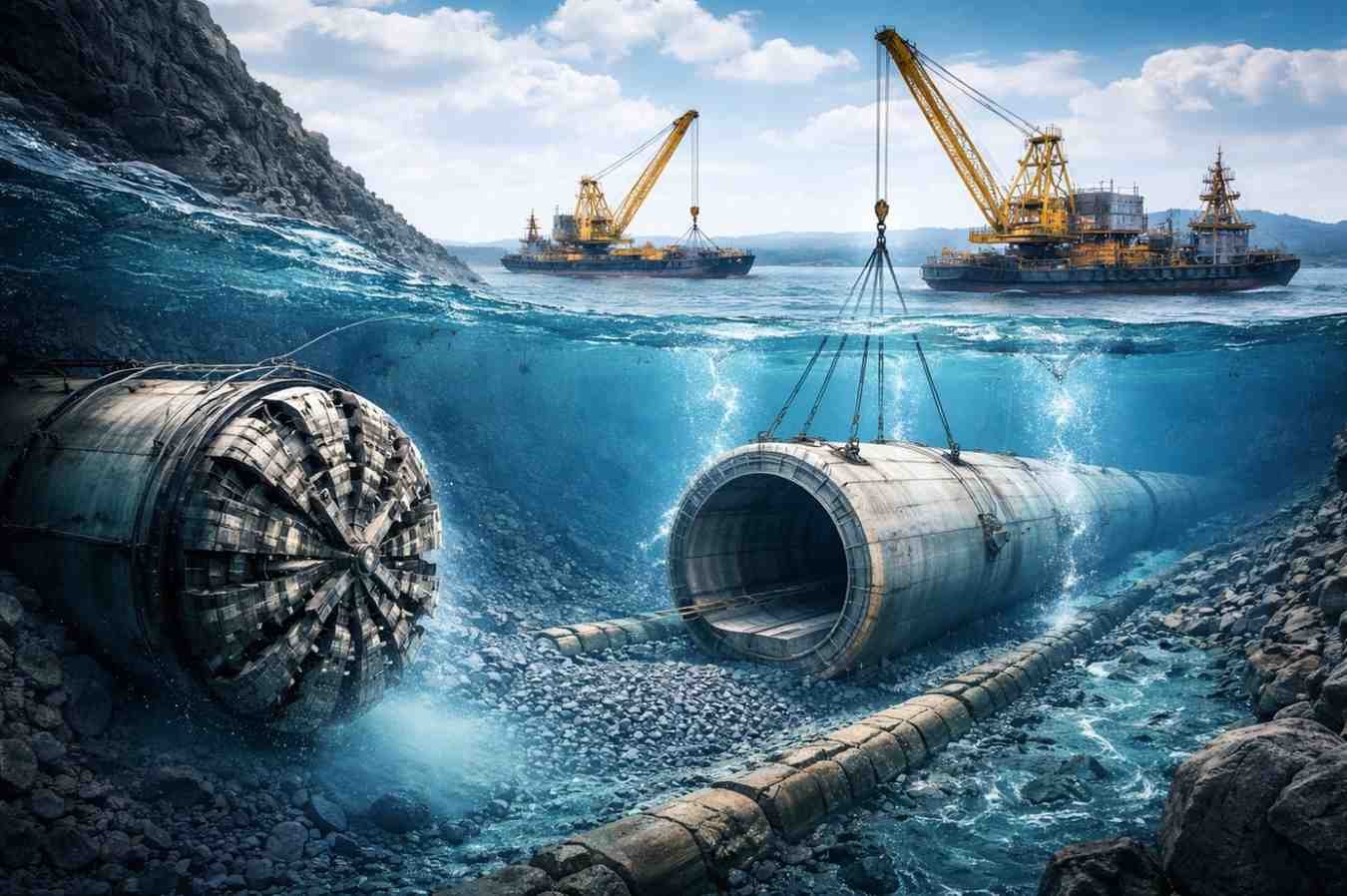
Examples include the construction of highways, bridges, water treatment plants, dams, and tunnels. These projects often require specialized equipment and advanced engineering skills.
Heavy civil construction projects are critical to economic growth as they enhance transportation, improve access to water and energy, and support community development. These projects create jobs, stimulate local economies, and provide lasting infrastructure that benefits society.
Heavy civil construction deals with large‑scale infrastructure projects focused on public works like roads, bridges, and water systems, while commercial construction focuses on the building of business properties such as offices and retail spaces.
These projects can span from several months to several years, depending on their complexity and scope. Large infrastructure projects often take longer due to environmental assessments, permitting, and project coordination.
Heavy civil construction is foundational to modern infrastructure. From highways and bridges to water systems and energy projects, this sector plays a key role in shaping the functionality of communities. The challenges and scope of these projects require specialized expertise, equipment, and coordination, but the long‑term benefits to the economy and public services are immeasurable.
If you’re looking to understand what is heavy civil construction, it’s a sector that builds the essential frameworks we rely on for daily living.