 11
11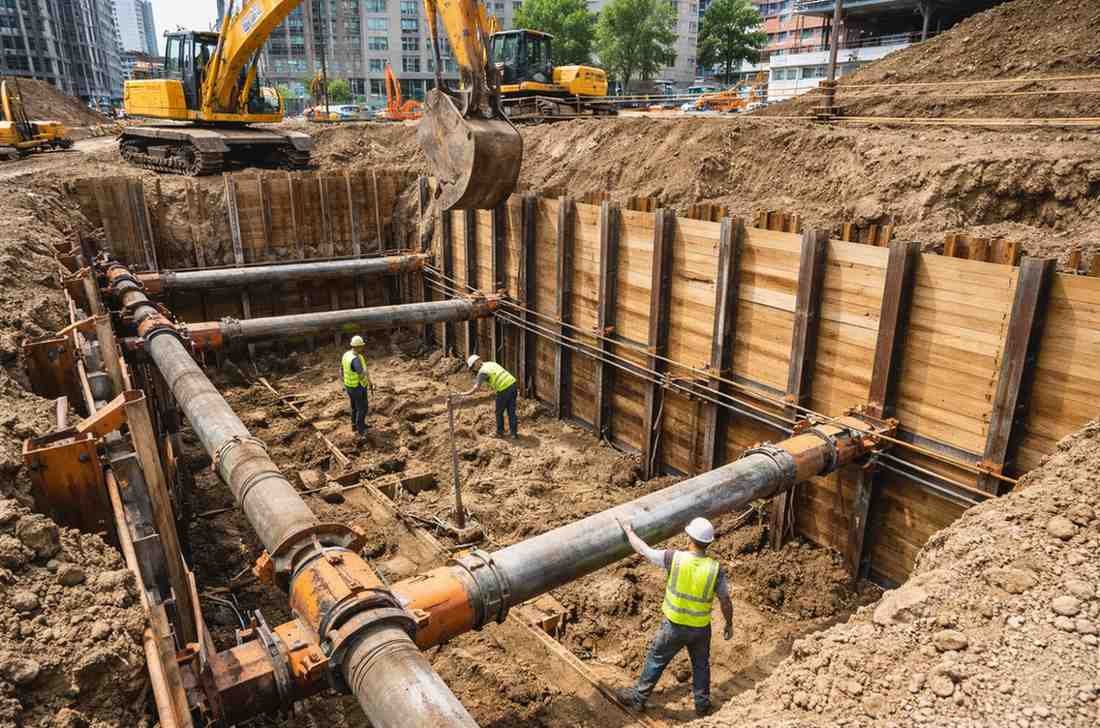
Safety in the construction industry is always of utmost importance. Shoring, whether you’re renovating, fixing a foundation, or excavating a trench, is an essential process that protects both people and property. However, what is shoring in the construction industry and why is it so important to projects?
Shoring is a temporary support system used to stabilize buildings, soil, or structures during excavation, repairs, or renovations. Its primary role is to prevent the collapse of soil or buildings and ensure worker safety until more permanent supports are installed. Without proper shoring, you risk the integrity of the entire project and the safety of everyone involved.
Let’s break down shoring in construction, its types, uses, and why it’s crucial for both safety and efficiency.
At its core, shoring is a temporary technique used to support a structure or earth during construction or repairs. It can involve anything from steel beams to wooden posts, depending on the size of the project and the type of work being done. Shoring systems ensure that structures remain stable during excavation, renovation, or demolition by propping up unstable loads until permanent supports can be placed.
Shoring is used in various construction scenarios, and it is crucial for managing both soil movement and building stability. Without it, risks like collapsing trenches or crumbling walls could derail a project and put lives in danger.
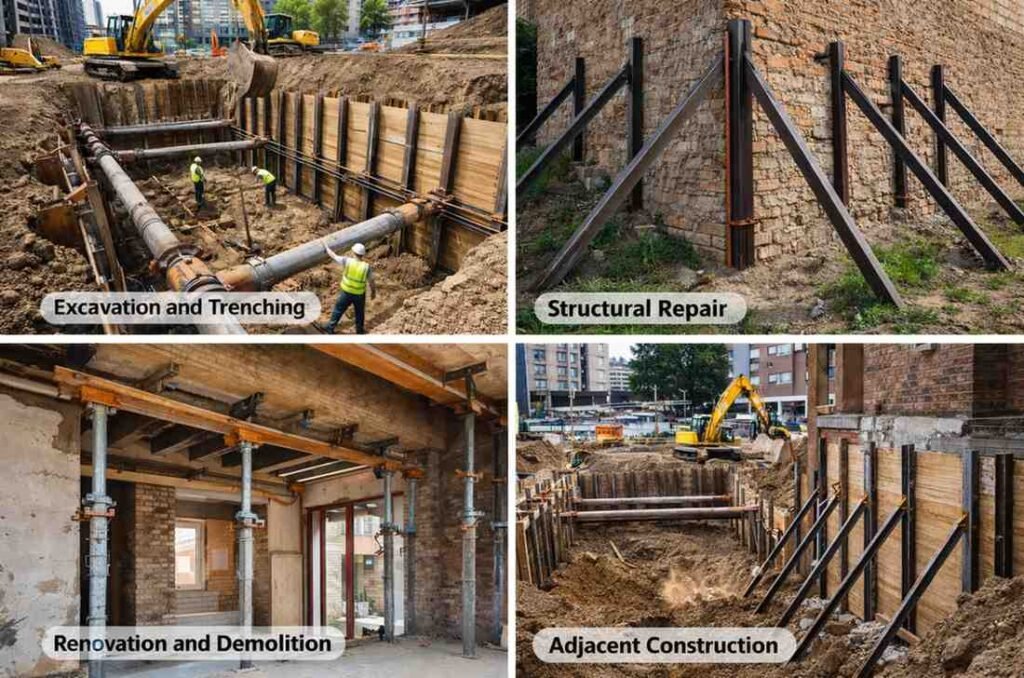
Shoring systems are applied in many construction settings. Let’s take a look at a few common situations where shoring is necessary:
When digging trenches, particularly in deep excavations, shoring prevents soil from collapsing, protecting workers who may be inside the trench. Without proper shoring, trench cave-ins are a significant risk, especially in unstable soil.
In situations where walls or foundations have cracked or become unstable due to settling, shoring provides temporary support while repairs are carried out. This system holds the structure in place, preventing further damage while the foundation or wall is fixed.
Shoring plays a vital role when removing load-bearing walls during renovation or demolition. It supports the upper floors, ceilings, or roofs of buildings while a lower load-bearing wall is removed to create new openings, like doors or windows. Without shoring, the structure may collapse as walls are removed.
When working near other buildings or structures, shoring helps stabilize adjacent walls or foundations that may be affected by nearby excavation or demolition. This is especially important in urban construction where buildings are tightly packed together.
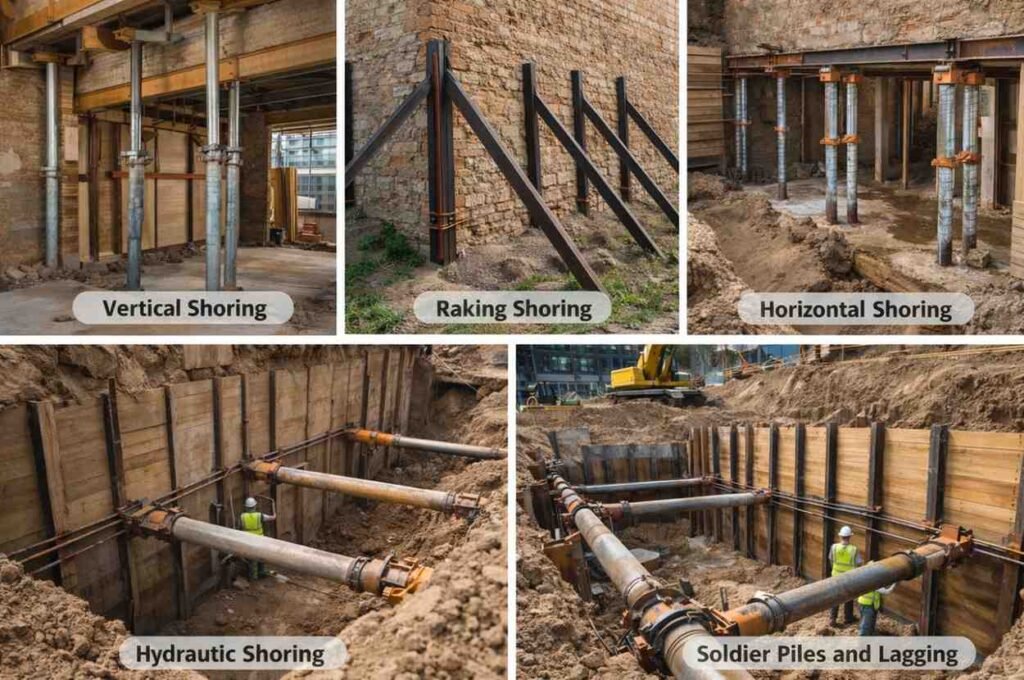
There are several types of shoring systems, each designed for different needs and types of projects. Let’s explore the most common ones:
Vertical shoring involves using vertical posts and horizontal “needles” to support a structure’s weight. It’s used primarily for stabilizing walls and foundations during repairs. This system ensures the load is transferred directly to the ground, making it ideal for repairing foundations or rebuilding defective walls.
Raking shoring uses angled braces (called rakers) to provide lateral support to leaning or unstable walls. This system is often employed when supporting bulging walls or walls that have shifted from their original alignment. It’s commonly seen in structural repairs where foundation issues cause walls to become out of plumb.
Horizontal shoring involves placing horizontal supports between two parallel walls, often in areas where buildings are adjacent to each other. This system is used when the building between two others is demolished, ensuring the surrounding buildings remain stable and undisturbed during demolition activities.
Hydraulic shoring systems are quick-install solutions that use hydraulic pistons to apply pressure against trench walls. This technique is ideal for trenching and utility work, where fast installation and quick adjustment are required. It’s especially helpful for short-term support during excavation projects that need to be completed in a hurry.
Soldier piles and lagging use steel H-beams (piles) driven into the ground with wooden planks (lagging) placed between them. This system is frequently used in large-scale urban excavations or basement construction. The soldier piles provide vertical support, while the lagging holds back the soil. This system is perfect for deep excavations, especially in cities where space is limited.
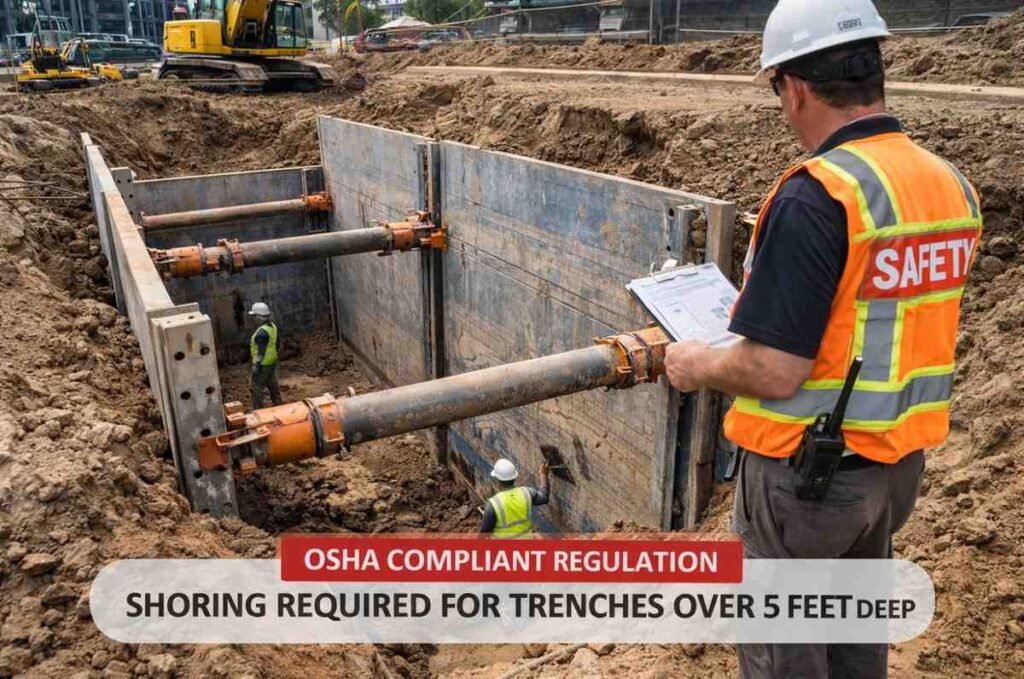
Shoring isn’t just a helpful technique – it’s also regulated for safety. In the United States, OSHA (Occupational Safety and Health Administration) requires that shoring be used for any trench or excavation deeper than 5 feet (1.5 meters). These safety regulations help protect workers from the serious risks associated with deep excavations, such as cave-ins or falling debris.
Some jurisdictions and safety guidelines may recommend shoring at shallower depths (around 4 feet or 1.2 meters) depending on the soil conditions and project type. These regulations are in place to minimize the risks and ensure that all construction sites remain safe for everyone involved.
The most common types of shoring systems are vertical shoring, raking shoring, flying shoring, hydraulic shoring, and soldier piles and lagging. Each serves a specific purpose, depending on the structure and depth of the excavation or renovation.
Hydraulic shoring systems use hydraulic pistons to apply pressure to trench walls, providing quick and adjustable support during excavation projects. These systems are ideal for utility and trench work because of their fast installation and flexibility.
Shoring is needed when working in deep excavations, structural repairs, demolition projects, or when adjacent buildings are being impacted. It’s used to stabilize unstable structures, prevent cave-ins, and support load-bearing walls during renovations.
OSHA mandates that shoring or other protective systems must be used for any trench or excavation deeper than 5 feet to ensure worker safety. Some guidelines recommend additional precautions for shallow excavations in unstable soil.
Shoring is a non-negotiable procedure used in the construction industry to guarantee safety and avoid structural failure during excavation, repair, and remodeling projects. Every sort of shoring, from hydraulic shoring devices used in utility work to vertical posts used in dead shoring, has a specific function in protecting adjacent structures and workers.
You can protect your building site and guarantee that projects move forward without expensive delays or mishaps by following safety regulations and choosing the right shoring solution.