 11
11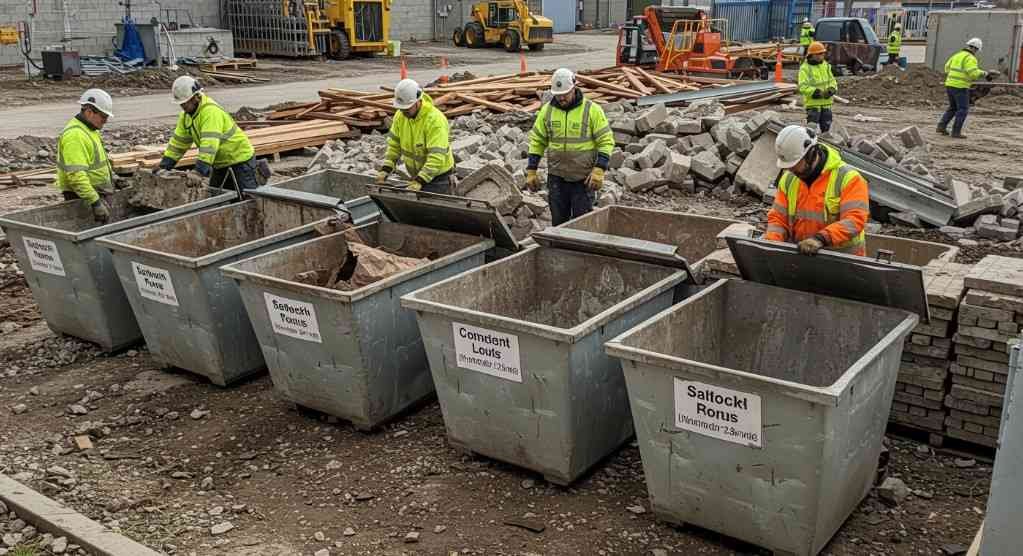
I still remember standing next to a construction dumpster early in my career, staring at piles of unused drywall and clean lumber being tossed like trash. At that moment, I realized most projects do not fail at sustainability because people do not care. They fail because no one teaches you how to reduce waste in construction projects in a practical, real-world way. Waste felt inevitable until I saw how small planning decisions snowball into massive losses.
Over time, I learned that reducing waste is less about recycling bins and more about changing how projects are designed, ordered, handled, and executed. When teams stop thinking about waste at the end of a project and start planning for it at the beginning, everything shifts. That mindset is what this guide is built around.
These aspects are where most construction waste is quietly created. When drawings are rushed or quantities are guessed instead of calculated, excess material becomes unavoidable. A formal Site Waste Management Plan helps teams identify waste streams early and assign responsibility before ground is broken.
They have become essential for teams learning how to reduce waste in construction projects. These tools allow accurate quantity takeoffs, clash detection, and optimized cut lists that prevent rework. Designing with standardized material dimensions also reduces off-cuts and makes better use of every delivery.
These help push waste reduction even further. By moving assembly into controlled environments, materials are measured precisely, cuts are automated, and errors drop dramatically. This approach transforms waste prevention from a theory into a measurable outcome.
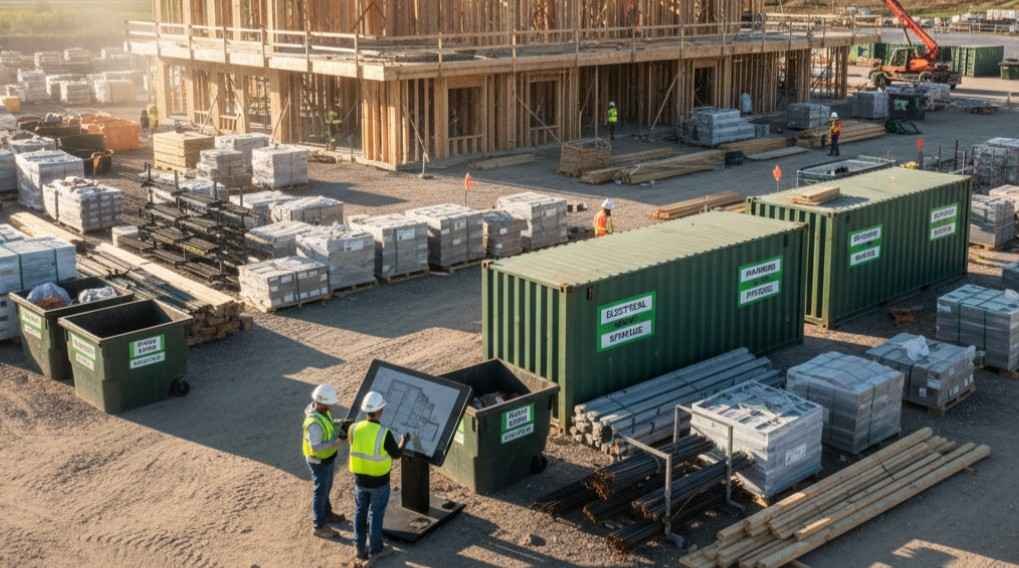
It helps shape waste long before materials arrive on site. Ordering without coordination often leads to surplus materials that sit unused or get damaged. Collaborative ordering with suppliers who offer pre-cut or custom-length materials minimizes excess from the start.
This also plays a role in reducing packaging waste. When suppliers use returnable crates or reusable pallets, job sites stay cleaner and disposal costs fall. These changes may seem small, but they compound across large projects.
They are another underused strategy. Negotiating return agreements for unused and undamaged materials prevents landfill waste while protecting budgets. Smart procurement is not about buying less. It is about buying exactly what the project needs.
Even the best plans fail if materials are mishandled on site. Weather damage, theft, and poor storage are silent waste creators. Secure, elevated, and covered storage areas protect materials and extend their usability throughout the process of project lifecycle.
Adhering to Green Building Certifications it helps make waste reduction practical instead of theoretical. Clearly labeled bins for wood, metal, concrete, and cardboard placed near work zones increase compliance and reduce contamination. When sorting is convenient, crews actually do it.
It also changes behavior. Organized off-cuts can be reused for blocking, shims, and smaller framing tasks. Combined with regular crew training and toolbox talks, these habits turn waste reduction into a daily routine rather than a policy document.
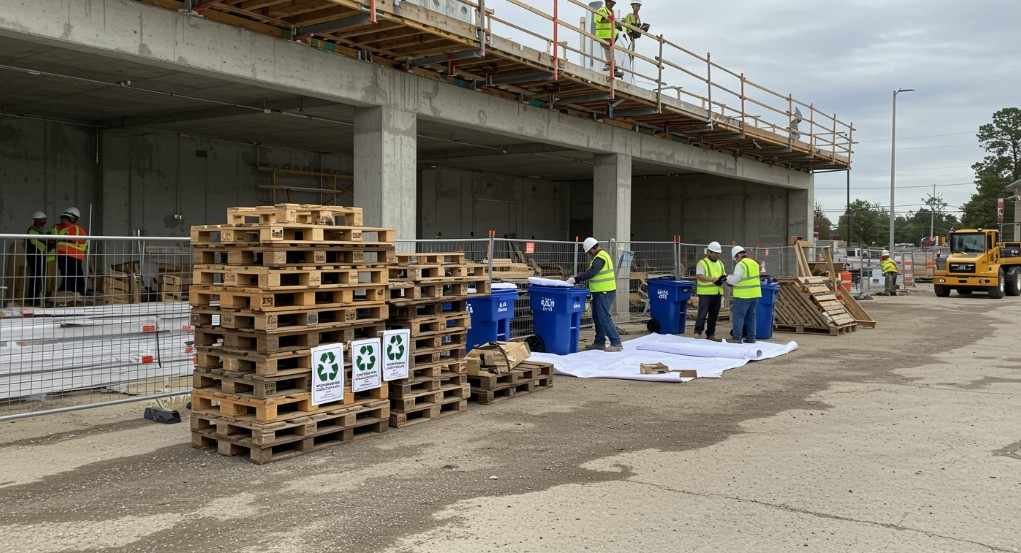
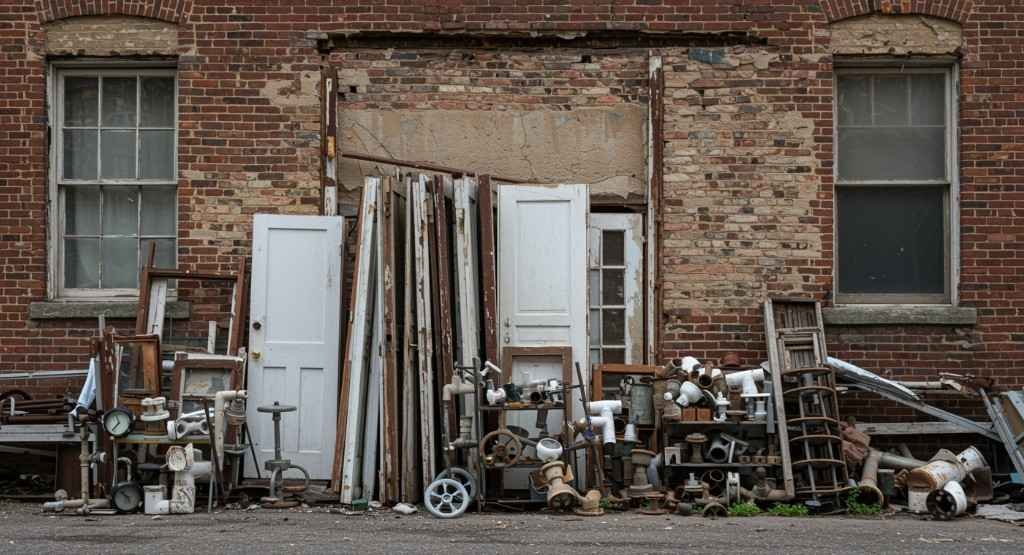
It closes the loop when waste cannot be avoided. Deconstruction instead of demolition preserves valuable materials like fixtures, brick, and lumber that would otherwise be destroyed. Salvaging these materials reduces disposal costs while supporting reuse markets.
It is another powerful tactic. Concrete and masonry can be crushed and reused as base material or backfill. Untreated wood can be chipped for landscaping or soil erosion control. These practices reduce hauling while keeping materials productive.
Help provide both social and financial benefits. Donating usable items like doors, appliances, and hardware to organizations such as Habitat for Humanity avoids landfill fees and may offer tax advantages. Recovery is not about perfection. It is about responsibility.
Learning how to reduce waste in construction projects starts before construction begins. Review drawings carefully and finalize dimensions early to prevent late changes that create excess material. Develop a Site Waste Management Plan that sets clear reduction targets and assigns accountability.
During procurement, order materials in phases rather than all at once. This allows adjustments based on real usage and reduces the risk of surplus inventory. Work closely with suppliers to align delivery schedules and packaging methods with waste goals.
On site, track material usage daily and store materials properly from day one. Revisit waste performance at the end of each phase to identify what worked and what did not. These small feedback loops lead to continuous improvement across projects.
Planning determines material quantities, sequencing, and coordination. When planning is rushed, over-ordering and rework increase waste dramatically. Accurate estimating, standardized designs, and early waste planning reduce mistakes that lead to disposal. Waste prevention works best when it begins before the first delivery arrives on site.
Yes, smaller projects often see the biggest relative savings. Tight budgets make material waste more noticeable. Simple steps like accurate measurements, phased ordering, and proper storage can eliminate unnecessary dumpster loads. Waste reduction is scalable and effective regardless of project size.
Technology is helpful but not mandatory. BIM, digital takeoffs, and inventory tracking improve accuracy and coordination. However, basic practices like standardized dimensions, proper storage, and crew training also deliver strong results. Technology accelerates waste reduction but good habits sustain it.
Reducing waste lowers material costs, disposal fees, and rework. Projects run cleaner, safer, and more efficiently. Teams communicate better and schedules stabilize. Waste reduction is not just about sustainability. It directly improves profitability and project control.
Once you truly understand how to reduce waste in construction projects, you start seeing job sites differently. Waste stops feeling inevitable and starts looking like a design flaw that can be fixed. The most successful projects are not perfect. They are intentional.
If there is one takeaway, it is this. Waste reduction is not a single decision. It is a series of small, smart choices made consistently from planning through close-out. When teams commit to that mindset, results follow naturally.