 11
11
In construction, the Chief Operating Officer (COO) is more than just an executive title; they are the driving force behind smooth and efficient operations. The COO is responsible for turning the CEO’s vision into actionable strategies, ensuring that projects stay on track, budgets are adhered to, and safety regulations are strictly followed.
The significance of having a competent COO increases with the size and growth of construction companies. The COO concentrates on the operational elements that have a direct impact on daily performance, whereas the CEO usually manages high-level strategy, public relations, and external business development.
From managing resources to ensuring safety compliance and financial control, the COO plays a pivotal role in the overall success of a construction company. In this blog, we’ll explore the role and importance of a COO in construction companies, their key responsibilities, and how they contribute to a company’s long-term success.
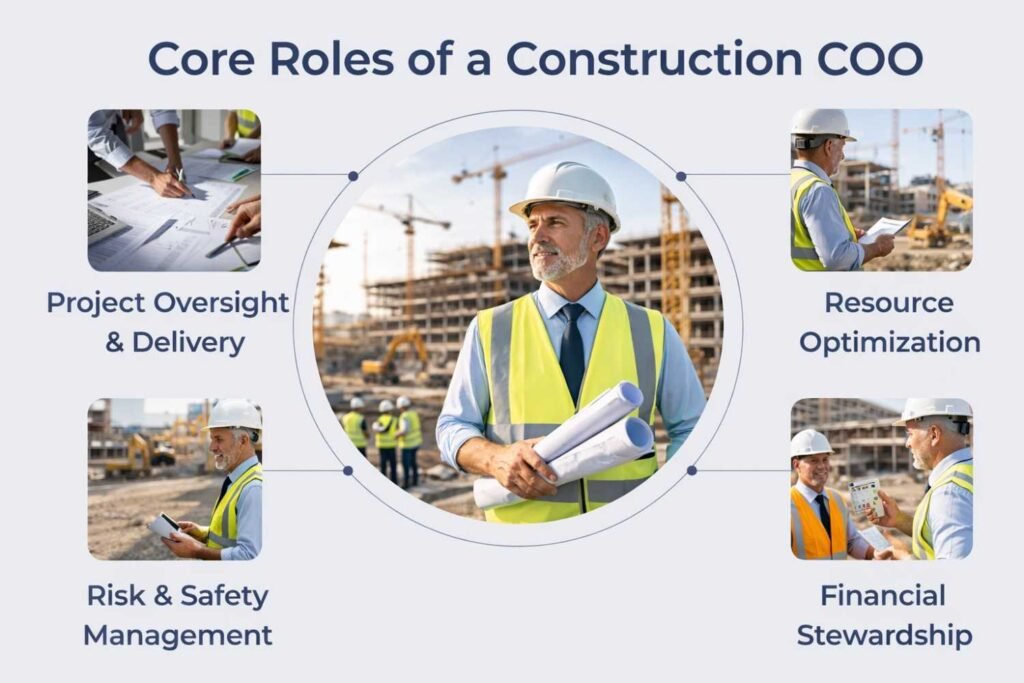
The COO’s primary responsibility is overseeing multiple construction projects simultaneously, ensuring they are completed on time, within budget, and with the highest standards of quality. They work closely with project managers to set and monitor project milestones, ensuring deadlines are met and any potential delays are addressed proactively.
In construction, efficient resource management is crucial. A COO is responsible for allocating labor, equipment, and finances across various projects, ensuring that every resource is used optimally. By maximizing resource efficiency, the COO can help reduce costs and improve profitability without sacrificing quality.
With construction being one of the most hazardous industries, the COO enforces strict safety protocols and ensures compliance with OSHA regulations. They are responsible for identifying potential risks and implementing measures to prevent accidents and delays, which can have a significant impact on both timelines and budgets.
Supply chain disruptions are common in the construction industry. The COO manages relationships with suppliers and subcontractors to ensure that materials and services are delivered on time, despite potential delays or shortages in the supply chain. They play a critical role in minimizing downtime and ensuring that projects continue to move forward smoothly.
The COO oversees financial management at the project level, ensuring budgets are adhered to and costs are controlled. By monitoring the financial health of ongoing projects, they can make adjustments as needed to protect profit margins. Effective financial stewardship by the COO is key to maintaining the profitability of the business.
A successful COO also ensures that the CEO’s growth goals are translated into actionable plans. They lead the adoption of new construction technologies, such as Building Information Modeling (BIM) or Enterprise Resource Planning (ERP) systems, to improve efficiency, reduce costs, and streamline processes across the organization.
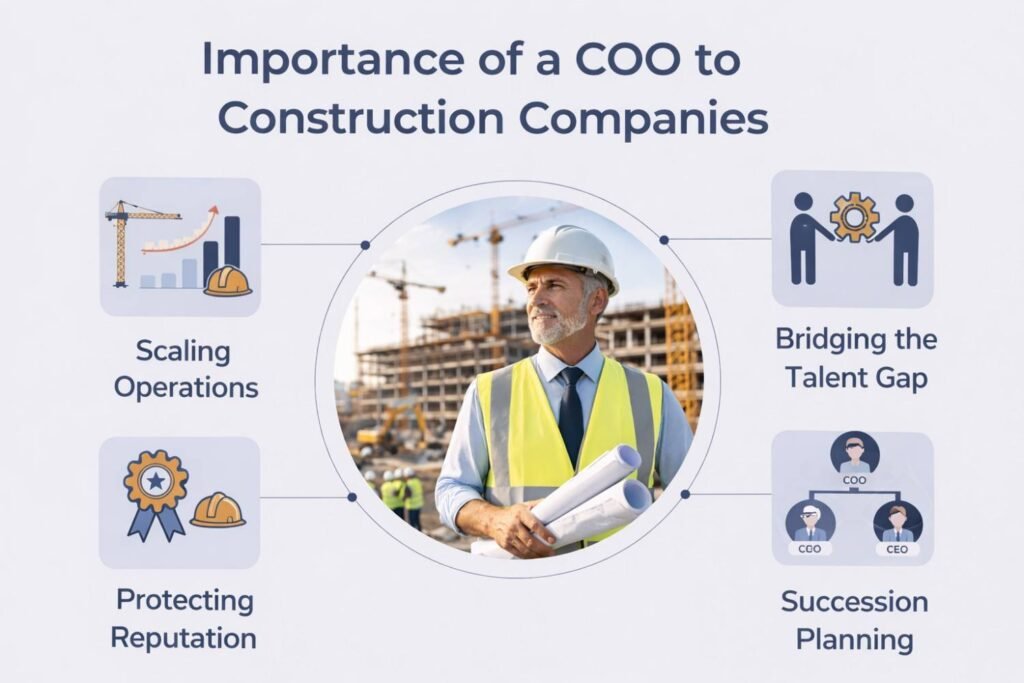
The role of the COO is critical in the construction industry due to the sector’s high-risk, low-margin nature. Let’s break down the major reasons why the COO is vital for construction companies:
As construction companies grow, the COO ensures that operations scale accordingly. They put in place repeatable systems and processes that allow the company to handle larger projects, multiple job sites, and a larger workforce without sacrificing quality or efficiency.
A construction company’s reputation hinges on its ability to deliver projects on time and within budget, with a strong safety record. The COO is responsible for ensuring that these critical factors are managed well, helping to maintain a positive reputation, secure repeat business, and attract new clients.
The construction industry faces a shortage of skilled labor, making it challenging to recruit and retain qualified workers. The COO leads efforts to address this challenge by building recruitment strategies and fostering a work environment that attracts and retains top talent. They ensure that skilled subcontractors are available to meet project demands.
The COO often serves as the heir apparent to the CEO, making it essential for the company to have a strong COO in place to ensure leadership continuity. By taking on operational responsibilities, the COO helps provide stability, especially during leadership transitions.
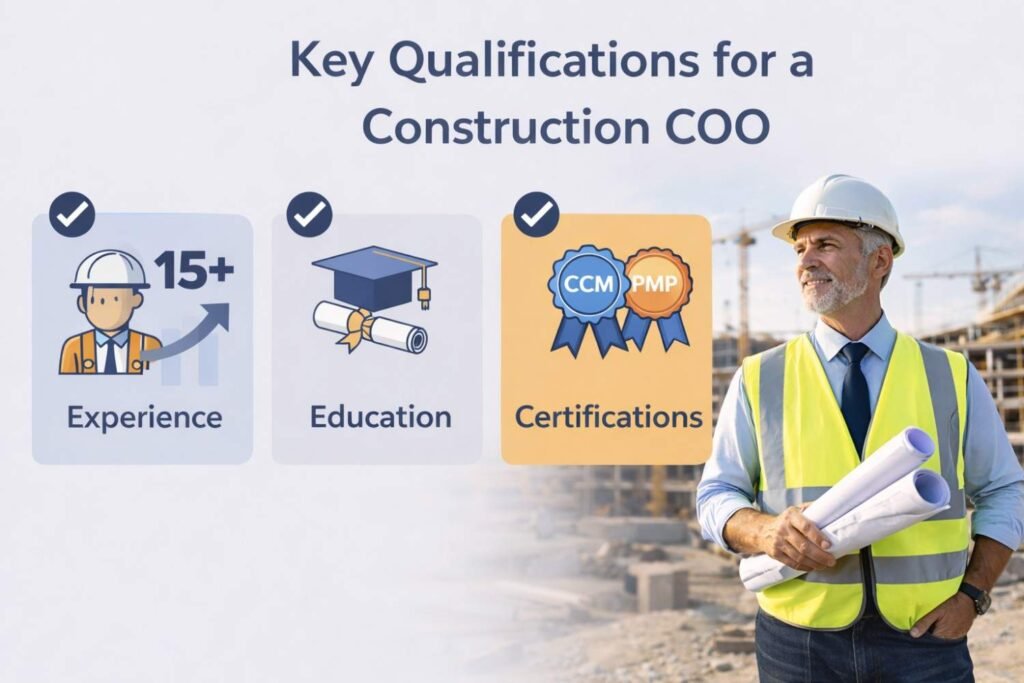
A typical COO in the construction industry has over 15 years of experience in construction management. Most COOs rise through the ranks, often starting as project managers and advancing into senior roles. Their extensive experience in managing large-scale construction projects is essential for leading operations efficiently.
A bachelor’s degree in Construction Management, Business Administration, or a related field is essential for a COO. An MBA is often preferred for more senior roles, as it equips the COO with advanced skills in leadership, business strategy, and financial management.
Certifications like Certified Construction Manager (CCM) and Project Management Professional (PMP) are highly regarded and can significantly boost a COO’s credibility within the industry. These certifications demonstrate the COO’s commitment to maintaining high standards in construction project management.
A COO in a construction company manages daily operations, including project oversight, resource allocation, risk and safety management, procurement, and financial stewardship. They ensure that projects are delivered on time, within budget, and safely.
A COO is vital in construction because they streamline operations, manage risks, optimize resources, and ensure financial stability. Their role helps construction companies scale, protect their reputation, and remain competitive.
A construction COO typically requires 15+ years of experience in construction management, a Bachelor’s degree in Construction Management or Business, and certifications like Certified Construction Manager (CCM) or Project Management Professional (PMP).
The COO is essential to the construction sector because they make sure that projects are completed on time, within budget, and with safety regulations respected. The Chief Operating Officer plays a crucial role in a company’s capacity to expand and thrive in a market that is becoming more and more competitive, whether they are managing operations, maximizing resources, or spearheading strategic initiatives.
A competent COO is a vital asset for any construction firm hoping to prosper in the fast-paced market of today because of their capacity to convert high-level strategy into practical operations.