 11
The question of where can i find playground building regulations gets answered in layers, because no single federal document governs a play structure in the United States. Authority splits across local building departments, state child care licensing agencies, school facility offices, and two private consensus standards that most jurisdictions adopt by reference.
The practical starting point is the local building official who issues your permit, and the second stop is the adopted code edition listed on that office’s website. Everything after that is document archaeology, and the trail is traceable if you know which offices hold which pieces of the puzzle.
Contractors who build commercial play areas learn quickly that the permit set and the design standard are two different animals. A stamped drawing can pass plan review and still fail an insurer’s inspection because the equipment spacing violates a standard the building department never opened.
Understanding where can i find playground building regulations means understanding that gap. The regulatory stack has a legal floor, a licensing layer, and a voluntary consensus ceiling that carries enormous weight in litigation and insurance underwriting.
Your municipal or county building department is the first and most authoritative source, and their website usually hosts the adopted code list under a heading like “codes and ordinances” or “building division.” Search that page for the International Building Code edition in force, then look for local amendments.
Many cities publish a separate amendment packet that modifies Chapter 4 of the IBC, which governs means of egress, and Chapter 11, which covers accessibility. Play structures attached to occupancies such as restaurants, churches, and child care centers fall under these provisions when the structure is classified as an accessory to the primary use.
The building department counter is also where you confirm whether the play equipment itself requires a permit or whether only the surfacing and footings do. Ask specifically for the plan review checklist used by examiners for recreational structures, and use its specifications to help choose the right building materials for the project.
Those checklists are public records in most states and they reveal exactly which referenced standards the examiner will apply. When people ask where can i find playground building regulations that actually govern their job site, the honest answer is often a twenty page internal checklist that never appears in a web search.
County health departments enter the picture for public pools, splash pads, and sometimes for surfacing materials that involve loose fill. Their published rules on sand, engineered wood fiber, and drainage are separate from the building code and are enforced by a different inspector with a different checklist. A project manager tracking where can i find playground building regulations for a mixed amenity site will end up maintaining a contact sheet with at least three agencies on it before the first excavation.
Two documents do most of the technical work in this field. ASTM F1487 covers playground equipment for public use, addressing everything from fall height and use zones to entrapment probes and guardrail geometry. ASTM F1292 defines the impact attenuation testing protocol for surfacing systems. The U.S. Consumer Product Safety
Commission publishes the Public Playground Safety Handbook, which condenses both standards into a readable guide and is the single most useful free document for anyone mapping where can i find playground building regulations. The CPSC handbook is not law, but state licensing agencies and courts treat it as the benchmark for reasonable care.
Accessibility requirements arrive through a different channel. The U.S. Access Board publishes the ADA Standards for Accessible Design, and play areas are addressed in section 240 along with the technical requirements in sections 1008. If your project receives federal funding, the Access Board guidance carries additional force through the funding agreement rather than through the building code alone.
Designers who research where can i find playground building regulations for publicly funded parks must read the Access Board chapters before they finalize equipment layout, because retrofitting an accessible route into a finished play area costs far more than drawing it correctly the first time.
| Document | Issuer | Legal Status | What It Governs
|
|---|---|---|---|
| International Building Code, Chapters 4 and 11 | International Code Council | Adopted law in most jurisdictions | Structural, egress, and accessibility for the building and attached structures |
| ASTM F1487 | ASTM International | Voluntary standard, adopted by reference | Equipment design, use zones, entrapment, fall heights |
| ASTM F1292 | ASTM International | Voluntary standard, adopted by reference | Impact attenuation of surfacing under and around equipment |
| CPSC Public Playground Safety Handbook | U.S. Consumer Product Safety Commission | Federal guidance, not regulation | Consolidated safety recommendations for public play areas |
| ADA Standards, sections 240 and 1008 | U.S. Access Board | Federal civil rights law where applicable | Accessible routes, transfer systems, ground level play components |
| State child care licensing rules | State licensing agencies | Binding on licensed facilities | Equipment condition, supervision sightlines, surfacing depth records |
If the play area serves a licensed child care center, a preschool, or an after school program, the state licensing agency holds a rulebook that frequently exceeds the building code in specificity. These rules often mandate minimum loose fill depths, daily surfacing inspections with written logs, and equipment age limits that force replacement regardless of condition.
The National Association for Regulatory Administration maintains directories of state licensing bodies, and most states publish their child care regulations as searchable documents. Someone hunting where can i find playground building regulations for a daycare project should pull the licensing rules before ordering equipment, since a rule about maximum climbing height can void an entire purchase order.
State education agencies occupy similar territory for public schools. Facility standards for playgrounds are sometimes codified in administrative rules and sometimes buried in grant program requirements. The National Center for Education Statistics publishes facility guidance and data that help frame school construction requirements, though the binding text lives in each state’s administrative code. District facility offices are usually willing to share the specification package from their last play area replacement, and that package is a shortcut to where can i find playground building regulations as applied in that specific district.
Use site restricted searches to cut through the noise. A query formatted as site:gov “playground” “surfacing” with your state name will surface inspection forms and licensing manuals faster than general searching. Swap in terms like “use zone,” “fall height,” and “impact attenuation” to catch documents that never use the word regulation. The people who find where can i find playground building regulations quickly are the ones who search in the vocabulary of the inspectors rather than the vocabulary of the customer.
Public records requests remain the blunt instrument of last resort. If a municipality will not post its playground inspection criteria, a written request to the building official under the state public records statute usually produces the document within the statutory response window. Keep the request narrow: ask for the plan review checklist and the inspection form for the specific project address or permit type. Narrow requests get fulfilled, broad ones get negotiated for months.
Carriers that underwrite parks, schools, and hospitality properties maintain their own loss control standards, and those standards cite the ASTM documents directly. As with common mistakes in home construction, overlooking insurer requirements during playground planning can lead to costly revisions.
A risk manager can often produce a one page summary of where can i find playground building regulations as the carrier interprets them, and that interpretation governs whether the policy renews without surcharge. Ask the underwriter for the loss control bulletin on play equipment before design freeze. The answer arrives faster than any government response and carries commercial consequences that a building permit never captures.
Manufacturers hold another piece of the map. Every commercial equipment line ships with installation instructions stamped with the specific ASTM edition it was tested against, and those instructions are enforceable through the warranty. Installing equipment to an older standard than the one named in the manual voids coverage for structural failures. Contractors verifying where can i find playground building regulations for a specific product should treat the manufacturer’s installation manual as a binding document rather than a suggestion, because the warranty language says exactly that.
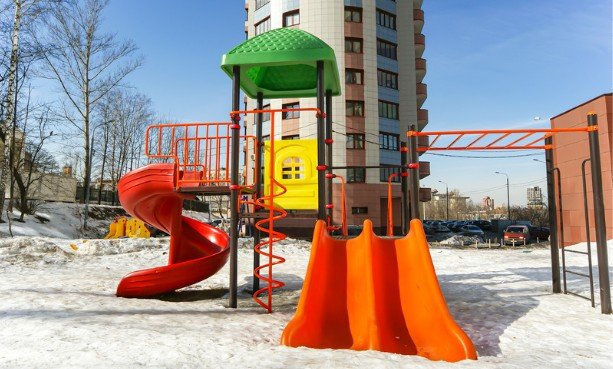
Regulations do not stop at the certificate of occupancy. ASTM F1292 testing of installed surfacing is a field test, not a laboratory claim, and many jurisdictions require a written report from a certified tester before the play area opens. Those reports have a shelf life. Surfacing compacts, wood fiber decomposes, and impact values drift upward until the surface fails the standard it once passed. The agencies that publish where can i find playground building regulations rarely publish the retest schedule, so owners end up setting their own interval, commonly annually for high traffic sites.
Inspection logs are the document trail that matters after an incident. A dated maintenance record showing surfacing depth checks, hardware torque checks, and prompt repair of damaged components is the difference between a defensible file and an indefensible one. OSHA standards apply to play equipment in employee accessible areas of commercial properties and add another inspection lens for maintenance staff. Builders who understand where can i find playground building regulations at the front end of a project usually build the maintenance log into the handover package, which keeps the owner compliant long after the punch list closes.
Does the federal government regulate playgrounds? Not directly. The CPSC publishes guidance and can pursue recalls of defective equipment, but the binding rules arrive through state and local adoption. This is why the search for where can i find playground building regulations never terminates at a single federal page.
Are ASTM standards legally enforceable? They become enforceable when a jurisdiction adopts them by reference, when a contract or warranty names them, or when a court uses them to define reasonable care. In practice all three happen routinely, which gives the standards more force than their voluntary label suggests.
Who signs off on a completed play area? The building inspector signs the permit, the licensing agency signs for child care facilities, and the owner’s insurer signs economically. Each signature depends on a different document set, which is why due diligence on where can i find playground building regulations has to cover all three.
A project file that answers where can i find playground building regulations in full contains the adopted local code and amendments, the plan review checklist, the current ASTM F1487 and F1292 editions, the CPSC handbook, the ADA Standards chapters for play areas, the state licensing rules if applicable, the manufacturer’s installation manual with its cited standard, the field impact test report, and the maintenance log template.
Assemble that set before design freeze and the regulatory question stops being a research project and becomes a checklist item, which is where it belongs on every commercial play build.