 11
11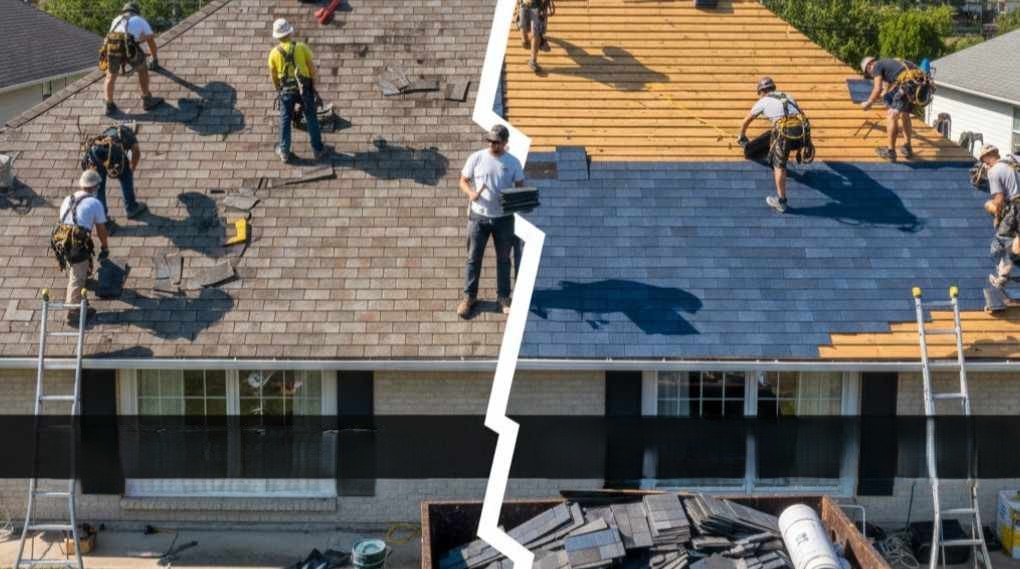
I’ll admit it: I’ve been caught standing on a ladder, staring at my roof, trying to decide whether I should fix a small leak or just replace the entire thing. It felt like an overwhelming decision at the time, and I wasn’t sure if I was wasting money on repairs or if I should’ve just committed to a replacement.
If you’re currently wondering whether to go for a residential roofing repair vs. replacement, you’re not alone. This is a common dilemma for homeowners, and making the right choice can save you a lot of stress (and money) in the long run. Let’s dive into this roofing debate and figure out which option is best for your home.
When deciding between roof repair and replacement, understanding the key differences is essential. Roof repair is a targeted fix for specific damage, like a leak, missing shingles, or holes. This is usually a quick and cost-effective solution for minor issues.
On the other hand, roof replacement involves removing the old roof and installing a completely new one. This is typically the better option for homes with significant damage or an aging roof that needs a fresh start.
So, how do you know which option is right for you? The answer lies in assessing the extent of the damage and considering your long-term plans for the property. Let’s break down the factors that will influence your decision.
In some cases, roof repair is the ideal choice, especially if the problem is minor or your roof still has plenty of life left. Here are the situations where repairing your roof makes the most sense:
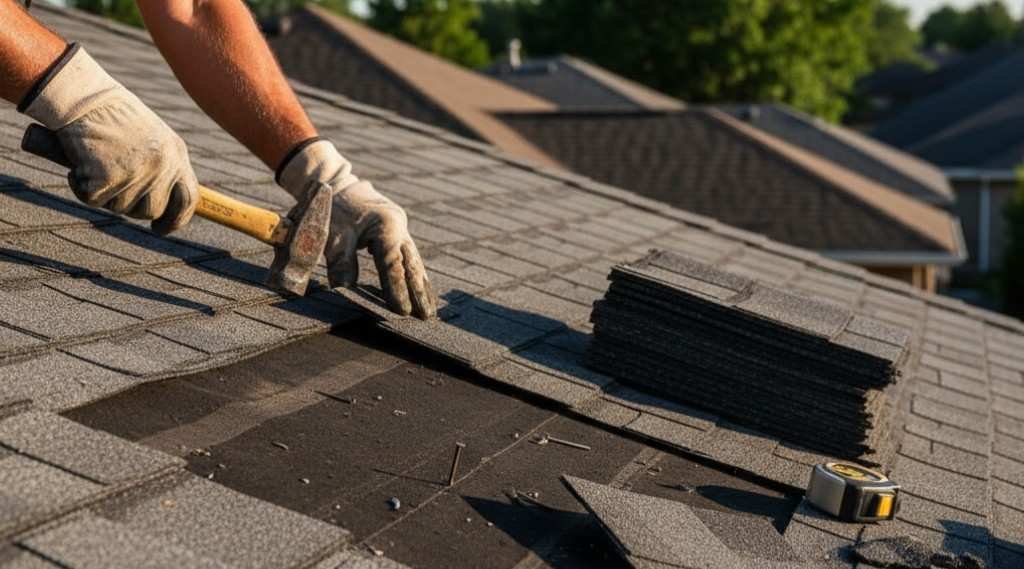
If you’re dealing with minor issues like a small leak, a few missing shingles, or a puncture from a tree branch, repairs are the way to go. These types of issues don’t require a full replacement.
If your roof is less than 10–12 years old, it likely has plenty of life left in it. A repair can extend its lifespan for a few more years before you need to think about replacing it.
Full roof replacements are expensive. If you’re not financially ready to replace your roof, a repair can buy you time to save up for a full replacement down the road.
If you’re planning to sell in the near future (within 2 years), minor repairs might be enough to satisfy home inspection requirements. This allows you to avoid the heavy investment of a full replacement.
While roof repairs work for minor issues, some situations call for a complete replacement. Here are the main reasons why you might need to replace your roof:
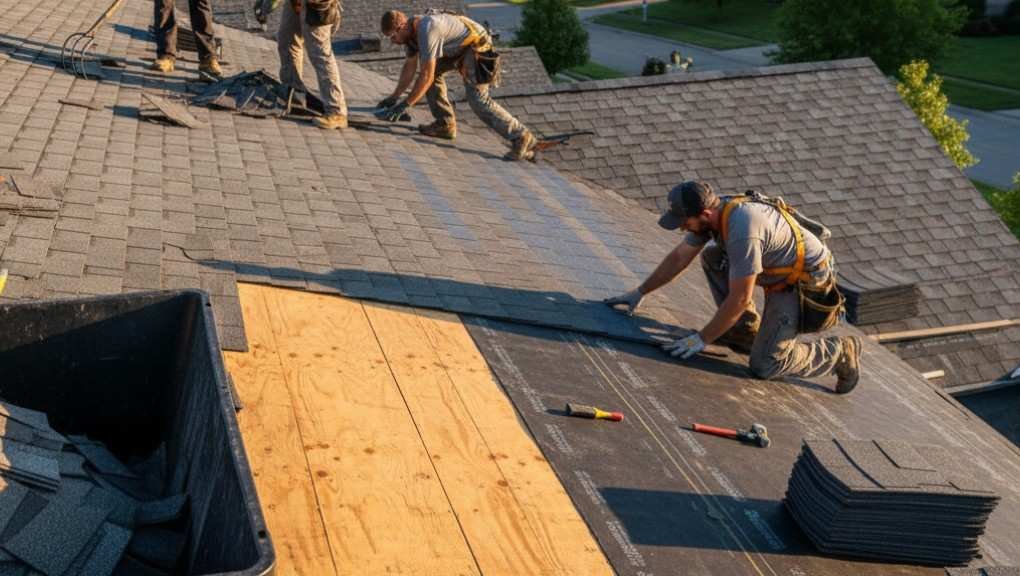
If more than 25–30% of your roof’s surface is damaged, it’s generally more cost-effective to replace the roof than to continue repairing it.
Most asphalt shingles last around 20–25 years. If your roof is getting close to this age, repairs can end up being a waste of money. It’s better to invest in a new roof.
If your roof has widespread issues like curling, cupping shingles, or granule loss in gutters, these are signs that your shingles can no longer shed water effectively, and a replacement is necessary.
Signs of sagging, soft spots, or rot in the roof deck require a complete tear-off and replacement. These issues can’t be fixed with a simple repair.
If you’re constantly fixing leaks in multiple rooms, it’s a sign that the underlayment has failed and needs replacing.
Choosing between a roof repair and a roof replacement doesn’t have to be overwhelming. Here’s a step-by-step guide to help you avoid common mistakes in home construction:
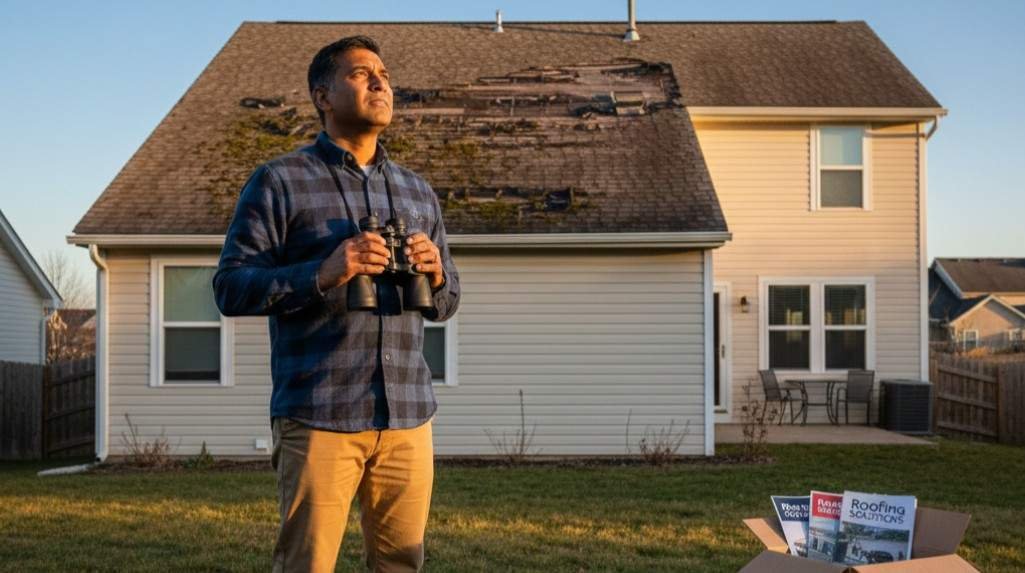
Take a good look at your roof or hire a professional to inspect it. Look for major signs of damage like leaks, curling shingles, or sagging spots.
If your roof is older than 20 years, a replacement is likely the better option. A roof repair might work temporarily, but it won’t fix the underlying age-related issues.
Roof repairs are generally much cheaper than replacements. If your budget is tight, a repair might be the best option for now. However, if you’re already spending a lot on repairs, it might be more cost-effective to replace the entire roof.
A roof replacement might seem expensive upfront, but it could add value to your home and save you money in the long run, especially if you’re upgrading to energy-efficient materials.
When in doubt, get an expert opinion. A roofing professional can assess your roof’s condition and help you determine whether repair or replacement is the best option.
| Feature | Roof Repair | Roof Replacement |
| Typical Cost | $300 – $2,000 | $15,000 – $30,000+ |
| Duration | 1 day or less | 1 – 5 days |
| Best For… | Localized damage on a young roof | Widespread damage or aging materials |
| ROI | Preserves value/prevents damage | Increases home value and efficiency |
The cost of a roof repair depends on the extent of the damage. Minor repairs, like fixing a small leak or replacing a few shingles, can cost between $300 and $1,500. Larger repairs, such as fixing a leak in multiple rooms or repairing damaged flashing, could cost more.
Most roofs made from asphalt shingles last between 20 and 25 years. Metal roofs can last 40 to 70 years, while tile or slate roofs can last up to 100 years with proper maintenance. If your roof is approaching the end of its lifespan and showing signs of wear, it’s time to start thinking about replacement.
In some cases, you can replace just part of your roof, but this is not always the best option. Matching shingles and materials can be difficult, especially if the roof is older. If the rest of the roof is in poor condition, it might be better to replace the entire roof for a more cohesive look and longer-lasting protection.
Deciding between residential roofing repair vs. replacement doesn’t have to be a tough choice if you consider all the factors involved. While a repair is perfect for minor issues and younger roofs, a full replacement offers long-term benefits for homes with significant damage or aging roofs. In the end, trust your instincts, consult with a professional, and make the decision that works best for your home and budget.