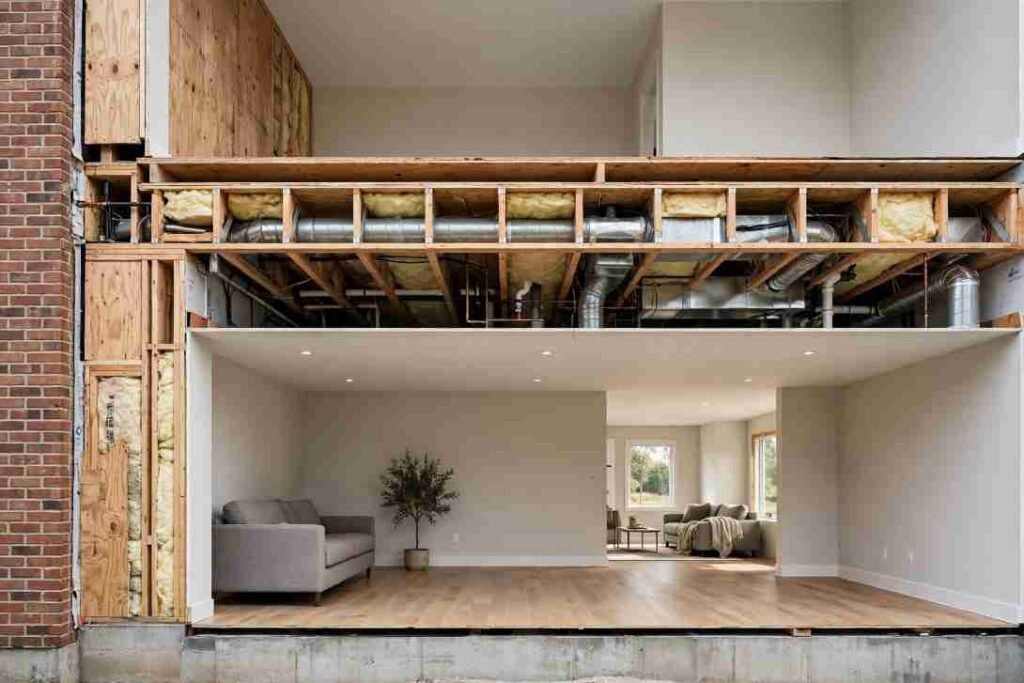
 11
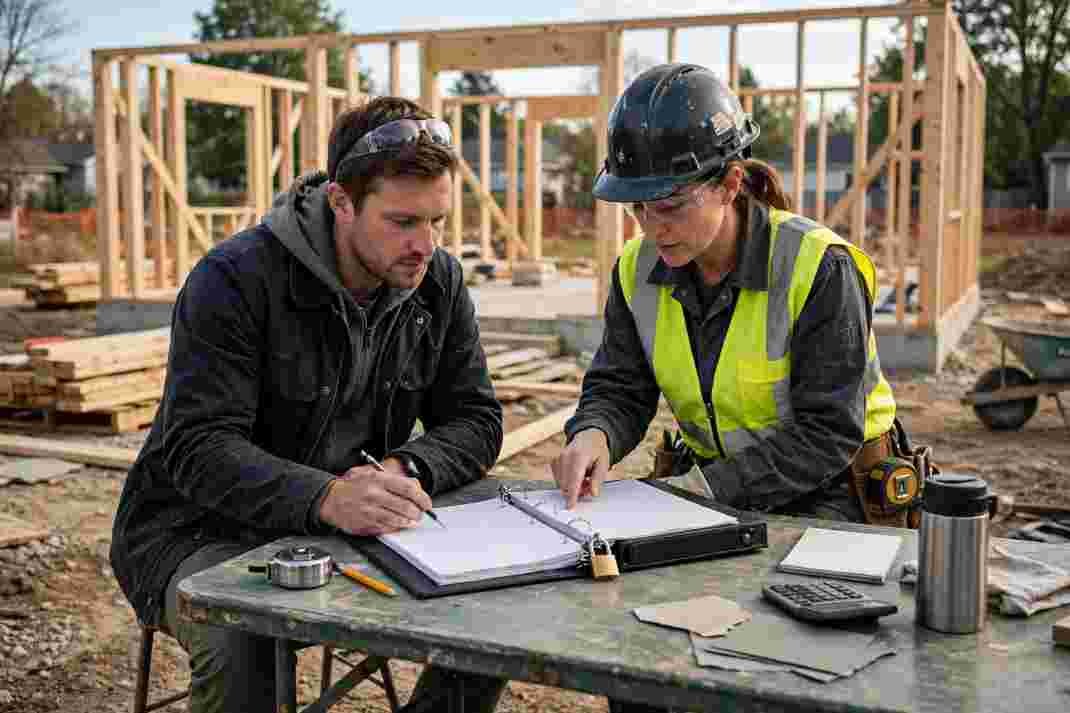
Knowing how to save money building a house is less about finding cheaper materials and more about controlling decisions before they harden into contracts, and the owners who succeed at it treat the build as a sequence of locked gates rather than a single purchase. Residential construction costs climbed sharply enough that the U.S. Census Bureau’s construction spending data now tracks single-family outlays month over month, and anyone reviewing those figures quickly sees that the spread between a disciplined project and a sloppy one is not margin, it is process.
Learning how to save money building a house starts with a blunt admission: the drawing set and the bid package determine roughly the same outcome that a hundred small site decisions later attempt to rescue.
Most budget damage happens in the gap between what the owner thinks is included and what the contract actually says. When you are working out how to save money building a house, the first real lever is a single, frozen scope document with a written allowances schedule attached to it, because every ambiguous line item becomes a change order the moment framing starts and the owner no longer has leverage to refuse.
Ask each builder to bid the identical package with allowances listed as dollar figures, then compare the allowances themselves rather than the bottom line. A bid showing a $4,000 lighting allowance against another showing $12,000 is not a cheaper bid, it is a bid that hid $8,000. Contractors who understand how to save money building a house for their clients will happily break allowances out, because the alternative is a mid-project argument that damages both parties.
The Federal Trade Commission maintains guidance on home improvement contracts and consumer rights that is worth reading before signing anything. The FTC home improvement consumer guidance covers the deposit and contract terms that separate a professional arrangement from a risky one. Anyone serious about how to save money building a house should read it in full before the first check clears.
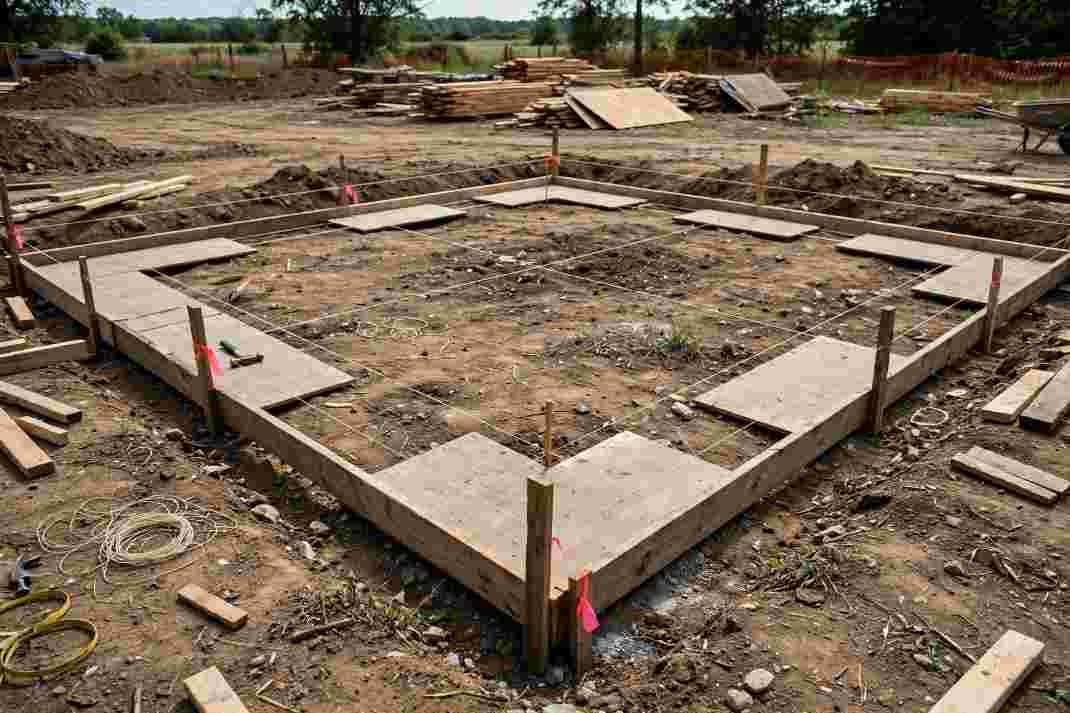
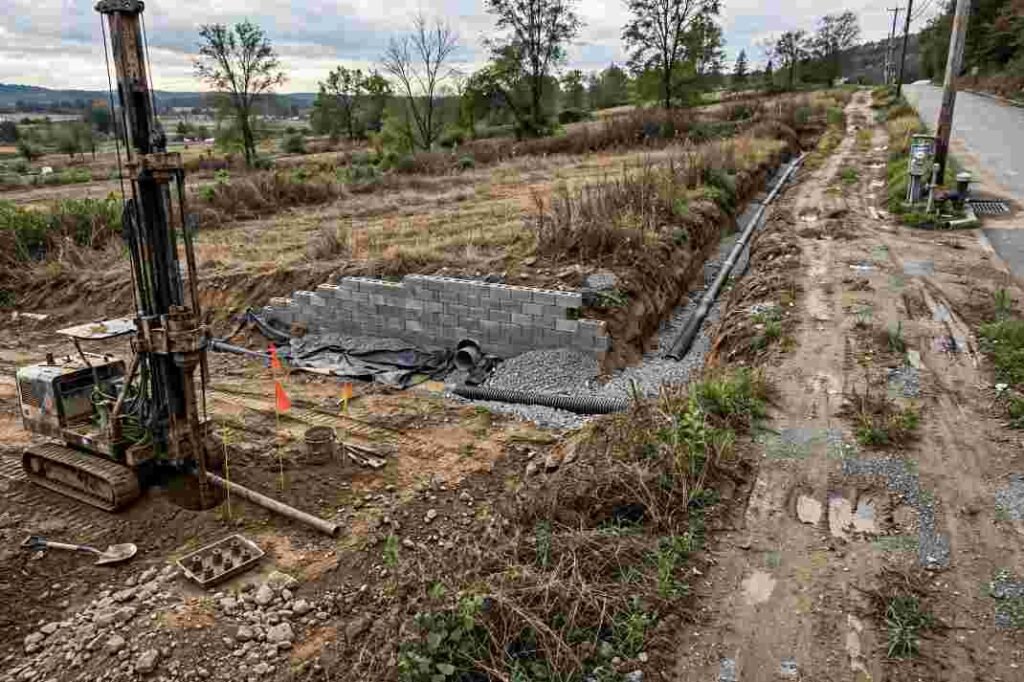
The land decision carries more cost weight than any finish package, and it is the most frequently rushed. A cheap lot with no utilities, poor drainage, or a long driveway approach can erase tens of thousands in savings once excavation, septic, and utility runs are priced. Owners who study how to save money building a house spend disproportionate time on soil and access before they ever discuss countertops.
Three site conditions deserve scrutiny before purchase:
Ask the local building department for the permit fee schedule and any impact fees before you commit to the parcel. Municipal fee schedules are public documents and often reveal several thousand dollars of cost the seller never mentioned to you during the showing.
Before committing to a construction project, homeowners should also compare the financial trade-offs of new construction vs. resale to determine whether building a home offers better value than purchasing an existing property.
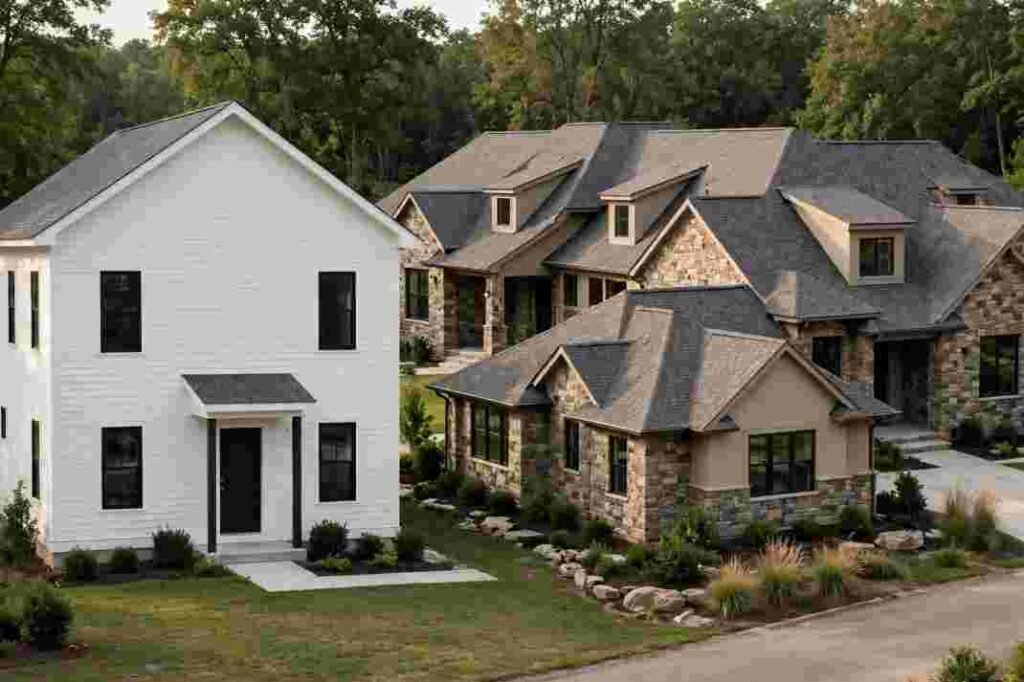
Simple rectangles build cheaper than complex footprints, and this single principle drives more savings than most finish-level negotiation. Every jog in a wall line adds framing labor, sheathing cuts, roof intersections, and flashing detail, and the labor multiplier on complexity is where owners quietly lose money while believing they are gaining square footage.
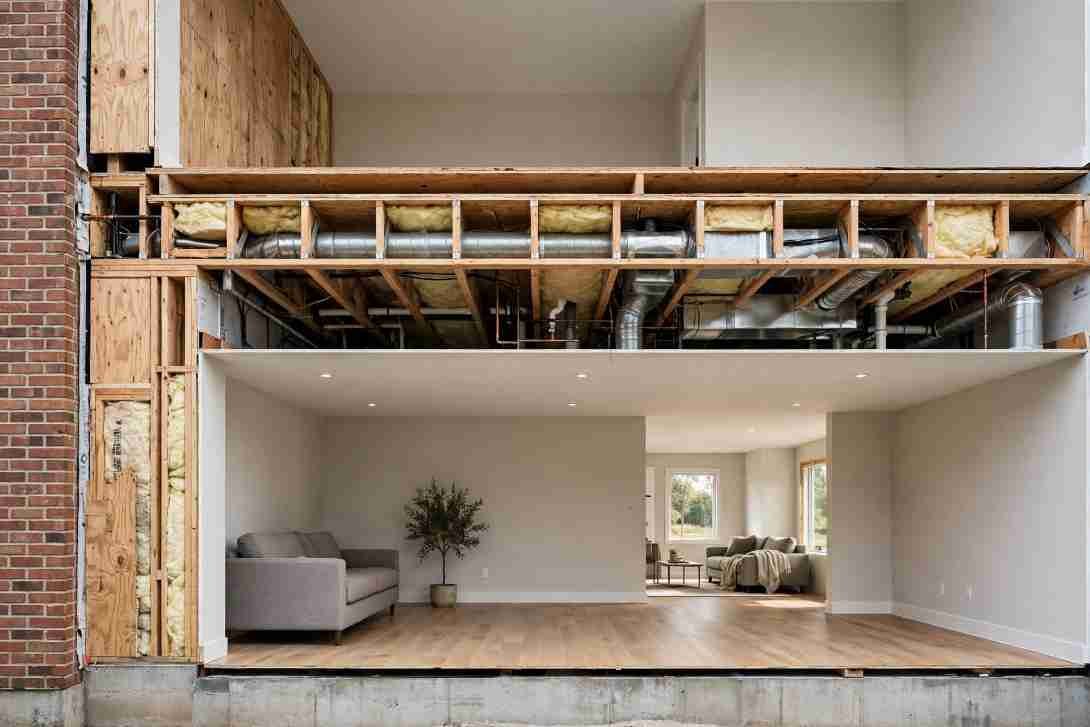
Stack the plumbing. Bathrooms located back to back and vertically aligned across floors share wet walls, which cuts pipe runs and labor simultaneously. Keep the roof plan uncomplicated, since valleys and dormers cost more per square foot than any flat plane ever will, and anyone teaching themselves how to save money building a house should walk the drawing set counting roof intersections before approving it.
Consider a two-story plan over a sprawling single-story footprint when the lot allows it, because foundation and roof area drop even when total square footage stays constant. Foundation and roof are the two highest-cost-per-square-foot envelopes on most homes, so shrinking them is a structural savings move rather than a cosmetic one.
Not every savings category behaves the same way over the life of the project. The table below reflects how each lever typically performs in practice, based on how contractors and owners experience the trade-offs.
| Cost Lever | Upfront Savings | Long-Term Risk | Verdict
|
|---|---|---|---|
| Simplified footprint | High | Low | Keep permanently |
| Builder grade allowances | High | Medium | Negotiate later, not now |
| Cutting insulation or waterproofing | Moderate | Very High | Never |
| Owner supplied materials | Variable | Medium | Only with written coordination |
| Off-season scheduling | Moderate | Low | Worth pursuing |
| Skipping third-party inspections | Low | Severe | Never |
Owners who understand how to save money building a house recognize that the first column is not the only scoreboard. The third column matters more, because rebuilding a failed shower pan or replacing a rotting rim board costs multiples of what was saved, and those costs arrive after the loan has already been drawn down.
Competitive bidding only works when all bidders price the same documents, and that discipline is central to how to save money building a house without generating a dispute in month three. Issue one drawing set, one specification book, and one allowance schedule, then refuse to accept verbal alternates during the walk-through.
Verify licensing and standing before comparing numbers. The National Association of State Contractors Licensing Agencies publishes a state-by-state directory that lets an owner confirm whether a bidder holds an active license in good standing. The NASCLA state licensing board directory is a practical first stop, and skipping the check has cost more owners more money than any bid differential ever saved them.
Require a written schedule of values with the bid, and tie progress payments to completed milestones rather than calendar dates. That structure alone reduces the risk of paying ahead of work, which is where a large share of owner losses occur on residential projects.
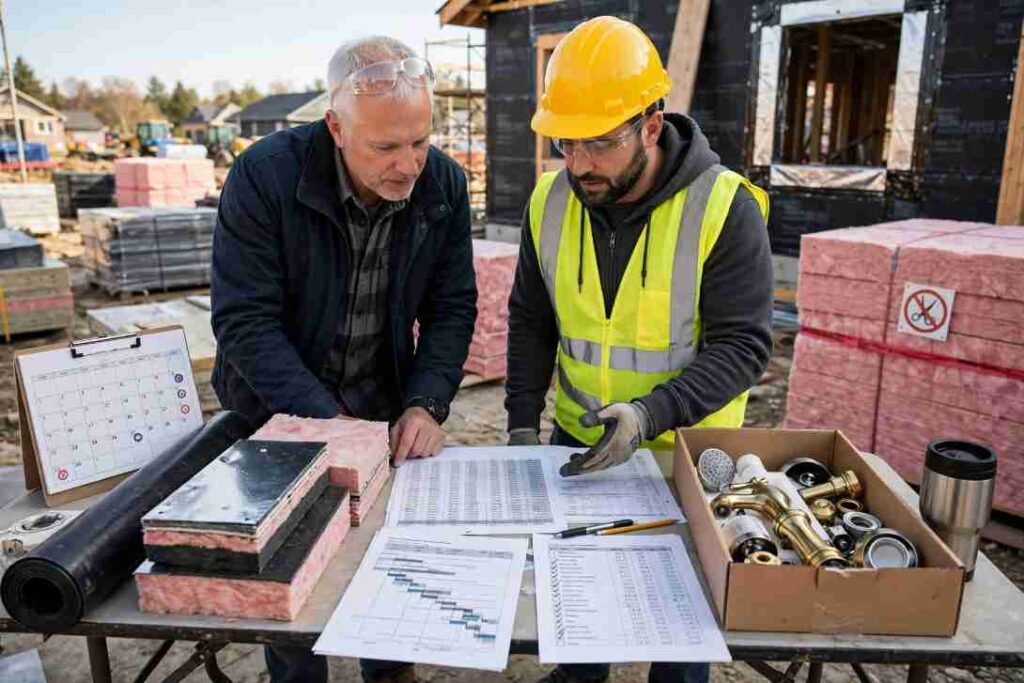
Change orders are the single most common budget killer on a custom build, and the mechanism is simple: work already in progress is expensive to redo. The owner who decides mid-framing to relocate a wall pays to demolish, reframe, reroute electrical, and redo the drawing, and the cumulative effect of several such decisions can consume the entire savings plan.
Build a written decision calendar at contract signing. Selections for cabinets, tile, plumbing fixtures, and electrical layout get dates that precede the relevant rough-in phase by at least two weeks, and the builder agrees in writing to flag any late selection as a potential cost event. Owners studying how to save money building a house should treat the decision calendar as a budget document, because lateness in selections is what converts a well-priced job into an overrun.
Keep a contingency reserve that never gets touched for upgrades. Ten percent of hard costs is the customary starting figure in residential construction, and that number should carry a written rule that it is reserved for surprises the site produces, not for selections the owner wants.
Supplying your own fixtures can save real money, but only if the arrangement is documented before the bid closes. Contractors price unknown coordination work at a premium, so a written owner-supply schedule with delivery dates, storage responsibilities, and warranty exclusions preserves both the savings and the working relationship.
Reducing material waste is another way to control project expenses, and exploring how adaptive reuse is reducing construction waste can help homeowners understand how salvaged and repurposed materials support more efficient construction.
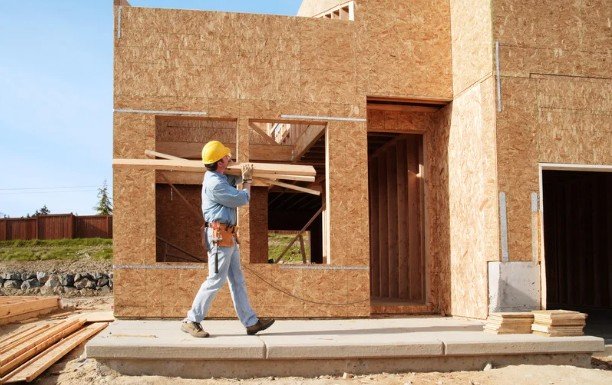
Sweat equity is a narrower lever than most owners assume. Site cleanup, final landscaping, painting prep, and some finish carpentry are realistic owner contributions on many projects, while anything touching electrical, plumbing, or structural work usually requires licensed labor by law. Ask the local building department which tasks an owner may legally perform on their own permit before assuming labor savings that a code inspector will later reject.
Anyone learning how to save money building a house through self-performed work should price the tools, rentals, and time honestly. A weekend of owner painting saves real money; a weekend of owner cabinet installation that goes wrong costs more than the labor would have.
The financing structure affects cost as much as any material selection, because interest accrues on draws and a slow schedule costs money even at a modest rate. Owners who are studying how to save money building a house should compare construction loan terms carefully, particularly draw inspection fees and the interest reserve requirement.
Ask the lender for a written draw schedule that matches the construction schedule of values, then confirm that inspections are scheduled promptly rather than queued. A builder who cannot produce an accurate schedule of values is a builder who will struggle with the draw process, and those delays cost interest that nobody budgeted for.
For broader context on how national construction spending trends affect material pricing and subcontractor availability, the U.S. Census Bureau construction spending reports are published monthly and are read by contractors as a leading signal for when to lock in pricing.
Timing carries measurable value. Subcontractors discount slower months to keep crews busy, and materials ordered in advance of known price increases can save more than a negotiated allowance reduction. Locking framing and drywall into a shoulder season is a common tactic among builders who know how to save money building a house without stripping quality out of the assembly.
Long lead items deserve early ordering, but only against a confirmed schedule and a written delivery window. Cabinets, windows, and specialty doors ordered too early create storage problems on a site with limited room, and ordered too late they stall the job and add interest cost during the idle weeks.
Waterproofing, insulation, flashing, and drainage are the four assemblies that owners most often ask to cut, and they are the four that produce the worst returns on that decision. Building science research from the U.S. Department of Energy’s Building America program consistently shows that envelope failures cost far more to remediate than to install correctly, and the DOE Building America project profiles document real assemblies that failed when details were compressed for budget reasons.
Skimping on the foundation, the roof underlayment, or the drainage plane is not a savings strategy, it is a deferred expense with interest attached. Building inspectors and warranty providers both know this pattern well because they see it every season.
An owner who has mastered how to save money building a house keeps a running cost log from the first payment through the final punch list, reconciling every draw against the schedule of values. That log is the single document that reveals drift before it becomes a problem, and the discipline of updating it weekly is what separates a project that closes within budget from one that limps to the finish line.
Owner familiarity with the budget also changes how contractors behave on site, because a builder who knows the owner reads the draws weekly does not test the numbers. Nothing about that dynamic is adversarial, it is simply how the working relationship stays honest when the project moves fast and the paperwork lags behind.
The build finishes when the cost log balances against the final draw, and the next house starts with that log as the first input, not the last.