 11
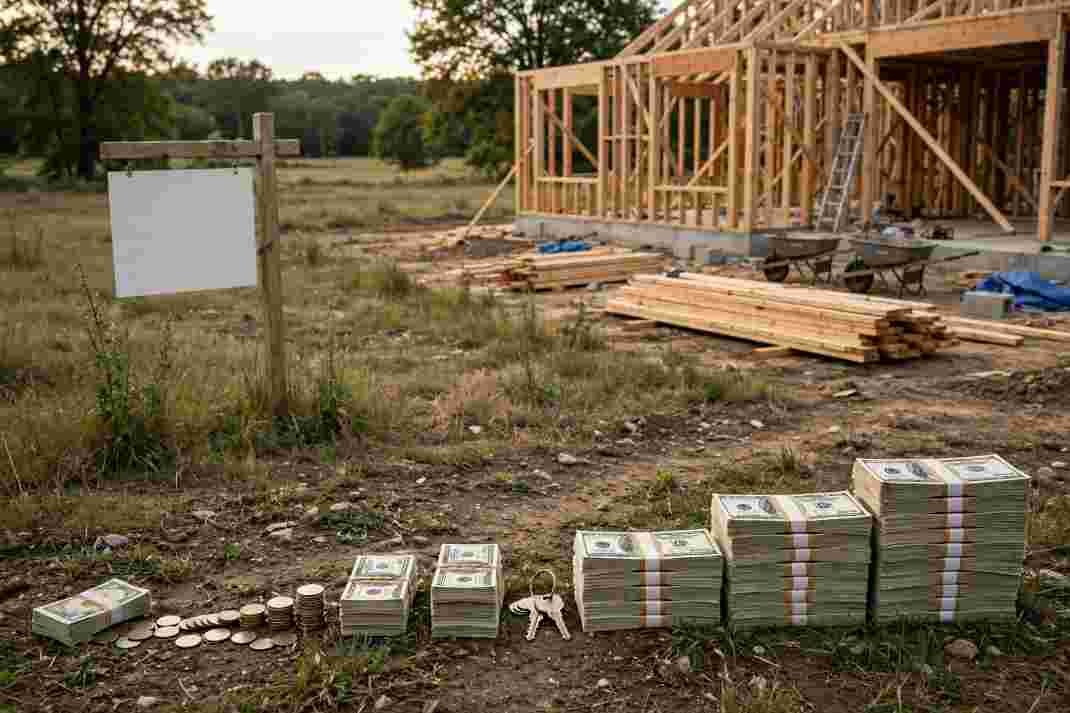
Most people who set out to build discover that the hardest part is not the concrete pour or the framing crew, it is the sequencing of money.
Knowing how to finance buying land and building a house means understanding that no single lender product covers the whole arc, because raw dirt, vertical construction, and a finished dwelling carry three very different risk profiles.
A parcel with no utilities and no permits is not collateral a bank wants to hold, and a construction loan on top of a land loan creates a stacking problem most retail buyers have never encountered. The workable path usually runs through one of four financing structures, each with its own appraisal mechanics and cash requirements.

Raw land sits at the bottom of the lending food chain because it produces no income and cannot be quickly resold. A house in a functioning market has comparables, a tax history, and a buyer pool. A vacant lot twenty minutes outside town might have two comparable sales in the last eighteen months.
Lenders price that illiquidity into their terms, which is why land loans typically carry shorter amortization schedules, larger down payments, and higher rates than a conventional mortgage on an existing home. The Federal Reserve’s consumer credit data reflects how household borrowing shifts with rate environments, and land lending sits at the most expensive edge of that spectrum.
The practical consequence for anyone learning how to finance buying land and building a house is that land rarely comes cheap at the closing table. Many institutions want 20 to 50 percent down on undeveloped acreage, and some will not lend on land at all unless the borrower has a simultaneous construction commitment. That constraint shapes everything downstream, because the cash you sink into dirt is cash you cannot put toward the build.
The single close construction loan, sometimes called a construction-to-permanent or “one-time close,” bundles land acquisition, building costs, and the permanent mortgage into one set of documents. The lender funds in draws as work progresses, and at completion the loan converts to a standard amortizing mortgage.
This is the cleanest route for most owner-builders because it eliminates a second closing, a second set of title and appraisal fees, and the awkward moment when a land loan comes due before construction finishes.
A two-close structure works in the opposite direction. You buy the land outright with a separate land loan, hold it for a period, then apply for construction financing later. That path suits buyers who need time to secure permits, finalize plans, or wait on a seller who is not ready to close. The tradeoff is duplication.
You pay closing costs twice, you face two underwriting reviews, and if rates move between closings you absorb the difference.
Before choosing a financing structure, buyers should also compare the financial implications of new construction vs. resale to understand how building a home differs from purchasing an existing property.
| Structure | Down Payment Range | Closings | Best Fit
|
|---|---|---|---|
| Single close construction-to-permanent | 10 to 25 percent of total project | One | Buyers with plans, permits, and a signed builder contract ready |
| Separate land loan then construction loan | 20 to 50 percent on land, plus construction down | Two | Buyers who need time before building or are negotiating lot terms |
| All-cash land purchase then construction loan | Full land cost plus construction down payment | One (construction) | Buyers with liquid capital who want maximum negotiating leverage |
| Owner-builder construction loan | 20 to 30 percent, lender dependent | One | Experienced self-builders managing their own subs |
The down payment number people quote online is almost always wrong because it refers to the finished value, not the total project cost. A construction lender appraises the completed home, then lends against that figure. If the appraised value comes in below your land cost plus build cost, you cover the gap in cash. This is where owner-builders get squeezed, because appraisal gaps on custom builds are common when the design is unusual for the neighborhood.
Beyond the down payment, expect to fund closing costs, title insurance, appraisal fees, permit charges, architectural drawings, engineering, and site work like clearing and utility trenching. Many construction loans require you to bring those pre-construction soft costs out of pocket.
Reserve funds for interest during the build are also standard, with some lenders holding two to six months of interest payments in escrow as a cushion against schedule overruns. HUD publishes consumer guidance on the home buying process that covers the closing cost categories worth budgeting for, though construction lending adds layers a standard purchase does not.

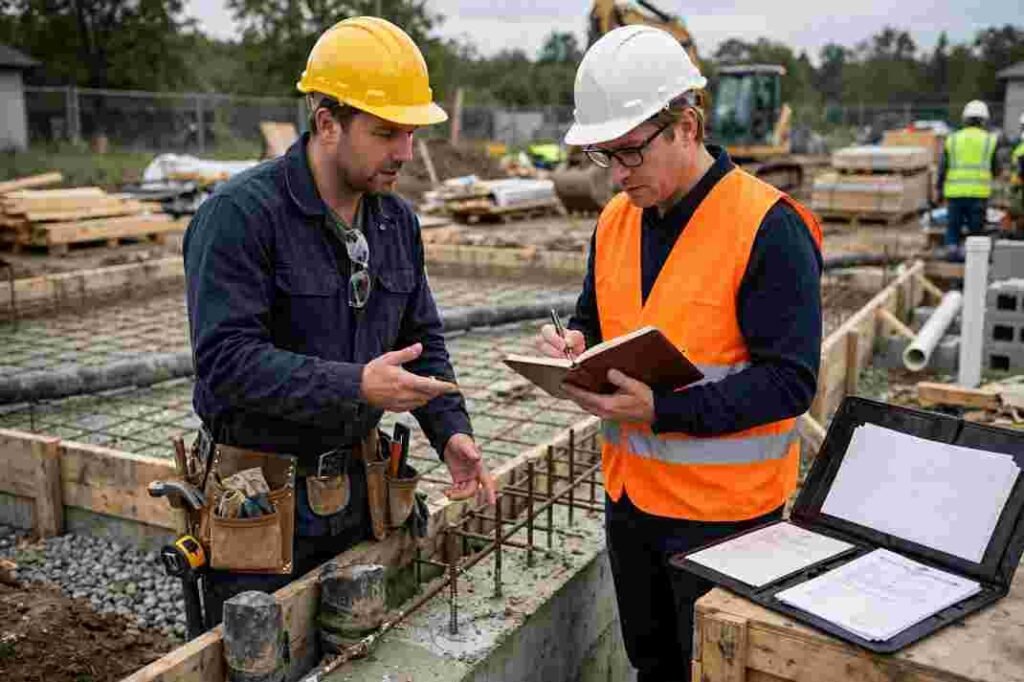
Lending to someone who intends to swing a hammer is a different risk calculation than lending to a general contractor with a license and a track record. Owner-builder construction loans exist, but they come with conditions.
Lenders typically want documented experience on at least one prior project, a licensed builder of record for specific phases, and a detailed draw schedule that ties funding to completed work verified by inspection.
The draw schedule is the part most self-builders underestimate. You do not receive a lump sum. You receive money after an inspector confirms the foundation is poured, then after framing, then after rough-in, and so on through the phases.
That means you front the labor and materials for each stage before reimbursement, which requires a working capital buffer of its own. Knowing how to finance buying land and building a house as an owner-builder means treating your own liquidity as a financing instrument, not just a down payment source.
Underwriting a construction loan looks at the borrower and the project separately. On the borrower side, expect income documentation, asset statements, and a debt to income ratio that fits within the lender’s tolerance.
The Consumer Financial Protection Bureau maintains resources on mortgage qualification requirements that apply to the permanent phase of a construction loan, since that end of the product is a standard mortgage.
Borrowers with limited or no established credit history may also need to explore alternative qualification options, so understanding whether you can get a loan without a credit history can help clarify what lenders may consider during the application process.
On the project side, the lender reviews the builder’s financials, the construction contract, the plans, the permits, and the appraisal of the completed home. A builder with a thin balance sheet can kill a deal even when the borrower is pristine. Expect the lender to verify the builder’s license, insurance, and prior completed projects. Some lenders maintain approved builder lists and will not fund a contract with an unfamiliar firm.
The same financing logic applies when you already own a house and want to build an addition or a detached structure. Renovation lending and ground-up construction lending share the draw schedule mechanic and the appraisal methodology, which is why specialists in one often work in the other. Firms that handle home construction and renovation see the same pattern repeatedly: borrowers are approved for the loan amount but unprepared for the inspection cadence that releases the funds.
If your project includes significant site work, retaining walls, or utility extensions on a sloped or unimproved parcel, ask the lender early whether those costs are eligible for draws or must be paid upfront. Site work is often the first item cut from a construction budget and the first item that blows past estimate.
Buyers looking at acreage outside metro areas should investigate USDA rural development lending, which offers construction and purchase packages for eligible rural locations. Eligibility is geography driven, so check the property address against the program’s maps before assuming anything. The USDA Rural Development single family housing programs page lists current offerings and income limits.
VA construction loans exist for eligible veterans but are administratively complex and fewer lenders originate them.
FHA offers a construction-to-permanent product sometimes called a one-time close, and it allows a lower down payment than most conventional construction loans. Each of these programs has occupancy, income, and property condition rules that narrow the field of eligible parcels, and a lot that fails a septic feasibility test can disqualify the whole transaction under any of them.
The sequencing matters more than the individual product choice. Figure out the land, verify it is buildable, then structure the money. Anyone reverse engineering how to finance buying land and building a house should start with the lender conversation rather than the real estate listing, because the lender defines which parcels are even viable.
Construction loans are typically interest only during the build, with payments calculated on the outstanding balance as draws are made. That structure means your carrying cost rises as the house goes up, peaking near completion. Budget for it explicitly rather than discovering it in month six.
Rate locks on construction loans behave differently than on purchase mortgages. Many lenders lock only at conversion to the permanent loan, which leaves the borrower exposed to rate movement during a build that can run nine to fourteen months. Ask specifically whether a float-down or extended lock is available and what it costs.
The Federal Reserve’s policy calendar is worth watching during a build cycle if your conversion timing is flexible.
Walk in with a parcel address and a preliminary site evaluation, a set of plans at least at schematic stage, a builder letter of intent or draft contract, a rough construction budget with line items, and your last two years of income documentation.
Lenders who see an organized package move faster because the underwriting questions get answered in the first meeting rather than the fourth. The borrower who arrives with a folder of receipts and a verbal estimate is the borrower who waits three extra weeks.
Nothing about how to finance buying land and building a house is complicated in isolation, but the pieces interlock in ways that punish improvisation, and the borrower who maps the sequence before making an offer on a lot will clear underwriting while the borrower who bought dirt first is still hunting for a lender willing to take the risk.