
 11
The question of how do i market my building company gets asked in every contractor forum by owners who can frame a roof but cannot explain why their phone stopped ringing in February. The blunt answer is that construction marketing fails because most builders treat it as a side task handled between site visits, when in practice it is a separate operating function that needs an owner, a budget line, and a weekly schedule. Pacific Construction Builders sees the same pattern across residential and commercial outfits: strong crews, weak pipelines. What follows is the working method, not the theory.
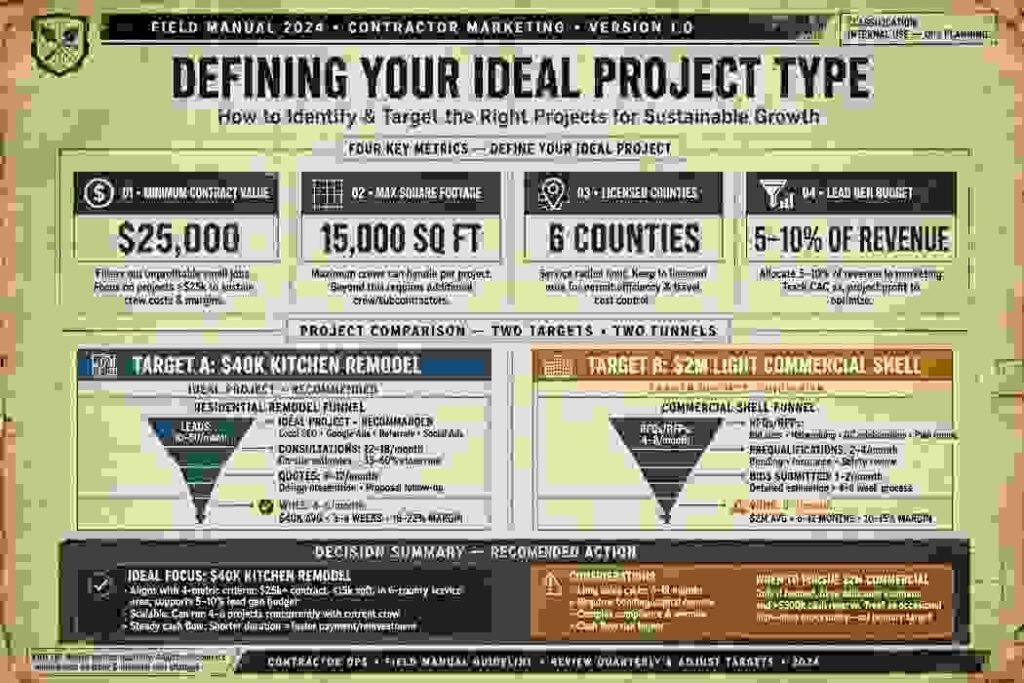
Marketing decisions collapse when the target is vague, so the first move is to define the exact project type and value band the company wants to fill its calendar with. A builder chasing $40,000 kitchen remodels needs a very different message than one pursuing $2 million light commercial shells, and mixing the two in one funnel produces inquiries the estimating team cannot price efficiently.
Write down four numbers before spending a dollar: the minimum contract value that makes a job worth mobilizing, the maximum square footage the crews can handle without subcontracting risk, the counties the company is licensed to work in, and the percentage of revenue the business can afford to spend on lead generation. Most residential builders land between 5 and 10 percent according to the Construction Financial Management Association, though the figure swings hard depending on whether the work is referral-driven or paid acquisition.
Once those numbers exist, the message writes itself. A roofer chasing insurance restoration should lead with claim documentation and turnaround speed. A general contractor chasing commercial tenant improvements should lead with schedule certainty and permit experience. The mistake is writing one tagline for everyone, which is the default failure mode of every builder who asks how do i market my building company and then buys a generic website template.
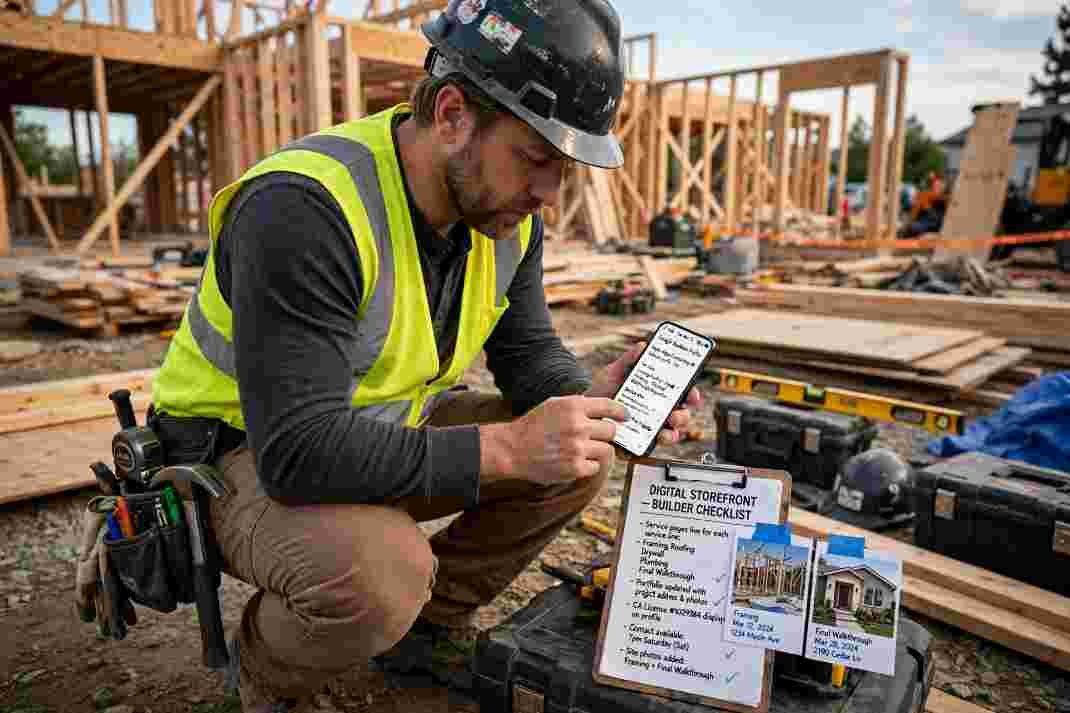
Sending paid traffic to a thin website is the fastest way to burn a marketing budget, so the foundation comes first. That means pages for each service line, a portfolio with actual addresses or project types, license numbers displayed prominently, and a contact mechanism that works on a phone at 7 p.m. on a Saturday.
The company needs a Google Business Profile that is fully completed, with categories matching the actual work, service areas matching the licensed counties, and a photo cadence that continues after launch. Google publishes the ranking factors for local results through its Business Profile help documentation, and review volume plus recency sits near the top of that list. Ask every satisfied client for a review within 48 hours of punch list sign-off, when goodwill is highest and the job is still fresh in their mind.
Homeowners and property managers search in cost and feasibility language long before they search in brand language. A page that answers what a project costs in the local market, with the caveats a real estimator would give, pulls traffic that a services page never will. The same logic applies to permit timelines and inspection sequences, which are the two topics that generate the most anxious inquiries in any jurisdiction.
Photography matters more than copy on these pages, and the standard is documentary rather than polished. Site photos during framing, mid-install, the wiring of a smart building automation system, and the final walkthrough tell a buyer far more than a stock image of a happy family in a doorway. Every image should carry a caption naming the project type and scope.
Local search is where most construction demand originates, so the question of how do i market my building company has a geographic answer before it has a creative one. The practical sequence is to claim the categories that match revenue, publish service pages for each town or county served, and earn citations from local trade associations, supplier directories, and the chamber of commerce.
Paid local search works, but only with tight geography and negative keywords. Exclude job seekers, DIY researchers, and out-of-area searchers by default, and set the budget around the value of a single won contract rather than a monthly comfort number. A builder with a $60,000 average contract can justify far more per click than one averaging $8,000, and the bidding strategy should reflect that math instead of industry averages.
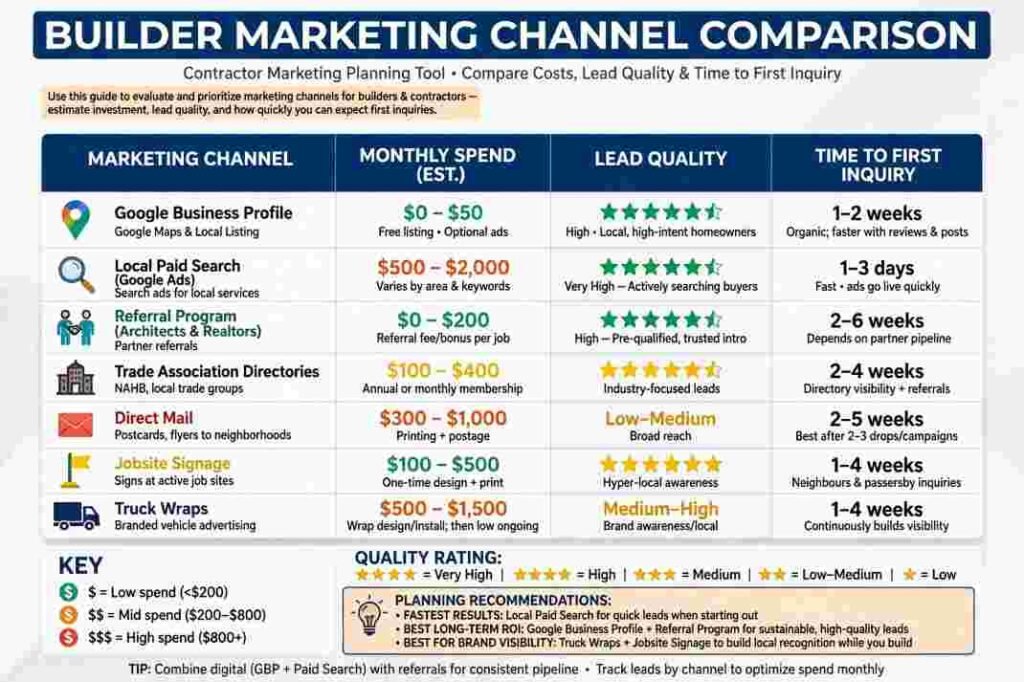
| Channel | Typical Monthly Spend | Lead Quality | Time to First Inquiry
|
|---|---|---|---|
| Google Business Profile and reviews | Under $200 | High, intent-driven | Two to six weeks |
| Local paid search | $1,500 to $9,000 | Medium, varies by bid | Immediate |
| Referral program with architects and realtors | Relationship cost only | Highest | Three to nine months |
| Trade association and supplier directories | $300 to $2,500 | Medium | One to three months |
| Direct mail to target neighborhoods | $800 to $4,000 | Low to medium | Two to five weeks |
| Jobsite signage and truck wraps | One-time, $1,200 to $6,000 | Steady trickle | Continuous |
The table is a planning tool, not a forecast. Real response rates vary by market saturation, season, and whether the company has any existing reputation to lean on, which is why the first sixty days should be treated as a measurement period rather than a verdict on any single channel.
Architects, structural engineers, real estate agents, and property managers control the front end of most construction demand, and they refer to builders they trust to show up, communicate, and not embarrass them in front of a client. That trust is built through repeated, low-friction contact rather than a single lunch.
The workable approach is a short list of fifteen to twenty referral partners, contacted on a rotating schedule with something useful attached: a recent project photo set, a note about a code change affecting their clients, or an introduction to a supplier who can help them. The purpose is to stay present in their memory when a client asks for a builder recommendation, which is the moment that actually matters.
Subcontractor relationships deserve the same attention, because a framer or electrician who respects the company’s scheduling will recommend it to other general contractors and occasionally to owners directly. Builders who ask how do i market my building company often overlook that their own trade network is a distribution channel.
Publishing project walkthroughs, permit timelines, and cost breakdowns serves two purposes at once: it demonstrates competence to prospective clients, and it feeds the search engines that route local inquiries. A video tour of a completed addition with a real narration of what went wrong and how it was solved outperforms any polished brand film.
The cadence should be sustainable rather than ambitious. One project write-up per month, with photos and a short narrative, builds a body of work over two years that no competitor can replicate quickly. Builders who ask how do i market my building company without a marketing team often find this is the only channel they can maintain consistently, and consistency is what compounds.
Distribution matters as much as production, so each piece should go to the Google Business Profile, the company newsletter, and the relevant trade partners who might forward it to a client. A single well-documented project can generate inquiries for years if it ranks for the right local search terms.
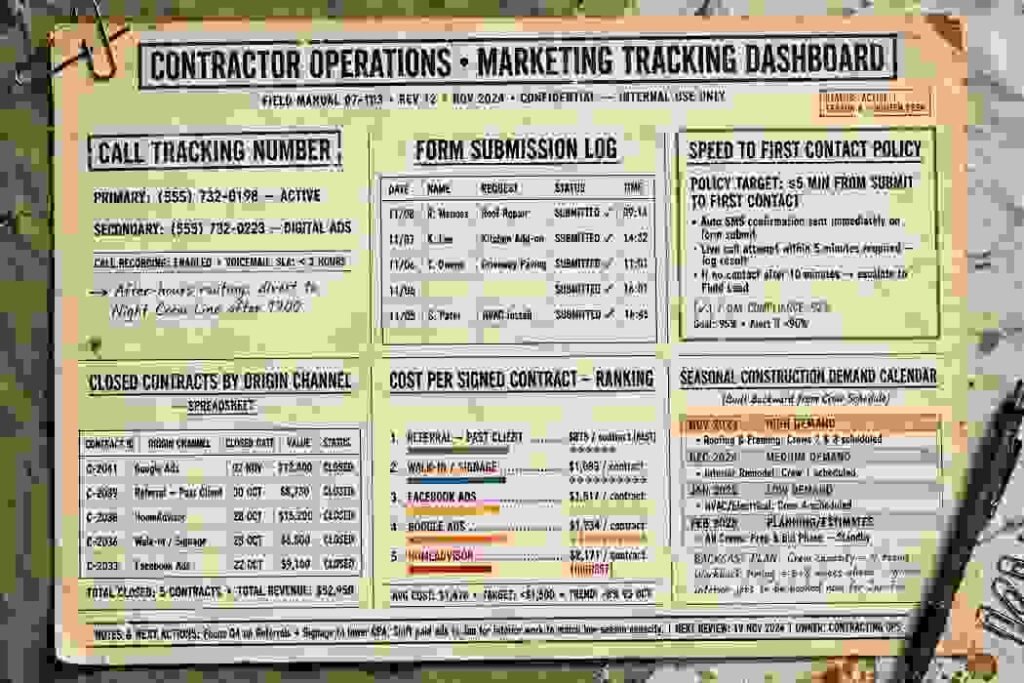
Marketing without measurement becomes a guessing game funded by the estimating team’s margin. The minimum viable tracking setup is a call tracking number on the website and ads, a form submission log with source attribution, and a simple spreadsheet that ties each closed contract back to its origin channel.
Review the numbers monthly and rank channels by cost per signed contract rather than cost per lead, since a channel producing cheap leads that never close is worse than one producing expensive leads that sign at a high rate. The U.S. Census Bureau construction data can provide market context for seasonal swings, which prevents panic decisions during predictable slow periods.
Any channel that has produced no signed contract after ninety days of reasonable spend should be cut or restructured. That discipline is what separates builders who grow from those who keep asking how do i market my building company while rotating through vendors every year.
A practical starting allocation for a builder doing between $1 million and $5 million in annual revenue looks roughly like this: forty percent to local search and the Google Business Profile work, twenty five percent to referral relationship maintenance including events and small gifts, twenty percent to content production, and fifteen percent held in reserve for seasonal pushes or a new market entry.
That mix shifts as the pipeline matures. Referral-driven builders eventually reduce paid search and put more weight on content and trade relationships, while builders entering a new county lean heavier on paid search for the first year to generate awareness quickly. The allocation should be revisited quarterly against actual cost per signed contract.
Owners who ask how do i market my building company often assume the answer is to hire an agency, and sometimes it is. Framing content around critical buyer decisions, such as new construction vs. resale, is an effective strategy, but the distinction comes down to whether the company has someone who can produce accurate technical content and manage vendor relationships, or whether that responsibility will fall to an already overloaded project manager.
An agency works best when the scope is narrow and measurable, such as local paid search management or review generation. It works poorly when the scope includes content production, because agencies rarely understand construction sequencing well enough to write credibly about it. The middle path is a part-time marketing coordinator who handles scheduling, publishing, and vendor coordination while the owner or a senior estimator supplies the technical substance.
Whichever route is chosen, the builder must retain control of the message and the customer data. Any vendor that owns the website domain, the review profile, or the ad account creates a risk that surfaces the day the contract ends.
Construction demand has a rhythm that marketing should follow rather than fight. In most climates, inquiries for exterior work spike in late winter and early spring, while interior remodeling inquiries hold steadier through the colder months. Budgeting the same spend every month ignores that pattern and leaves the company paying premium rates during low-intent periods.
The calendar should be built backward from the crew schedule. If the company wants a full spring backlog, the marketing push needs to begin in January and February, which means the content and creative should be produced in the fourth quarter of the prior year. Builders who ask how do i market my building company in March are already late for the season they are trying to capture.
Pre-season planning also gives the estimating team time to respond quickly when inquiries arrive, and speed of response is one of the strongest predictors of whether a lead converts. A builder who answers within an hour wins against one who answers the next day, regardless of price.
Speed to first contact determines whether marketing spend turns into revenue. Every inquiry should trigger an immediate acknowledgment, a scheduled call, and a follow-up sequence that continues for at least two weeks. Construction buyers shop multiple contractors, and the one who responds first usually sets the frame for the entire conversation.
Builders who fix their response time before increasing their ad budget often find the same spend produces more signed contracts, because the leads were always there and simply went cold in the inbox. That single operational fix is the cheapest answer to how do i market my building company that exists, and it costs nothing but a phone policy.
Marketing a building company comes down to disciplined geography, documented work, and a response system that treats every inquiry as a perishable asset. Builders who build that system first will out-earn competitors with larger budgets, and they will stop asking the question altogether once the calendar fills on its own.