 11
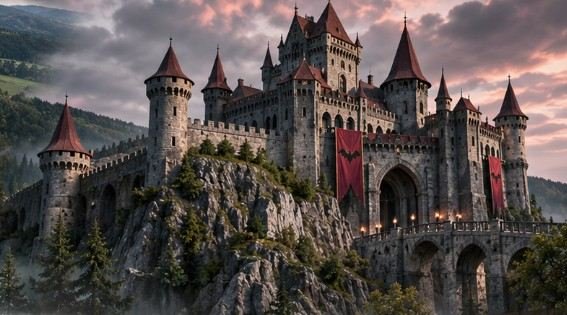
The question of whether Romania is actively building a Dracula theme park has a short answer and a long one, and the short answer is no, not in the sense most people imagine. There is no bulldozer push on a Transylvanian hillside right now, no steel rising beside a forest road, no signed global operator with a construction timeline pinned to a wall.
What exists instead is a two decade trail of proposals, feasibility studies, political reversals, and one persistent tourism problem that no developer has managed to solve with concrete and steel.
The search phrase “is romania building a dracula theme park” gets typed thousands of times a month, mostly by travelers chasing a legend, and what they land on is usually rumor recycled as news. This piece pulls the record apart: what was actually proposed, where it stalled, what the Romanian state and private investors have done since, and what any real entertainment venue in that region would have to confront before a single foundation is poured.
The modern trail starts in the early 2000s, when Romanian tourism officials floated a large scale entertainment complex tied to the Dracula brand. The favored site sat near Sighisoara, the walled medieval town in Mures County where Vlad III was born, and the concept was pitched as an anchor attraction capable of pulling international visitors deeper into Transylvania rather than letting them skim through Brasov and Bucharest in three days.
Government bodies at the county and national level backed early studies, and for a stretch it looked like a genuine public private venture with real money behind it.
It did not happen. Bran Castle, the fortress most tourists associate with the novel, sits in a different county entirely, and local officials there had their own ideas about where visitor traffic should land. Environmental groups objected on heritage and forest grounds. The financing never closed.
By the mid 2000s the project had become a political football, and Romanian administrations since have shown no appetite to restart it as a state led build. Anyone typing “is romania building a dracula theme park” and expecting a construction update is really reading the tail end of a story that peaked two decades ago.
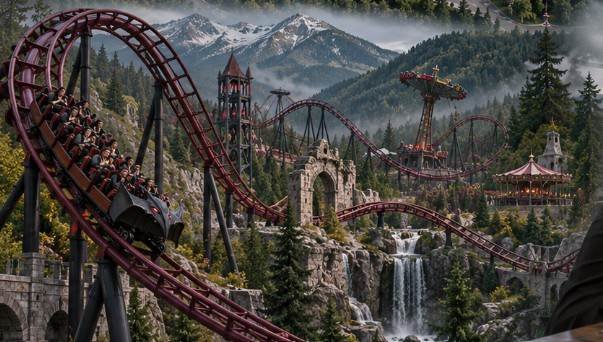
As of now the national government has no approved budget line, no tendered construction contract, and no designated development zone for such a venue.
The Ministry of Economy, Entrepreneurship and Tourism has focused instead on rural tourism, spa towns, and cultural routes, and its public materials do not list a Bran or Sighisoara theme park among active investments. That is the operational answer to is romania building a dracula theme park: the state is not, and it has not been for years.
Private development has not filled the gap either. The Bran area has accumulated small scale attractions over the years, including a vampire themed hotel and various seasonal experiences tied to the castle, but nothing at the scale of an amusement park with rides.
Bran Castle itself is privately operated by the Habsburg family estate, and its strategy has been tightly focused on restoration, exhibitions, and direct ticket revenue rather than capital intensive theme park construction.
A proper park needs water infrastructure, road capacity, parking for thousands of vehicles, and year round staffing, and none of those conditions are being assembled on any publicly visible timeline.
Regional tourism authorities have periodically raised the possibility again, usually around election cycles or during slow tourist years, and those statements tend to generate headlines that read as if a project is imminent.
Read the source documents and the language is conditional throughout: potential, exploratory, feasibility stage. That distinction matters for anyone tracking the question of is romania building a dracula theme park, because a press release is not a building permit.
The clearest way to understand why this project has never advanced is to compare the skeleton proposal with an actual operating attraction of similar ambition. The gap is not in ambition. It is in the boring parts nobody writes press releases about.
| Project Element | Proposed Dracula Park (Sighisoara area) | Operating European Theme Park (Typical)
|
|---|---|---|
| Land status | Contested, no consolidated title | Assembled and zoned before construction |
| Financing | Public pledges, no closed funding | Committed equity plus bank facility |
| Environmental review | Objections filed, unresolved | Completed with conditions and monitoring |
| Road and utility access | Unassessed at the proposed site | Upgraded arterial and service connections |
| Operating partner | None named | Operator with multi site track record |
| Seasonality plan | Absent | Indoor and event programming for winter |
Every row on the left represents a failure point where the project has historically stopped. The Romania Insider archive has tracked these stops in detail over the years, and the pattern repeats: an announcement, a study, a public backlash over site selection, then silence. Construction professionals reading this will recognize the sequence as a development that never cleared feasibility, much less preconstruction.
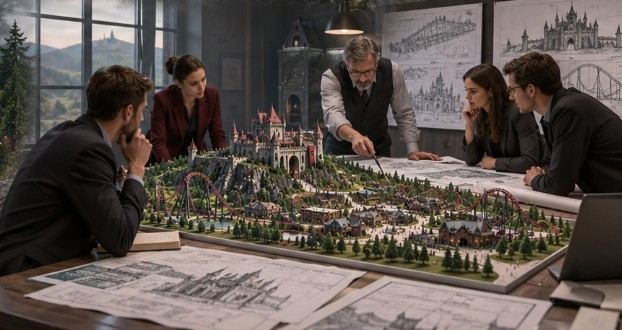
Sighisoara wanted the park. Bran wanted the park. The two counties spent years arguing about which one had the stronger claim to the Dracula brand, and that argument alone sank more momentum than any environmental objection.
In construction terms, a project cannot reach the design development phase while the client is still fighting over the parcel, and Romanian local politics made the parcel an identity question rather than an engineering one.
Bran sits close to Brasov with existing highway access and a hospitality base that already absorbs around half a million visitors a year at the castle gate, according to figures the Bran Castle administration has published. Sighisoara holds the stronger historical claim through Vlad III and the citadel itself, which is a UNESCO listed monument.
Both arguments are correct, which is exactly why neither side would concede, and a compromise site chosen for neither heritage nor infrastructure killed the political will that remained.
The Sighisoara area proposals drew organized opposition from Romanian environmental groups concerned about forested land and the visual impact on a medieval citadel landscape that draws visitors precisely because it looks untouched.
UNESCO buffer zone considerations entered the discussion as well, and a developer who proposes a roller coaster adjacent to a listed historic core is inviting a review process measured in years. That is not obstruction for its own sake. It is the standard planning reality for any large venue near protected heritage, and it is why serious operators scope such sites long before they announce.
A viable attraction in Transylvania would need to clear a sequence that has nothing to do with vampires and everything to do with how construction projects get built.
None of those prerequisites are exotic. They are the same items any contractor prices on a commercial job, just larger. The reason the Dracula park never advanced is that the project consistently skipped to the brand and the press conference while leaving the parcel, the utilities, and the operator unresolved, and no amount of mythology substitutes for a signed ground lease.
Here is the fact that quietly explains why the park has stayed dead: the region already captures the spending. Bran Castle reports robust annual visitor numbers, and the surrounding town runs a dense market of souvenir stalls, guesthouses, and restaurants that operate on a fraction of the capital a theme park would demand.
Local operators have no incentive to compete with a subsidized attraction that could cannibalize their season, and county officials have noticed that the castle plus the medieval towns deliver tourist revenue without a construction risk attached.
The broader Romanian tourism sector has been growing on that model, with international arrivals climbing steadily in recent years, and the national tourism strategy has leaned into cultural and nature routes rather than marquee built attractions.
The World Bank country data on Romania shows the economy has shifted toward services and IT, which means tourism competes for public investment against sectors with louder political constituencies. A theme park built by the state was always going to lose that fight.
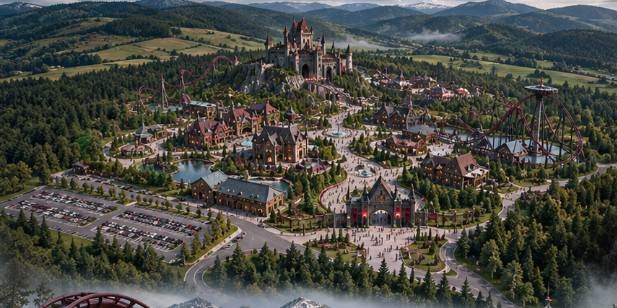
Every few years, headlines revive claims about a Dracula theme park in Romania. These reports often originate from tourism conferences or statements by local officials.
To verify whether Romania is building a Dracula theme park, check three important documents:
Without these records, the project may remain a proposal rather than an active development. Romania has seen several ambitious tourism projects stall before construction.
Travelers should confirm the park’s construction and opening status before making reservations.
Romania already offers memorable Dracula-related attractions. Visitors can explore Sighișoara’s medieval citadel, Bran Castle, and the scenic Carpathian Mountains.
These destinations provide authentic historical experiences without relying on uncertain theme park plans.
Travelers who book trips based on unverified announcements may face disappointment. Checking official project updates helps avoid confusion and unrealistic expectations.
Three conditions would flip the answer from no to yes, and each is measurable. A private operator with theme park experience would need to take the lead rather than a government ministry, because the capital requirement is far beyond what any Romanian county budget can carry.
A site outside the UNESCO buffer zones with existing road access would need to be secured, which points toward the Brasov corridor rather than the Sighisoara citadel. And a financing structure combining private equity with EU regional development funds would need to close, since Romania has been a significant recipient of EU structural funding and regional tourism infrastructure has drawn on it before.
The EU angle is worth watching because EU regional policy funding has supported tourism infrastructure across member states, though large amusement venues rarely qualify on their own and usually need a broader regional development framing.
Even with that support, no application is public, no beneficiary is named, and no timeline exists. The Romanian government’s own tourism materials continue to emphasize heritage and rural stays, which is the practical signal that the park sits outside current policy priorities.
The original Dracula park proposal near Sighișoara failed to advance for two decades. However, newer private development plans have renewed interest in the concept.
Meanwhile, construction opportunities across Transylvania include hotel renovations in Brașov and guesthouse developments near Sibiu. Other projects involve road improvements and converting historic Saxon houses into boutique accommodations.
These projects offer established commercial opportunities without depending on uncertain theme park announcements.
Developers planning attractions in Transylvania must consider heritage regulations, utility upgrades, and seasonal tourism revenue. They should also prepare for lengthy permitting processes and substantial infrastructure costs.
The question “Is Romania building a Dracula theme park?” will continue attracting attention as new proposals emerge. However, developers should verify land ownership, financing commitments, and construction permits before treating any project as confirmed.
Focus on official permits and construction contracts rather than promotional announcements.