
 11
Building codes are the minimum legal standards a structure must meet for safety, sanitation, and structural integrity, adopted by a government authority and enforced through the permit and inspection process. That definition sounds dry until a project stalls because a foundation detail does not match the adopted edition, or a buyer’s lender refuses to close on a house that never received a certificate of occupancy.
When people ask what are building codes, the honest answer is that they are the rulebook nobody reads until it costs them money, and the cost of ignoring them runs from a few hundred dollars in reinspection fees to a full demolition order.
This guide strips the topic down to what actually matters on a job site and at a closing table: where the rules come from, who enforces them, how they differ by jurisdiction, and what happens when a building goes up without them.
The United States does not have a single national building code. Codes are adopted at the state or local level, and most jurisdictions start from model codes written by private organizations and then amend them to fit local conditions. The dominant model documents today come from the International Code Council, which publishes the International Residential Code for one and two family dwellings and the International Building Code for everything larger. The International Code Council maintains the full catalog and the revision cycle behind those documents.
Fire prevention rules trace back further, and the National Fire Protection Association still publishes the electrical and life safety standards that many jurisdictions fold into their local amendments. A jurisdiction might adopt the 2021 edition of a model code with a dozen local amendments covering everything from snow load to wildfire hardening, which is why two towns forty miles apart can demand different wall assemblies for the same house.
The important structural fact about what are building codes is that they are adopted, not imposed from above. A state legislature or a city council votes to adopt a model code, sometimes with a lag of several years behind the newest edition, and that vote is what gives the document the force of law.

A code with no enforcement is a suggestion. Enforcement runs through a sequence that most owners only experience as a series of fees and waiting periods. The chain generally follows this order:
Skipping a step does not make the requirement disappear. It surfaces later, usually during a sale, a refinance, or an insurance claim, when a title company or inspector asks for the final sign off and there is none to produce.
Owners frequently blur together three sets of rules that have almost nothing in common. Building codes govern how a structure is built. Zoning governs what can be built where, including use, setbacks, height, and density. Private covenants and deed restrictions are contractual limits recorded against a property, enforceable by neighbors rather than by the city.
A project can satisfy the code completely and still be illegal under zoning, or satisfy both and violate a subdivision covenant that limits fence height or bans detached workshops. Although underwater tunnel construction involves a very different approval process, it illustrates the same principle: technical compliance alone does not establish permission to build. Confusing what are building codes with zoning rules is one of the most common reasons a homeowner buys a lot that turns out to be unbuildable for their intended plan.
The table below summarizes the major categories a residential or light commercial project touches, along with the practical consequence of each on a job site. None of these are interchangeable, and a single project usually answers to all of them at once.
| Code category | Typical source | What it governs | Practical impact on a project
|
|---|---|---|---|
| Structural | International Residential Code, International Building Code | Foundations, framing, wind and seismic loads | Drives engineering stamps and design changes for unusual spans |
| Electrical | National Electrical Code published by NFPA | Wiring methods, panel sizing, grounding | Requires licensed electrician sign off before wall close up |
| Plumbing and mechanical | International Plumbing and Mechanical Codes | Pipe sizing, venting, HVAC equipment clearances | Common source of failed rough inspections |
| Energy | International Energy Conservation Code | Insulation values, window ratings, air sealing | Can raise material costs and changes wall assembly design |
| Fire and life safety | NFPA standards and local fire marshal amendments | Egress, sprinklers, alarms, separation distances | Most relevant to additions, multi family, and commercial work |
The modern code system grew out of urban fire disasters, and fire remains the clearest justification for the rules. The U.S. Fire Administration tracks residential fire loss nationally, and the pattern that shows up year after year is that failures in electrical work and egress are the differences between a contained fire and a fatal one. Codes exist because the market, left alone, would not consistently produce safe buildings, and because a buyer cannot inspect the wiring inside a wall before closing.
There is a financial argument alongside the safety one. Insurers price policies around construction quality, and an unpermitted addition discovered after a loss is grounds for denial. Lenders treat missing certificates of occupancy as a title defect. Understanding what are building codes in that context turns the topic from bureaucratic trivia into a question of whether a property can be sold, financed, and insured.

Adoption is local, so variation is the rule rather than the exception. Three patterns dominate:
Edition lag matters as much as the amendments. A jurisdiction still working from an older edition will not recognize newer methods or materials, while one that adopts early may require construction details that local subcontractors have not built before. Any serious question about what are building codes for a specific address has to be answered by the authority having jurisdiction, not by a general guide or a forum thread.
The authority having jurisdiction is the office that interprets and enforces the adopted code. In practice that means a city or county building department, sometimes alongside a fire marshal with independent authority over life safety items. Most departments publish their adopted edition, amendment list, permit forms, and inspection checklists online, and a phone call to the permit counter resolves questions faster than any secondary source.
Before buying a lot or signing a construction contract, confirm which office holds jurisdiction, which code edition is in force, and what the office requires for plan review submittal, because those three answers shape both the schedule and the budget more than any material selection will. The impact of COO in construction becomes clear when the chief operating officer coordinates these requirements across estimating, scheduling, and project delivery teams.

Code compliance adds cost, and pretending otherwise misleads owners. Engineers for unusual structures, energy code driven insulation upgrades, arc fault protection on residential circuits, and protected egress windows in basement bedrooms all carry price tags. The offsetting reality is that the inspections are cheap relative to the corrections they force later, and the resale value of a documented, permitted project consistently beats an undocumented one.
Schedule matters just as much. Plan review queues can run weeks in busy jurisdictions, and a failed rough inspection adds a reinspection cycle that pushes every trade behind it. Builders who phone in bribe requests or try to rush inspection timing learn quickly that the department controls the calendar, which is why experienced builders build the inspection sequence into the contract schedule rather than treating it as an afterthought.
The most expensive conversation in residential construction starts when someone discovers that prior work was never permitted. Correction paths vary by jurisdiction but generally follow one of two routes: a retroactive permit with inspections and possibly destructive access to verify concealed work, or a full removal and rebuild if the work cannot be verified. Neither is cheap, and both delay sales, so a buyer’s inspection contingency should always include a permit history search at the local building department.
Any reader still unclear on what are building codes should treat them as the boundary condition of every project, not a bureaucratic wrapper around it. The U.S. Department of Housing and Urban Development publishes guidance on code adoption and manufactured housing standards that illustrates how federal, state, and local authority combine on a single structure, and that layering is what makes the system messy and durable at the same time.
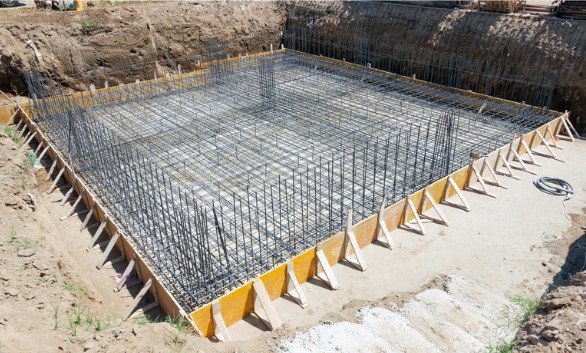
The next code edition is already in draft, and the amendments attached to it in your jurisdiction will be written by people who never set foot on your job site. Pull the adopted edition for your address before the first foundation is poured, because by the time an inspector finds the discrepancy, the concrete is already cured.