 11
The question of how many people died building famous landmarks has no clean master ledger, and anyone who hands you a single round number is selling fiction. Death tolls from the great construction campaigns of the nineteenth and twentieth centuries were tallied by contractors with an interest in keeping them low, by coroners with inconsistent jurisdictions, and by newspapers that only counted a body when it was white, local, and dramatic.
What survives is a patchwork of company payroll records, municipal death registers, and investigative commissions, and the honest way to read that patchwork is by separating hard counts from estimates.
Ask how many people died building famous landmarks and most people expect a number. What they get instead is a lesson in how industrial construction actually worked: compressed schedules, negligible safety regulation, and labor forces treated as consumable.
For anyone in the building trades today, that history is not morbid trivia. It is the baseline against which every modern safety standard, incident report, and fall protection requirement gets measured.
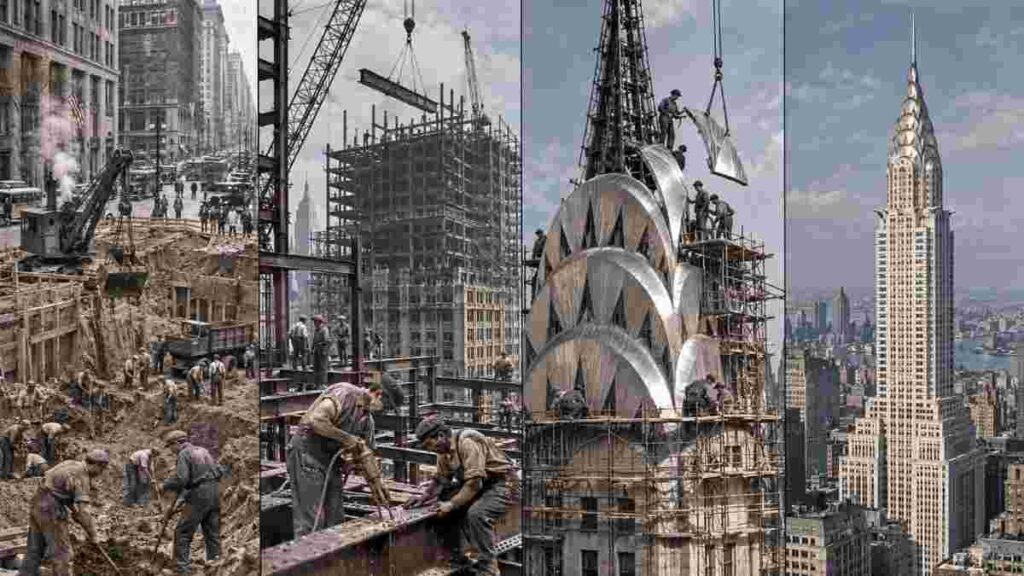
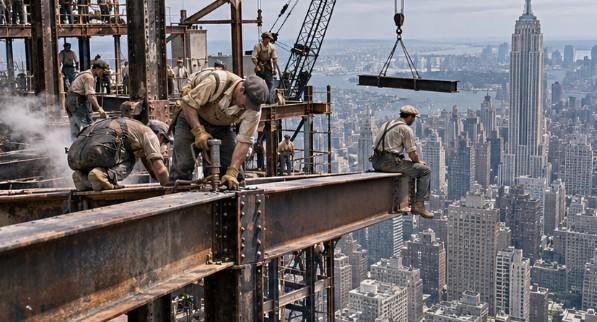
The landmarks with the most defensible death counts share one trait: someone kept a formal personnel record. The Empire State Building is the clearest case because the project ran under a general contractor that tracked its workforce, and the commonly cited figure of five workers killed during construction comes from those project records and contemporary press accounts.
Five deaths across thirteen months and roughly 3,400 workers is still a staggering rate by any modern measure, and it is a fraction of what earlier projects absorbed.
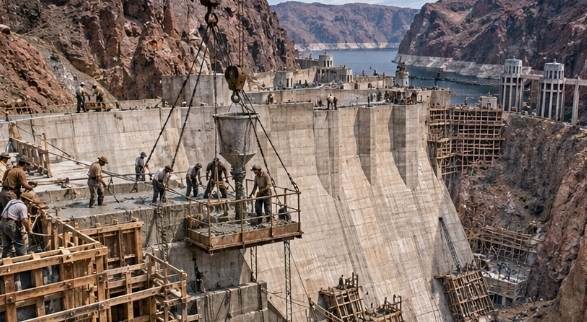
The Hoover Dam sits at the opposite end of the certainty spectrum. The Bureau of Reclamation’s own history notes that officially 96 workers died during construction between 1931 and 1936, and that figure has been disputed ever since because it excluded deaths from causes like heat stroke, pneumonia, and carbon monoxide exposure that were ruled unrelated to the job.
Historians, including those who maintain the Bureau of Reclamation’s Hoover Dam history archive, have argued the real number is meaningfully higher. The official count is a floor, not a total.
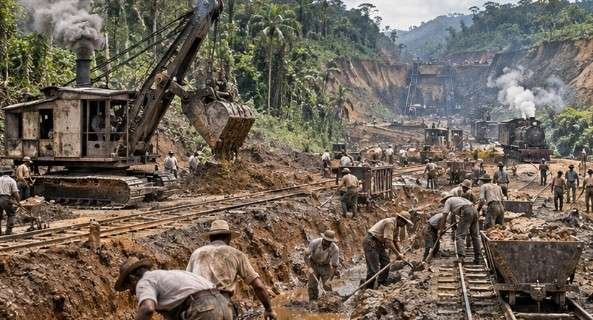
Nothing in the industrialized world approaches the Panama Canal for sheer mortality during a construction campaign. The French attempt under Ferdinand de Lesseps between 1881 and 1889 lost somewhere between 20,000 and 25,000 workers, most of them to yellow fever and malaria before anyone understood mosquito transmission.
The American effort that followed, beginning in 1904, lost roughly 5,600 more, and that lower number is directly attributable to sanitation work led by Dr. William Gorgas, who drained standing water and screened housing before major excavation began.
The Suez Canal, completed in 1869 under similar forced-labor conditions, is often cited with a death toll in the tens of thousands, though the records are far weaker and much of the labor was corvée conscription rather than wage employment.
When people ask how many people died building famous landmarks, they usually have canal-scale disasters in mind, and the honest answer is that the largest campaigns are precisely the ones where documentation failed first.
The American skyscraper boom produced better data because unions, insurance carriers, and city coroners all had reasons to count. A few figures worth knowing:
| Landmark | Construction Period | Reported Deaths | Record Quality
|
|---|---|---|---|
| Empire State Building | 1930 to 1931 | 5 | Strong, contractor records |
| Golden Gate Bridge | 1933 to 1937 | 11 | Strong, project and union records |
| Hoover Dam | 1931 to 1936 | 96 official, higher estimated | Disputed, causes reclassified |
| Panama Canal (US phase) | 1904 to 1914 | ~5,600 | Moderate, hospital and commission records |
| Panama Canal (French phase) | 1881 to 1889 | 20,000 to 25,000 | Weak, estimated from hospital returns |
| Brooklyn Bridge | 1869 to 1883 | At least 20, likely more | Weak, caisson disease undercounted |
| Burj Khalifa | 2004 to 2010 | At least 1 reported, widely disputed | Very weak, no public register |
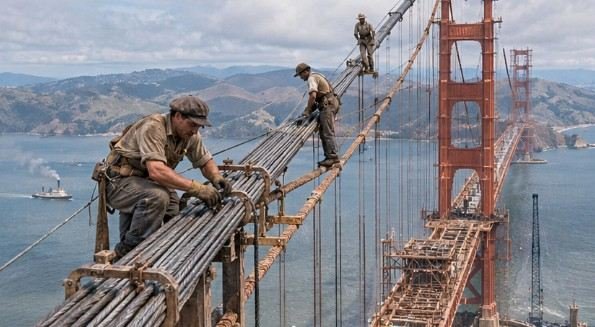
The Golden Gate Bridge figure of 11 deaths is unusually well documented because the project’s safety net, installed late in the schedule, saved 19 men and created a documented “halfway to hell club.” The Bridge’s own statistics and research archive maintained by the Golden Gate Bridge Highway and Transportation District records both the deaths and the rescues, which is rare candor for a public agency.
Two forces pull the counts in opposite directions. The first is that modern projects are genuinely safer, and the gap is enormous. A worker on the Burj Khalifa in 2008 faced fall protection, scaffolding standards, and on-site medical response that the Empire State crew could not have imagined.
The second force is reporting: Gulf states, China, and much of the developing world do not publish worker fatality registers for major projects, so a low number sometimes reflects a low count rather than a low toll.
Anyone asking how many people died building famous landmarks should treat any figure from a country without an open fatality reporting regime as an estimate with a wide error bar. The Burj Khalifa is the standing example. The project’s contractors publicly disputed reports of a single fatality, and no independent register exists to confirm or refute the claim.
The Brooklyn Bridge deaths are the most instructive case for contractors because the killer was a process, not an accident. Workers descending into pressurized caissons to excavate the riverbed developed what was then called caisson disease, now known as decompression sickness.
Washington Roebling, the chief engineer, was himself disabled by it. The condition was poorly understood, the deaths were often recorded as “paralysis” or “rheumatism,” and the true toll is almost certainly higher than the 20 or so names that can be confirmed. Process hazards kill quietly and get miscoded, which is exactly the failure mode modern incident investigation exists to prevent.
Construction fatality rates in the United States have fallen from catastrophic to merely unacceptable, and the decline is measurable. The U.S. Bureau of Labor Statistics publishes annual census data on fatal occupational injuries, and the construction sector consistently accounts for a disproportionate share of them despite representing a small fraction of total employment.
The BLS Census of Fatal Occupational Injuries is the reference document for anyone who wants to understand what a real, audited death count looks like, and its existence is the reason future historians will not have to guess at our numbers.
Falls remain the leading cause of death in construction, which is why fall protection sits at the top of OSHA’s most-cited violations year after year. The Empire State Building’s five deaths would today trigger a federal investigation, a public incident report, and likely a project shutdown. That difference is the answer to a question nobody asks directly but everyone implies: how many people died building famous landmarks is a function of era, not luck.
For buyers and developers evaluating a project today, the relevant question is not historical. It is whether the general contractor carries a documented safety program with incident tracking, toolbox talks, and a competent person on site for every high-hazard task.
That paperwork is the reason a modern high-rise can be built with a fraction of the losses that attended the great projects of the last century, and it is one of the few places where a contractor’s administrative burden translates directly into lives.
Several famous landmarks have uncertain death tolls due to incomplete historical records. The Great Wall of China took nearly 2,000 years to build under different dynasties.
Many laborers were conscripted workers or prisoners. Although some accounts suggest hundreds of thousands died, no reliable records confirm these figures.
The Pyramids of Giza also have disputed construction death tolls. Similarly, the Colosseum relied heavily on enslaved labor, but Roman records provide little information about worker fatalities.
Historical records become less reliable when workers lack legal rights or recognition. As a result, historians often rely on estimates rather than documented figures.
Claims about construction deaths at these ancient landmarks should be treated cautiously unless supported by credible historical evidence.
Several failure modes recur in popular accounts of landmark mortality, and anyone researching how many people died building famous landmarks should watch for them:
The most reliable figures come from projects with three attributes: an organized workforce with union or guild representation, a municipal or federal death registration system, and an investigative press. The Empire State Building, Golden Gate Bridge, and Hoover Dam all meet at least two of those conditions, which is why their numbers keep getting cited while the pyramids’ do not.
The historical death tolls of famous landmarks are not a curiosity for history buffs. They are a map of how construction kills people, drawn over two centuries. Caisson disease killed Brooklyn Bridge workers because nobody understood pressure physiology. Heat and carbon monoxide killed Hoover Dam workers because the schedule overrode the body. Falls killed skyscraper workers because scaffolding was ad hoc until regulators forced standards.
Modern safety measures address these historical construction hazards. Many improvements emerged after investigators documented worker fatalities and identified their causes.
Understanding how many people died building famous landmarks highlights the importance of modern construction safety systems. Contractors now use safety programs, incident reports, and fall protection plans to prevent workplace accidents.
These records help companies identify risks, improve worker protection, and maintain accountability. Accurate documentation also ensures future generations can understand the true human cost of major construction projects.
Contractors who neglect safety reporting risk repeating historical mistakes and leaving important fatalities undocumented.