
 11
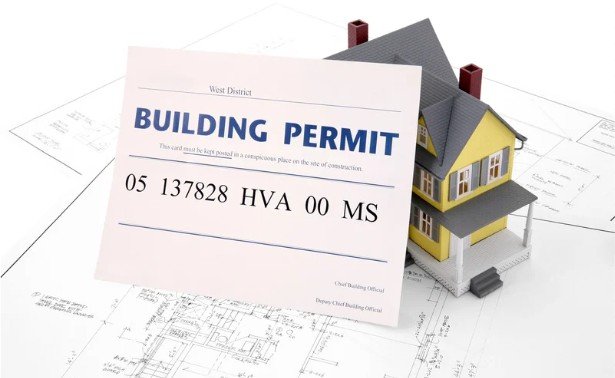
Most homeowners guess wrong on permit fees by a wide margin, and the error runs in both directions. Some assume the permit is a few hundred dollars of paperwork, while others brace for thousands and stall the project over a number that turns out to be modest. The honest answer to how much does a building permit cost is that the fee is a formula, not a price tag, and the formula lives in your local jurisdiction’s adopted fee schedule.
A typical residential permit for a deck, a shed, or a small addition lands somewhere between $150 and $1,500 in most American cities, while a full new home permit can run into the several thousands once plan review, impact fees, and inspection charges are stacked on top. The variance is not noise. It is policy.
Pacific Construction Builders works in a market where no two adjacent municipalities price the same scope of work identically, and that reality shapes every early budget conversation. Owners who understand the machinery behind permit pricing negotiate their projects with clearer eyes, and they avoid the classic mistake of treating the permit line as a fixed cost when it is really a variable tied to valuation, square footage, and local politics.
The fastest way to estimate how much does a building permit cost for a specific job is to sort projects by type, because most fee schedules are built around categories rather than a single flat rate. A deck permit is not priced like a kitchen remodel, and a kitchen remodel is not priced like a new single family dwelling. The table below reflects common ranges drawn from published municipal fee schedules, and it should be treated as a starting band, not a quote.
| Project Type | Typical Permit Fee Range | Common Fee Basis
|
|---|---|---|
| Deck or patio cover | $100 to $500 | Flat fee or valuation tier |
| Shed or detached accessory structure | $75 to $400 | Square footage threshold |
| Interior remodel (non structural) | $200 to $1,200 | Percentage of declared valuation |
| Roof replacement | $100 to $450 | Flat fee or square footage |
| Fence or retaining wall | $50 to $350 | Linear feet or height |
| Addition or major structural change | $600 to $3,500 | Valuation percentage plus plan review |
| New single family home | $2,000 to $15,000+ | Valuation, square footage, impact fees |
| Commercial tenant improvement | $1,000 to $25,000+ | Valuation percentage, occupancy, fire review |
Those bands widen dramatically in high cost coastal metros and in jurisdictions that layer school district fees or utility connection charges onto the base permit. A new home permit in a fast growing suburb with new sewer capacity to fund can cost several times what the same house would trigger in a rural county with no impact fee program at all. Builders who price a project in one county and build it in another learn this lesson the expensive way.
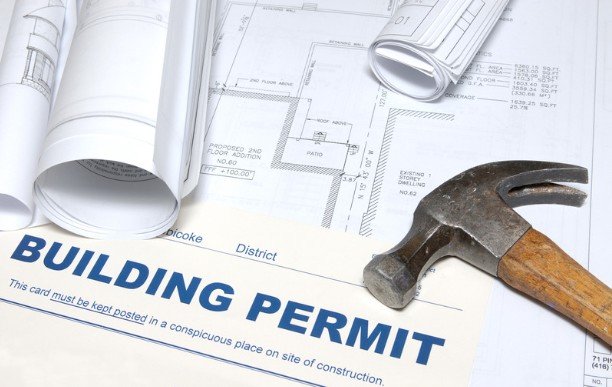
Almost every building department computes its fee from one of three methods, and knowing which one your city uses tells you how much does a building permit cost before you ever call the counter. The valuation method takes the declared construction value from your application and applies a rate per thousand dollars, often with a sliding scale that charges less per thousand as the project grows. The square footage method charges by area, which is common for additions and new dwellings. The flat fee method charges a set number per permit type, frequently used for decks, roofing, and minor mechanical work.
Plan review is usually billed separately from the permit itself, and it is where budgets quietly bleed. Many departments charge a percentage of the base permit fee for review, sometimes 25 to 65 percent depending on scope and whether the project requires architectural or engineering stamps. Inspections may be bundled into the permit or billed per visit after a certain number of trips, and re-inspection fees for failed or missed appointments are common.
The International Code Council maintains the model codes that most jurisdictions adopt, and while the code itself does not set fees, local adoption of those codes is what triggers the inspection regime that the fees fund. The ICC publishes adoption data and code resources at iccsafe.org for anyone who wants to trace how a local ordinance connects back to the model code.
The declared valuation number on the application carries more weight than most owners realize. Understate it and the department may reject the application or reassess the permit after the fact, sometimes with a penalty. Overstate it and you simply hand over more money than you needed to. Many cities publish their own valuation tables to keep applicants honest, and some require a copy of the construction contract as backup. The best practice is to declare accurately, document the contractor bid, and ask the plans examiner directly if the submitted valuation will be accepted before paying.
Impact fees are the line item that separates a modest permit from a painful one. These charges fund roads, schools, parks, and water capacity in growing areas, and they are often collected at permit issuance rather than later in the process. They can dwarf the actual building permit fee for a new dwelling, and they vary block by block in some jurisdictions depending on the service area. Home builders in expanding metros should request the impact fee schedule before land is even under contract, because the fee can reshape the feasiblity math on a lot.
Regional variance is real and often large. Cities that publish their fee schedules make comparison easy, and a few of those documents are worth reading directly. The City of Los Angeles publishes its building and safety fee schedule through its Department of Building and Safety at ladbs.org, and the diff between a routine residential job there and a similar job in a smaller inland city can run several hundred dollars on a project of identical scope. The U.S. Census Bureau tracks construction spending and permit volumes nationally through its construction data at census.gov, which is useful context for understanding why growing metros keep raising fees: permit volume is a leading indicator of infrastructure strain.
Owners comparing bids across states should also account for the cost of compliance work that comes alongside the permit. Engineering stamps, energy code documentation, and survey requirements are more demanding in some jurisdictions than others, and the total out of pocket for getting a permit in hand reflects all of those costs, not just the fee printed on the receipt. When someone asks how much does a building permit cost in California versus Texas versus Florida, the honest answer involves the surrounding professional services as much as the department’s own rate card.

Base fees are only part of the story, and owners who budget only the base fee end up surprised at closing. Here are the charges that commonly attach to a permit:
Owners asking how much does a building permit cost should ask it as a total preconstruction outlay question, because the permit desk is only one stop in a longer sequence. Projects involving open concept floor plans may also require structural assessments and engineered drawings when removing load-bearing walls. The full preconstruction spend is what should be reserved at the front of the budget, not just the base fee line.
Payment responsibility is set by contract and by local practice rather than by law. Many general contractors roll the permit into the contract as an owner cost, paid at issuance either directly by the owner or by the contractor and reimbursed. Some jurisdictions accept payment only from the licensed contractor of record, which can complicate matters when the owner is pulling an owner builder permit.
Others require an owner signature for any permit on owner occupied residential property. The cleanest approach is to agree in writing before the first application who files, who pays, and who holds the permit, because that decision affects liability, insurance, and who can legally direct changes in the field.
Permit expiration rules also deserve an early read. Most permits expire after six to twelve months of inactivity, and renewal often requires a new fee or a fresh review. On a project with long lead times for materials or a sluggish subcontractor sequence, an expiring permit becomes a real cost rather than a technicality.

The realistic ways to lower the number are about accuracy and timing more than negotiation. Submit a clean application with correct valuation and complete drawings, because rejected submittals generate resubmission fees and burning days. Pull permits in the right sequence so that a single combined plumbing and mechanical filing does not become three separate reviews on the same job.
Schedule inspections carefully, since missed inspection windows can trigger re-inspection charges, and the money lost to those fees usually dwarfs any savings from cutting the permit scope. If the project includes changes to the building facade design, confirm which reviews and inspections apply before finalizing the schedule. Ask the department whether an expedited review is available for a fee and whether it is worth the premium on a timeline sensitive job, because in busy cities the premium is often cheaper than the carrying cost of a delayed start.
Where the scope is genuinely small, some jurisdictions offer over the counter permits with reduced review, and the fee is correspondingly lower. That path is worth checking specifically when the work is a fence, a small shed, or a routine water heater swap, because the standard plan review charge sometimes exceeds the permit fee itself on tiny jobs. Anyone weighing whether a job needs a permit at all should confirm the threshold with the local department directly, since the work that triggers a permit is defined locally and the penalty for skipping a required permit adds inspection charges and possible work stoppage on top of the fee.
None of these tactics change the answer to how much does a building permit cost in the abstract, but each one reduces the final number a real project pays. Builders who know the local fee schedule and the review process inside out typically save far more on a typical project than a homeowner will ever save by shopping for a cheaper permit drawer.
Three misunderstandings show up repeatedly in early budget meetings. The first is that the permit fee is negotiable with the department, which it is not: the fee schedule is adopted by ordinance and applied uniformly. The second is that the permit covers all inspections, which it usually does not if the project requires utility or fire authority reviews.
The third is that an owner builder permit costs less than a contractor permit, which is sometimes true and sometimes false depending on the jurisdiction, and which ignores the tradeoff in time, liability, and access to professional insurance. The real question is not whether an owner builder permit is cheaper on paper, but whether the owner can absorb the schedule risk that comes with it.

A short list of questions before filing will settle most of the uncertainty. Ask the department for the adopted fee schedule in writing and check its effective date, because schedules update annually and a stale copy misleads. Confirm whether the valuation method, square footage method, or flat fee method applies to your project type. Ask what a typical plan review cycle costs and how long it runs.
Ask whether impact fees or utility charges attach and when they are due. Ask whether a permit extension is allowed and what happens if the job pauses. Verify whether the contractor or the owner must pay. Each of those answers shifts the final number, and none of them are guesses a builder should make in the dark.
For owners comparing construction types, the permit cost also interacts with design decisions in ways that rarely get discussed up front. Modular and prefab assemblies sometimes move review into a state level process that changes the fee structure entirely, while site built structures stay inside the local department’s rate table.
Anyone evaluating a factory built option should ask the dealer how the permit is filed and where the review happens, because the answer changes how much does a building permit cost on that project and who to pay. Pacific Construction Builders treats the permit schedule as part of the design brief rather than an afterthought, and that habit is what keeps final costs readable to the owner who signed the contract.
The most reliable move for any owner is to request the local fee schedule before the first drawing is finished, since the fee structure can shape scope, sequencing, and even whether a project is worth pursuing in a given jurisdiction. Owners who call the building department early and ask plainly how much does a building permit cost for their specific scope get a number in writing, and that number belongs in the first line of the project budget rather than the last.