 11
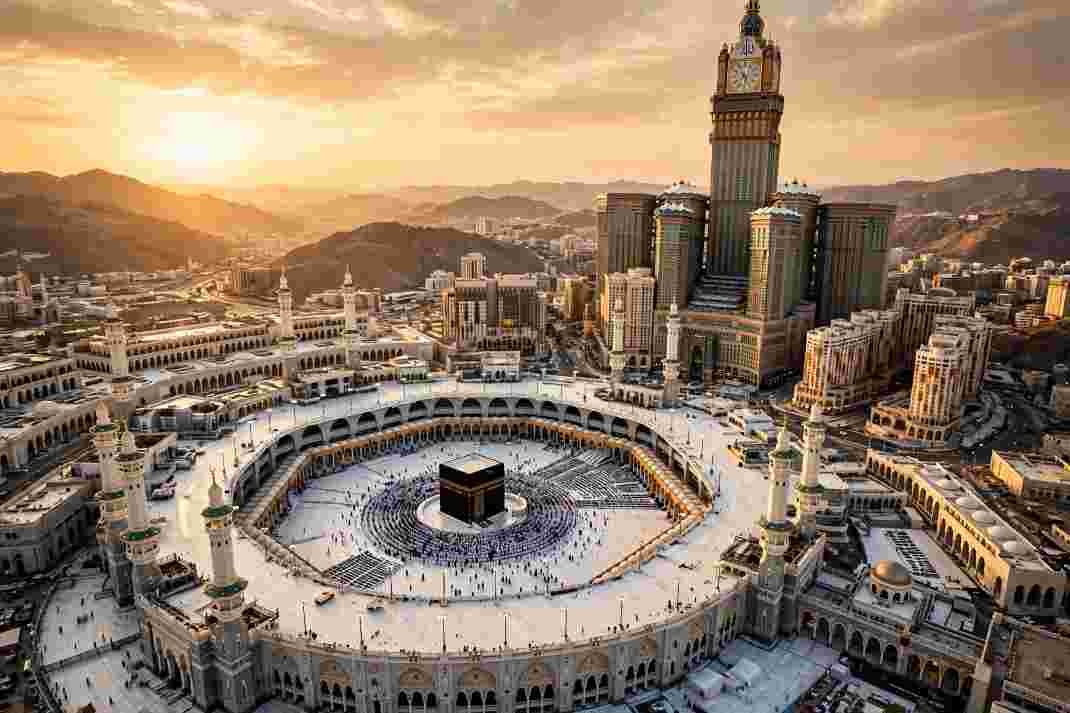
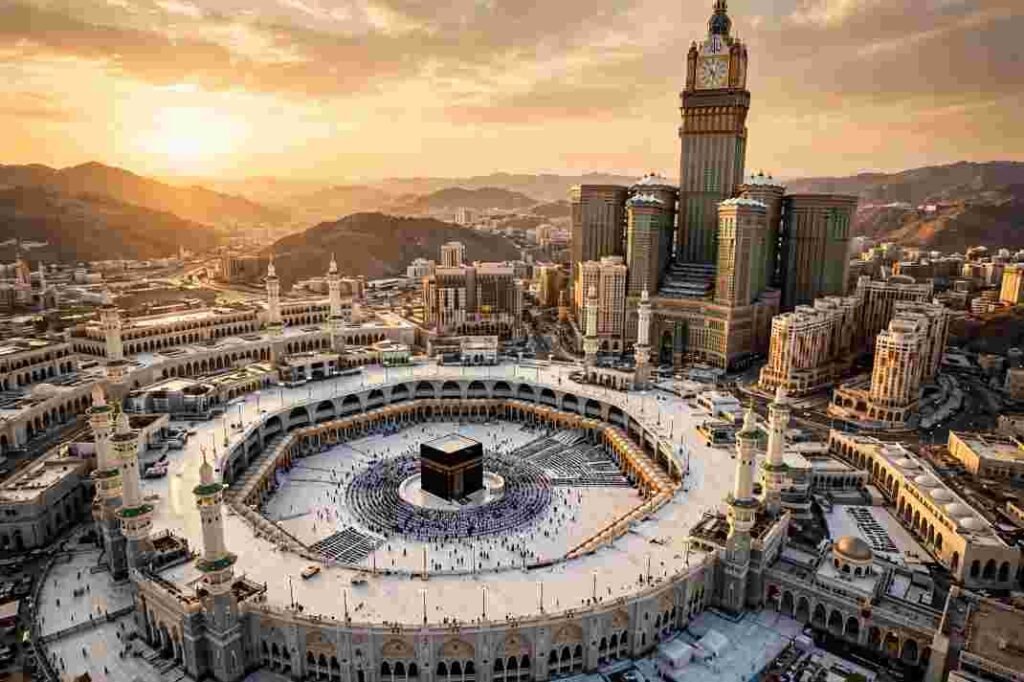
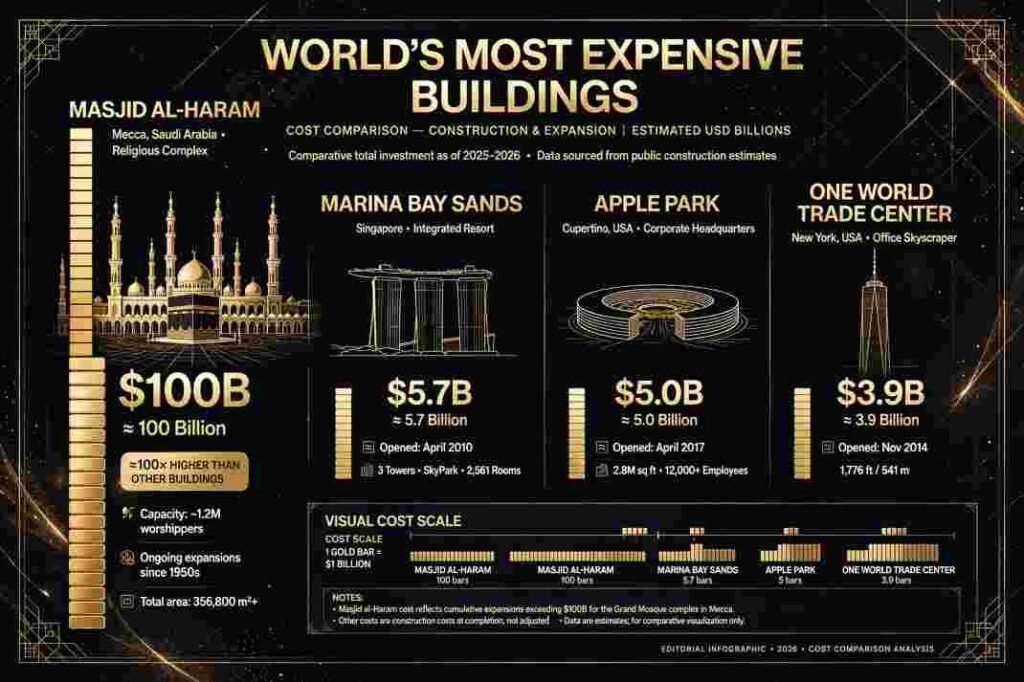
The answer to what is the most expensive building in the world is Masjid al-Haram in Mecca, and it is not particularly close. Independent estimates put the Great Mosque of Mecca and the surrounding Abraj Al Bait complex somewhere past the $100 billion line when you fold in land, repeated expansion phases, and the redevelopment of the immediate district. Nobody publishes a certified invoice for a religious site of that scale, so the figure floats, but every competing claim trails it by an order of magnitude. What follows is a cost anatomy of the top tier, because the numbers matter more than the ranking.
Construction people tend to argue about this question for the wrong reasons. They compare skylines, they compare floor counts, and they compare the price tag on the newest glass tower. Asking what is the most expensive building in the world is really a question about scope accounting: whether you count the land, whether you count the neighborhood that had to be demolished to clear the site, and whether you count four decades of phased renovation as one project or twenty. Once you set those rules, the leaderboard stops moving around so much.
The ranking below reflects publicly reported development costs and widely cited estimates, and it separates the two categories that get mashed together in most listicles. A single tower with a known developer budget is a different animal from a religious complex that has been under continuous construction since the eighth century. The table sorts them by estimated cost, and the notes column explains what the number actually covers.
| Structure | Location | Estimated Cost | What the Figure Covers
|
|---|---|---|---|
| Masjid al-Haram (Great Mosque of Mecca) and Abraj Al Bait complex | Mecca, Saudi Arabia | $100 billion plus | Land assembly, multiple expansion phases, clock tower and mall, adjacent district redevelopment |
| Marina Bay Sands | Singapore | Roughly $5.5 billion | Integrated resort, three hotel towers, casino, mall, convention space |
| Abraj Kudai | Mecca, Saudi Arabia | Reported near $3.6 billion | Hotel complex, unfinished for years, ten thousand rooms planned |
| Apple Park | Cupertino, California | Roughly $5 billion | Corporate campus, main ring building, visitor center, landscaping, underground parking |
| One World Trade Center | New York City | Roughly $3.9 billion | Tower core and shell, spire, podium, transit connections |
| The Cosmopolitan | Las Vegas, Nevada | Roughly $4.1 billion | Two hotel towers, casino floor, retail |
| Emirates Palace | Abu Dhabi, UAE | Roughly $3 billion | Hotel palace, grounds, interiors |
Anybody who reads a list of the most expensive buildings on the internet will notice the figures swing wildly between sources, and that is not sloppiness so much as a definitional problem. The Council on Tall Buildings and Urban Habitat maintains the recognized height database for towers, which anchors the physical facts, but no equivalent body certifies cost. Developers announce a budget at groundbreaking, quietly revise it upward during construction, and report a different number at ribbon cutting. The record that survives is whatever the trade press managed to confirm.
The Great Mosque of Mecca is not a single building in the sense a general contractor would use the term. It is a walled complex with a central courtyard, and the courtyard contains the Kaaba, and around that core sits a ring of prayer halls that has been expanded and rebuilt under Ottoman, Saudi, and modern administration across many generations.
Each expansion phase required acquiring land in one of the most expensive urban markets on earth, demolishing existing structures, and building new capacity without closing the site to pilgrims. That last constraint is the part most cost comparisons ignore, because you cannot simply shut a facility that hosts millions of visitors annually and hand the site to a single contractor for three years.
The most recent major expansion, commissioned under King Abdullah and continued afterward, added vast prayer capacity along with escalators, tunnels, and climate control across a footprint that would swallow most downtowns. Research published through Hajj research archives documents the scale of pilgrim volumes the expansion was designed to accommodate, and the capacity numbers explain the price.
Saudi authorities have not published a consolidated construction cost, so the $100 billion estimate circulating in the financial press is a reconstruction from land values, contract awards, and adjacent development spending rather than a single audited total.
Because of that opacity, if you ask what is the most expensive building in the world and expect a clean audit trail, Mecca will disappoint you. The number is enormous and the paperwork is thin, which is exactly the opposite of how a commercial tower gets reported.
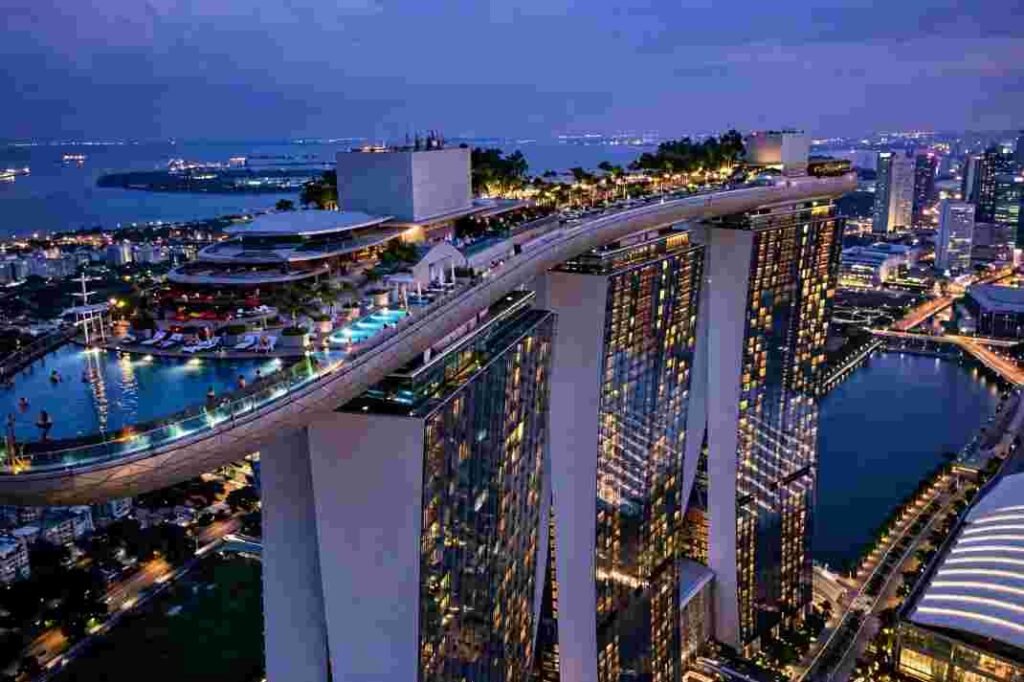
Among structures with a documented, largely private-sector budget, Marina Bay Sands in Singapore is the standard bearer at roughly $5.5 billion, though its cost overran early projections by a wide margin and the land itself was acquired on a long lease from the government. The project bundled three hotel towers, a casino, a convention center, a shopping mall, and the SkyPark that cantilevers across the tops of the towers. Architects and engineers who study the project point to the SkyPark as the cost driver, since a 340 meter long platform spanning three separate towers required structural solutions with almost no precedent. The project record from Safdie Architects lays out the structural program, and the engineering alone justifies a healthy chunk of the budget.
Integrated resorts occupy a strange position in cost accounting because the casino, hotel, retail, and convention components each carry a different return profile. When analysts ask what is the most expensive building in the world in the hospitality category, they usually mean Marina Bay Sands, but the honest answer is that the building is really four businesses bolted to a shared foundation and a shared steel frame.
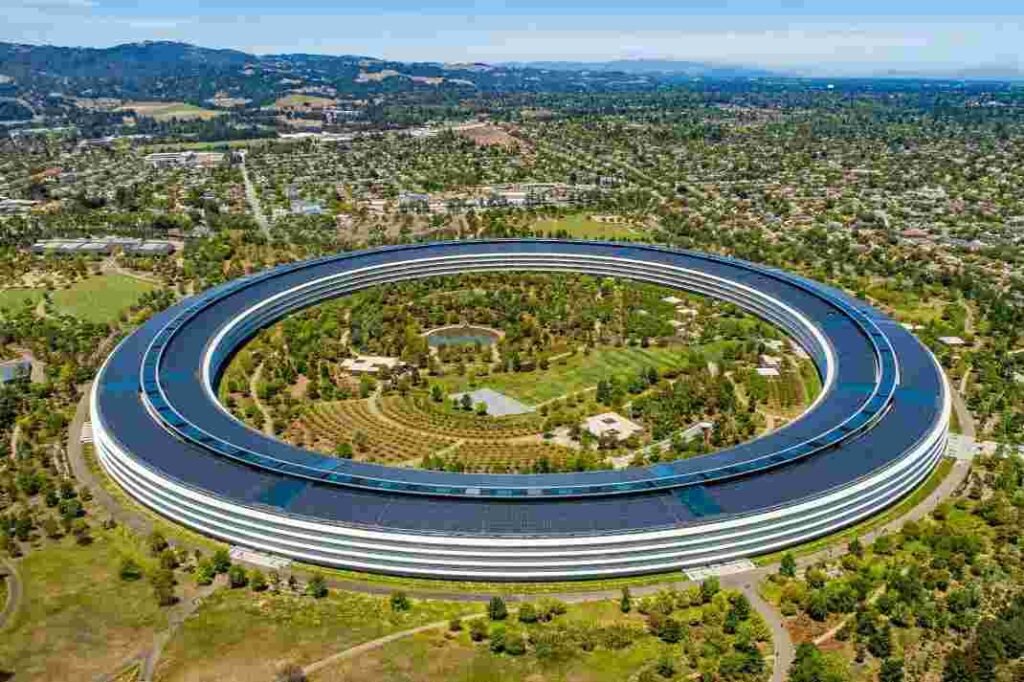
Apple Park landed near $5 billion when the final numbers settled, and it remains the reference point for anyone pricing a corporate campus. The main building is a single continuous ring with the largest curved glass panels ever fabricated for a structure of that type, and the campus sits on land Apple assembled parcel by parcel in Cupertino. The cost per square foot is what makes construction executives wince, because the building is only four stories tall yet carries the finish budget of a skyscraper. Custom precast concrete, custom door handles, and a landscape program that relocated thousands of mature trees all landed on the invoice.
When people search what is the most expensive building in the world and land on Apple Park, they often assume the price reflects square footage. It does not. It reflects specification density, meaning the dollars per square foot of a low rise headquarters can exceed those of a fifty story office tower if every surface is bespoke. The Apple newsroom announcement describes the campus design intent, and the language there gives a sense of why the specification went as far as it did.
The cost anatomy of any trophy building breaks into a few recurring line items, and understanding them is more useful than memorizing a ranking, especially if you are the one writing the checks. Whether looking at record-breaking global skyscrapers or ambitious multi-billion-dollar megaprojects like Romania building a Dracula theme park, four drivers show up in nearly every project that lands in the billions.
The fourth driver is the one most owners underestimate at the preconstruction stage, and it is the reason public sector projects with active facilities tend to carry higher per square foot costs than comparable private work. The U.S. General Services Administration publishes cost and performance data through its design and construction program, and the patterns there mirror what private developers see on constrained sites.
Total price and unit cost tell different stories, and conflating them is how bad comparisons get made. A megatall tower can cost $3 billion and still land at a lower cost per square foot than a boutique headquarters, because the tower spreads its fixed costs across hundreds of thousands of square meters of leasable area. Conversely, a low rise campus with bespoke everything can hit unit costs that look absurd for a four story building.
So when somebody insists they know what is the most expensive building in the world based on cost per square foot, they are answering a different question than the one most people mean. The Great Mosque of Mecca is expensive because the land and the expansion history are expensive. Apple Park is expensive because the specification is dense. Marina Bay Sands is expensive because it is four businesses and a structural stunt.
Even when looking at modern mega-venues—like the Tennessee Titans building a new stadium with a multi-billion-dollar price tag—the drivers combine massive public-private financing, extensive site infrastructure, and enclosed multi-use engineering. None of those is the same kind of number, and a serious comparison has to say which one it is measuring.
Abraj Kudai in Mecca was announced with a reported budget in the $3.5 billion range and a plan for ten thousand rooms, which would have made it the largest hotel on earth by room count. Construction stalled for years, and the empty shell became a symbol of what happens when a budget meets a market downturn and a change in government priorities. The project has reportedly been revived with a revised scope, though the final cost will likely never be disclosed. If you want a case study in why announced budgets are unreliable inputs for a ranking, this is the one to study.
Every time a news outlet asks what is the most expensive building in the world and cites Abraj Kudai’s original figure, it is repeating a number that no one has confirmed in a decade. The building may yet finish. The accounting will not get cleaner.
Three questions separate a real cost number from a marketing number. First, does the figure include land acquisition, or is it construction only? Second, does it include tenant fit out and furniture, or is that a separate budget? Third, is the number announced, revised, or actual? A figure that fails all three is a press release, not a cost.
Applying those filters to the current leaderboard, Mecca retains the top spot by a wide margin, Marina Bay Sands and Apple Park share the next tier with different cost profiles, and everything else falls into a long middle where the ranking depends entirely on which definition you accept.
If your interest is what is the most expensive building in the world as a piece of trivia, the ranking will do. If your interest is what that number implies for your own project, the more useful lesson is that the biggest budgets are almost always the products of constraints, not luxury.
Land assembly, operational continuity, bespoke engineering, and long schedules are the multipliers, and every one of them adds cost whether the building is a mosque, a resort, or a headquarters campus. Owners who understand that before the first bid goes out are the ones who keep a project from becoming the next cautionary headline.