 11
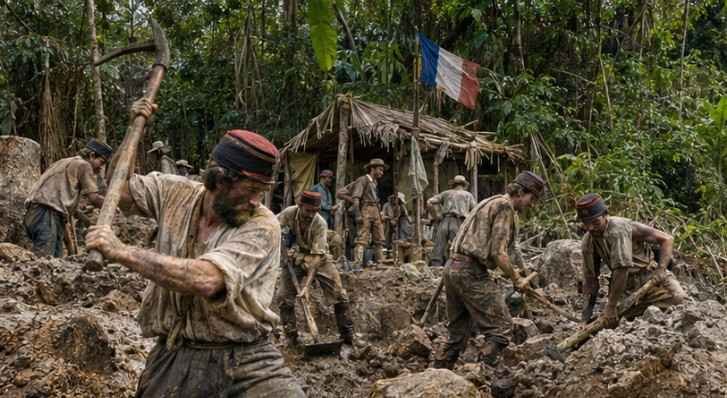
The question of how many people died building the Panama Canal has a deceptively clean answer that hides one of the ugliest mortality records in the history of heavy civil construction. The figure most often cited is roughly 25,000 workers dead across the French attempt of 1881 to 1889 and the American effort of 1904 to 1914, with the French phase accounting for the larger share.
Digging into how many people died building the Panama Canal means confronting two separate projects, two engineering cultures, and two very different attitudes toward labor on a strip of jungle where the ground itself functioned as a weapon. For anyone who has ever run a jobsite, the mortality ledger from that decade and a half reads less like history and more like a case study in what happens when safety, sanitation, and logistics fail at the same time.
The French Compagnie Universelle du Canal Interocéanique lost somewhere in the neighborhood of 22,000 workers between 1881 and 1889, a figure that includes men who died of disease, accidents, and the cumulative collapse of an under-provisioned labor force.
The American canal effort under the Isthmian Canal Commission recorded far fewer deaths in absolute terms, generally placed at around 5,600, though the American workforce was also different in composition and the medical infrastructure was substantially better.
Combined, the accepted range for how many people died building the Panama Canal lands between 25,000 and 28,000 depending on which historian’s ledger you trust. The Encyclopaedia Britannica entry on the Panama Canal gives a widely referenced breakdown of the French and American mortality totals, and the numbers do not move much from source to source because they were originally drawn from company and commission records.
That range matters because the question of how many people died building the Panama Canal is not a single number. The French phase killed at a rate that would today trigger criminal inquiry, while the American phase, though still horrific by modern standards, represented a genuine step change in occupational mortality management. The gap between those two phases is the real story, and it is the part most readers skip past.
The French canal attempt failed on multiple fronts at once. Ferdinand de Lesseps, the man behind the Suez Canal, had promised a sea-level canal through Panama, a plan that ignored the terrain, the rivers, and the rainfall of the isthmus.
When engineers discovered the Culebra Cut would require moving mountains of rock and clay, the project had already committed enormous capital and hired thousands of men who were then worked in conditions that had no medical precedent.
Yellow fever and malaria tore through labor camps because the mosquito vector was not yet understood as the transmission mechanism. Workers arrived from the Caribbean, from France, and from wherever labor agents could find them, and many died within weeks of landing.
The Centers for Disease Control and Prevention historical record on malaria documents how the mosquito transmission discovery reshaped public health practice, and the Panama Canal is the textbook case. During the French era, that knowledge did not yet exist in actionable form, so hospital wards filled faster than they could be expanded.
Estimates of how many people died building the Panama Canal during this period frequently emphasize that disease killed far more men than excavation accidents, a ratio that any site superintendent would recognize as a sign that the support systems failed before the work itself did.
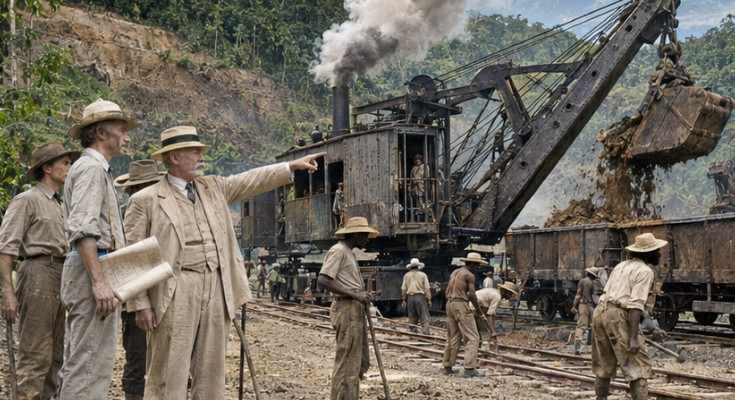
The French recruited heavily from the Caribbean, particularly from Barbados, Jamaica, and other islands where labor agents could promise wages that looked generous against local economies. Those workers arrived without acclimation to the isthmus, were housed in crowded barracks, and had limited access to clean water or competent medical care.
The mortality rate among Caribbean laborers during the French phase was so severe that some historians describe it as a demographic event for the islands that supplied the men. Any honest accounting of how many people died building the Panama Canal has to acknowledge that the dead were disproportionately poor, non-French, and far from home.
The American phase, launched in 1904 after the United States acquired the French assets and the canal zone, brought a different operating philosophy. Chief engineer John Frank Stevens and later George Washington Goethals understood that the workforce had to survive long enough to excavate.
Dr. William Gorgas, drawing on the work of Ronald Ross and the mosquito transmission findings, launched a sanitation campaign that drained standing water, installed screened housing, and fumigated structures. The result was a sharp decline in yellow fever and a meaningful reduction in malaria, which translated directly into fewer deaths.
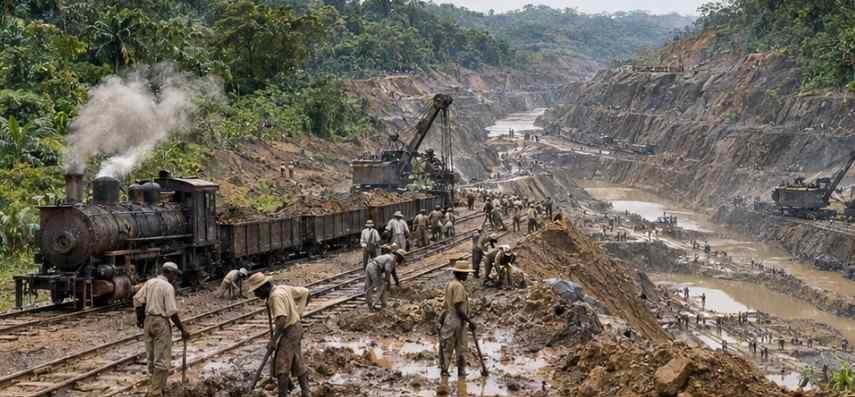
Even with those measures, the American effort still lost roughly 5,600 workers. The mix of causes shifted toward accidents, landslides in the Culebra Cut, and the sheer mechanical hazard of steam shovels operating on unstable benches.
The Library of Congress digital collections hold photographic and documentary records from the construction period that show the scale of the excavation and the density of the labor force, and the visual evidence explains why accident fatalities persisted despite better medicine.
When people ask how many people died building the Panama Canal, the American number often surprises them because it is smaller than the French total, but 5,600 deaths over a decade of work is still a figure that would dominate any modern incident log.
Sanitation and vector control improved dramatically. Housing improved. Medical staffing improved. What did not improve fast enough was slope stability in the Cut, where repeated landslides buried crews and equipment.
The American phase also employed a large Barbadian and West Indian workforce, and those men again bore a disproportionate share of the risk. The refined figure for how many people died building the Panama Canal during the American years is generally presented as a single total, but the burden was never distributed evenly across the payroll.
The table below lays out the two phases side by side. The numbers are drawn from the standard historical record, and the comparison makes clear why the phrase “how many people died building the Panama Canal” produces such a wide range depending on which era a source is counting.
The human cost of major infrastructure projects extends beyond Panama. Understanding how many people died building the Hoover Dam offers another perspective on historical construction risks and worker safety.
| Factor | French Phase (1881 to 1889) | American Phase (1904 to 1914)
|
|---|---|---|
| Approximate deaths | 22,000 | 5,600 |
| Dominant cause of death | Yellow fever, malaria, dysentery | Accidents, landslides, residual disease |
| Vector control | Not understood | Aggressive mosquito suppression |
| Housing quality | Dense, unscreened barracks | Screened quarters, improved water |
| Workforce origin | Caribbean, French, mixed | Caribbean, Spanish, American supervisory |
| Equipment scale | Limited steam machinery | Mass steam shovel and rail deployment |
| Engineering approach | Attempted sea-level canal | Lock canal with dams and Gatun Lake |
The controlling variable was not courage or effort. It was whether the project leadership understood the environment well enough to keep men alive. That is the part of how many people died building the Panama Canal that transfers directly to any modern general contractor running work in a difficult climate.
The reason a precise answer to how many people died building the Panama Canal remains elusive is that the record keeping was inconsistent, particularly during the French era. Company records were incomplete, some deaths were recorded under ambiguous categories, and workers who died after leaving the isthmus may or may not have been counted.
Historians have spent decades reconciling the ledgers, and the range of 25,000 to 28,000 reflects that reconciliation effort rather than a single authoritative count. The Britannica overview is a good starting point for anyone who wants the standard framing, but serious readers should look at the primary commission records held in archives.
The American records are cleaner because the Isthmian Canal Commission maintained detailed quarterly reporting, and the death certificates for the canal zone were more systematically preserved.
Even so, questions remain about whether the American total captures workers who died during transit home or shortly after discharge. When a source states a specific number for how many people died building the Panama Canal, the first follow-up question should be which phase the source is measuring and whether it includes post employment deaths.
The single most transferable lesson from the Panama Canal mortality record is that worker survival is an engineering problem before it is a medical one. Gorgas did not cure yellow fever. He eliminated the breeding habitat that produced the mosquitoes that carried it. That is a site planning decision, and it belongs in the preconstruction phase alongside grading and dewatering.
A modern superintendent who reads the canal history and comes away thinking only about disease misses the operational point, which is that the physical layout of a jobsite determines whether the workforce stays healthy and productive.
The second lesson concerns record keeping. The French failure to maintain consistent mortality data has left historians guessing for over a century, and the same failure mode appears on modern projects where incident reporting is treated as paperwork rather than intelligence.
A contractor who cannot produce a clean incident log cannot identify a pattern, and a contractor who cannot identify a pattern cannot prevent the next event. The question of how many people died building the Panama Canal is still debated partly because the French project did not treat its own dead as data worth capturing.
The Culebra Cut landslides that killed American workers were not random. They were the predictable result of excavating steep slopes in tropical clay that lost shear strength when saturated.
Modern geotechnical practice, including the slope stability guidance published by the Occupational Safety and Health Administration excavation standards, exists in part because collapses on this scale kept happening on major earthworks. The canal record is an early and expensive lesson in benching, drainage, and the danger of undercutting a slope to gain production.
Any discussion of how many people died building the Panama Canal that ignores the geotechnical dimension is incomplete. The French dug too steep.
The Americans dug too steep in places as well, and their own engineers documented the failures. The difference was that the American leadership treated the landslides as a problem to be studied, which is the posture that separates a functional earthworks program from a fatal one.
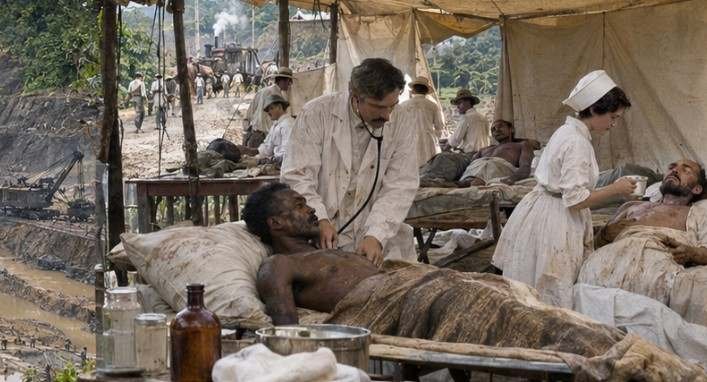
The men who died on the canal were overwhelmingly laborers rather than engineers or administrators. Caribbean workers, particularly from Barbados, made up a large share of the French casualties and a substantial share of the American ones as well.
Spanish laborers also appear heavily in the American records. The supervisory and engineering staffs suffered losses, but at a fraction of the rate borne by the men who actually moved the dirt. When someone asks how many people died building the Panama Canal, the number that comes back is a total, but the distribution behind that total reflects a labor hierarchy that put the poorest workers in the most dangerous positions.
That pattern has not disappeared from the construction industry. The workers who die on modern jobsites are still disproportionately the ones with the least control over their working conditions. The canal is an extreme case, but the underlying dynamic is familiar to anyone who has walked a large site and noticed who operates the equipment and who stands beneath the load.
Roughly 25,000 to 28,000 workers died across the two construction campaigns, with the French effort responsible for the great majority of those deaths and the American effort responsible for the remainder. That answer is defensible, sourced, and widely accepted, but it flattens a story that deserves the detail.
The French lost men because they built a project without understanding the disease environment. The Americans lost fewer men because they built a sanitation program before they built a canal. The difference between those two approaches is the difference between 22,000 dead and 5,600 dead, and it remains the most useful comparison in the entire history of heavy construction.
Modern project teams that study the canal tend to focus on the locks, the dams, and the excavation volumes. The mortality record deserves equal attention, because it demonstrates that a project’s survival rate is set long before the first shovel bites into the ground.
How many people died building the Panama Canal is a historical question with a historical answer, but the operational lesson is current, and it applies to every site where leadership decides whether worker safety is part of the plan or an afterthought bolted on once the work has already started.