 11
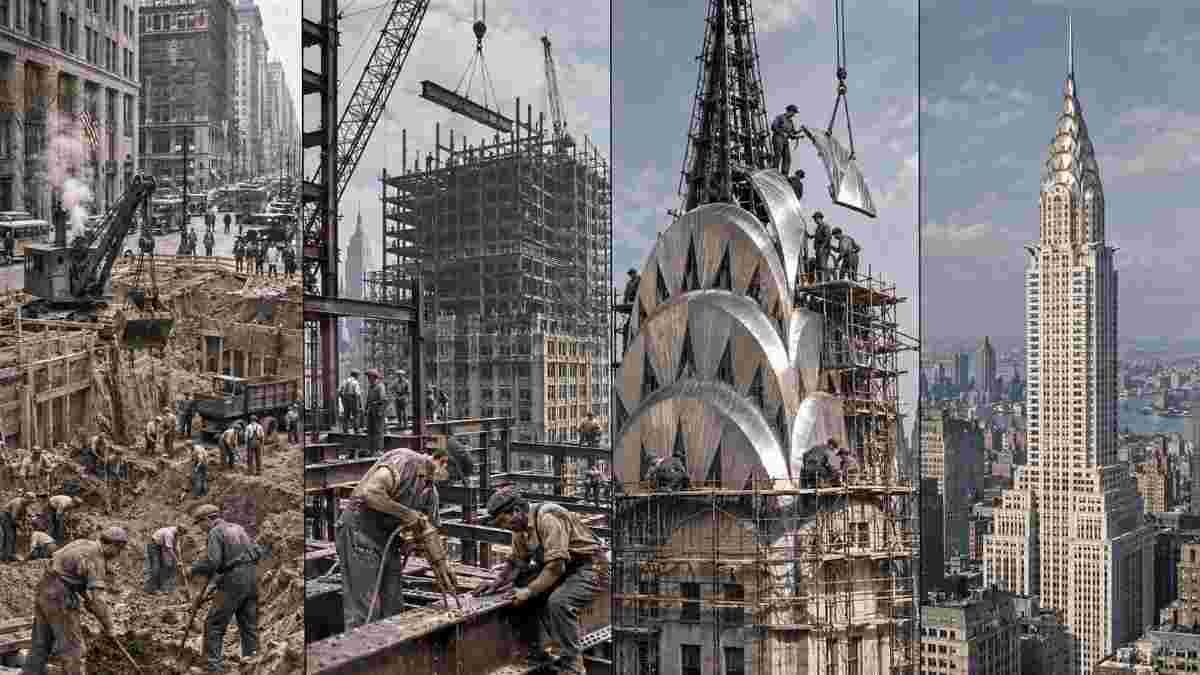
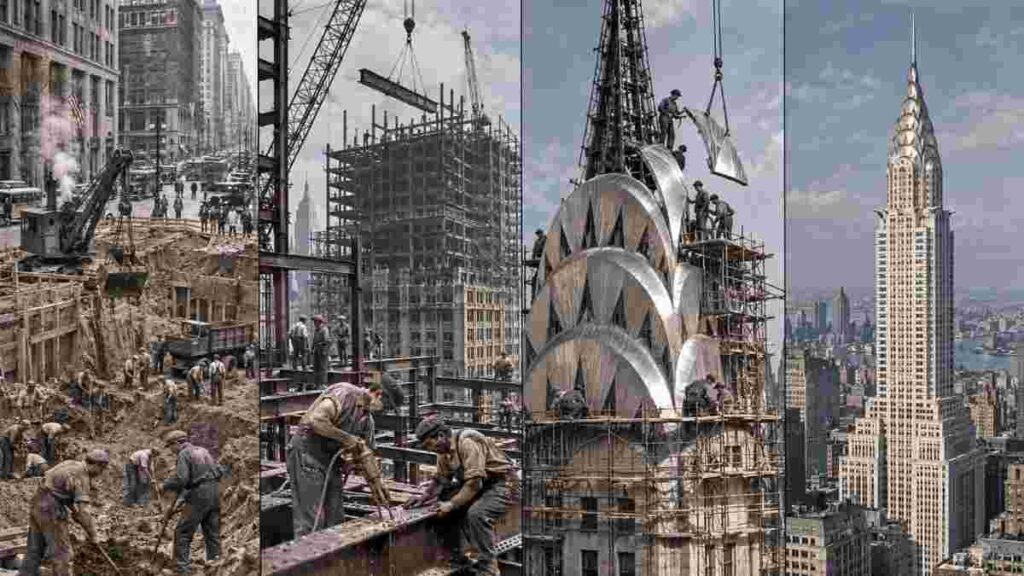
The Chrysler Building was built between 1928 and 1930, with the first structural steel going up in the fall of 1928 and the building opening to the public on May 27, 1930. If you want a single clean answer to when was the Chrysler Building built, that is the span: roughly twenty-six months from excavation to ribbon cutting, which by any modern measure is a violent speed of construction for an artifact that still stands at 42nd Street and Lexington Avenue.
What most summaries leave out is that the record was a race, the schedule was a weapon, and the finish line was decided by a spire that was assembled in secret inside the tower itself. That is the part worth understanding, especially if you spend your working life around steel, schedules, and the politics of a job site.
The short answer is 1930. The long answer starts in 1928. Walter P. Chrysler, who had taken control of the Chrysler Corporation and was looking for a corporate monument that would outshine anything his rivals could put up, leased the land at the corner of Lexington Avenue and 42nd Street from Cooper Union.
The site had previously carried a different proposal, and the deal carried the kind of land-use restrictions that still matter to anyone who reads a ground lease today. The architect was William Van Alen, a man with a taste for ornament and a reputation for being difficult about money and credit.
Demolition of the existing structures began in 1928, excavation followed, and the foundation work ran into the hard Manhattan schist that has anchored every tall building on that part of the island. Steel erection started in the fall of 1928, and the tower climbed at a rate that would be difficult to justify on a modern job with a full inspection regime.
By the time the building topped out in the fall of 1929, it had briefly claimed the title of tallest structure in the world, a title it held for only eleven months before the Empire State Building passed it.
The building opened on May 27, 1930. So when was the Chrysler Building built, in the way a scheduler would actually ask the question? Ground broken in 1928, structural frame complete by late 1929, occupancy in 1930. Three calendar years, two full construction seasons, one very public contest.
The construction of the Chrysler Building followed an unusually tight schedule because of intense competition. Walter Chrysler and architect William Van Alen wanted to surpass the nearby Bank of Manhattan Trust Building.
Architect H. Craig Severance designed the competing tower to exceed the Chrysler Building’s planned height. Throughout 1929, both projects competed to become the world’s tallest skyscraper.
Van Alen developed a clever strategy to win the race. Workers secretly assembled sections of the Chrysler Building’s crown and spire inside the tower.
In October 1929, crews raised the spire, bringing the building’s total height to 1,046 feet. The Bank of Manhattan Trust Building reached only 927 feet, giving Chrysler the victory.
However, the spire required careful structural planning. Engineers had to design supporting columns and bracing to withstand its weight and wind forces.
The timing also created financial challenges. The stock market crashed shortly after the spire’s installation, and the Great Depression reduced demand for office space.
Although the Chrysler Building won the height competition, it struggled to attract tenants during the economic downturn.
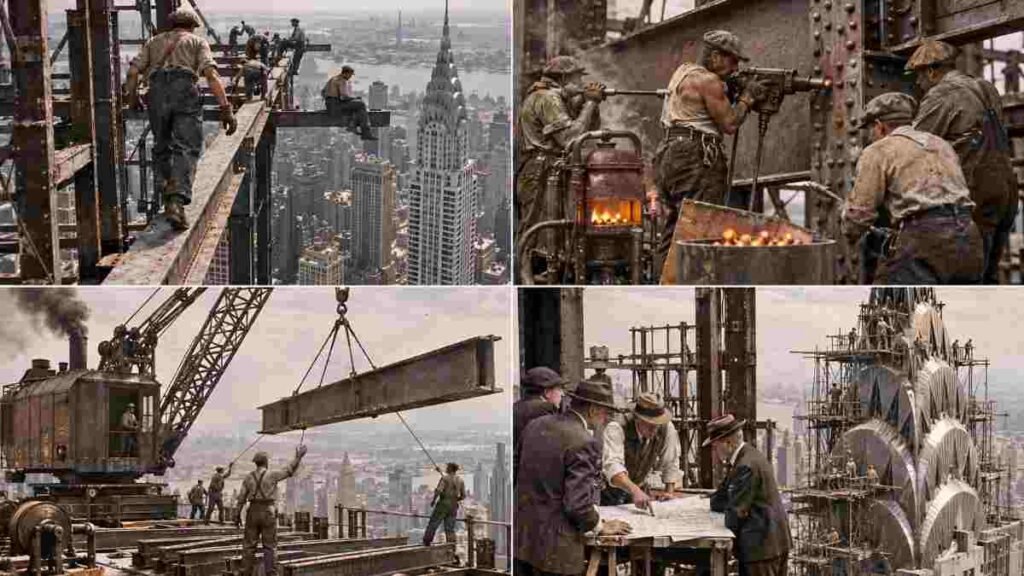
Anyone who builds for a living will tell you that the schedule is won or lost below grade. The Chrysler site sat over Manhattan schist, the hard bedrock that makes tall construction possible in midtown, and the foundation work involved caissons driven down to bearing on that rock.
Cooper Union’s ownership of the land shaped the deal, and the institution’s own historical record documents its long tenure as ground landlord on that corner, a relationship that outlasted the building’s most famous tenant decisions.
The excavation and foundation sequence consumed the better part of a year before a single column rose above sidewalk level. That ratio, roughly one season under grade to two above it, is not wildly different from what a large commercial project faces today, which is the point. The tools were different. The physics were not.
The Chrysler Building is a steel frame with masonry cladding, set back in tiers as it rises. The setbacks are not purely aesthetic; they were shaped in part by the zoning envelope of the 1916 resolution, which used a floor area formula to force tall buildings to step back as they climbed.
Van Alen’s genius was to make the regulatory constraint look like a design choice, with the terraced crown reading as ornament rather than compliance.
The crown itself is stainless steel, an unusual choice for a building of the period and the reason the tower catches light the way it does. The steel is not structural there, but the maintenance burden of an exposed metal crown in a city with a century of acid rain is real, and the building has been cleaned and restored repeatedly.
The New York City Landmarks Preservation Commission, which designated the building an individual landmark in 1978, has documented both the exterior and the celebrated lobby ceiling mural by Edward Trumbull as protected features.
Placing the Chrysler Building’s construction window against its neighbors shows how compressed the era was. Every one of these towers went up inside a decade, and each one was built by crews working without modern safety regulation, without computerized scheduling, and in most cases without air conditioning in the finished product.
| Building | Construction Span | Height at Completion | Architect
|
|---|---|---|---|
| Chrysler Building | 1928 to 1930 | 1,046 ft (with spire) | William Van Alen |
| Bank of Manhattan Trust Building | 1929 to 1930 | 927 ft | H. Craig Severance |
| Empire State Building | 1930 to 1931 | 1,250 ft | Shreve, Lamb and Harmon |
| Woolworth Building | 1910 to 1913 | 792 ft | Cass Gilbert |
| 40 Wall Street (Trump Building) | 1929 to 1930 | 927 ft | H. Craig Severance and Yasuo Matsui |
Note what happened after the Chrysler Building opened. The Empire State Building went up in roughly thirteen months, a schedule so aggressive that it became the benchmark for every fast-track commercial project that followed. The Chrysler tower’s twenty-six months looks almost leisurely by comparison, though it was anything but.
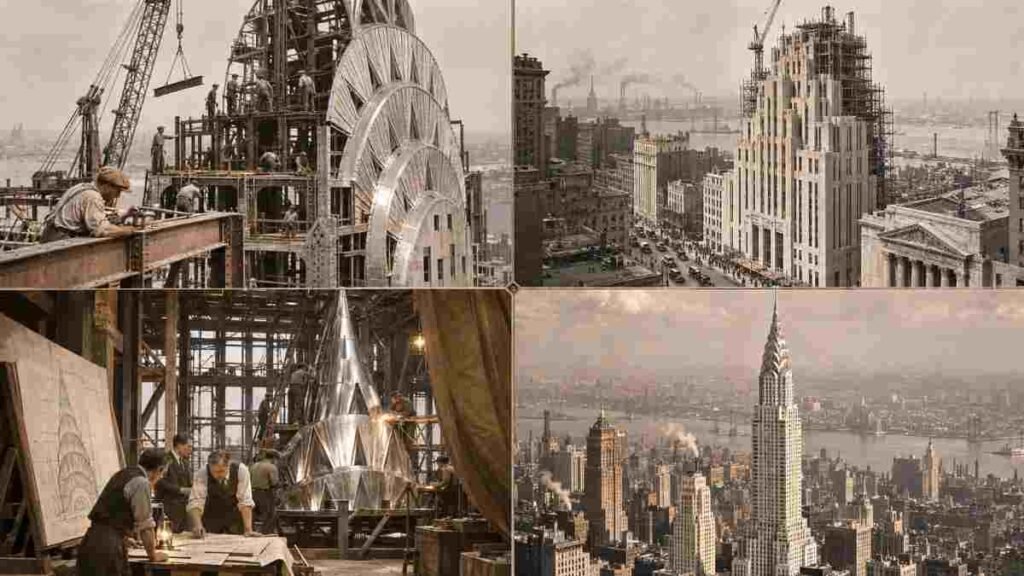
No complete official record confirms how many workers died during the Chrysler Building’s construction. However, historical accounts reveal the dangerous conditions steelworkers faced in 1929.
At the time, OSHA did not exist, and modern fall protection systems were unavailable. Workers also lacked mandatory hard hats and standardized injury reporting requirements.
Ironworkers balanced on high steel beams and installed rivets manually. Four-person riveting crews worked together, with one worker heating and throwing hot rivets to others. These hazardous practices exposed construction workers to serious injuries and potentially fatal accidents.
The Occupational Safety and Health Administration did not exist until 1971, and its own historical materials describe the pre-regulation era of construction work in terms that make the Chrysler schedule look like a gamble with human life.
If you compare the Chrysler project to a modern high-rise of the same footprint, the difference is not only in equipment, it is in the assumption that workers come home. That assumption was not standard in 1929.
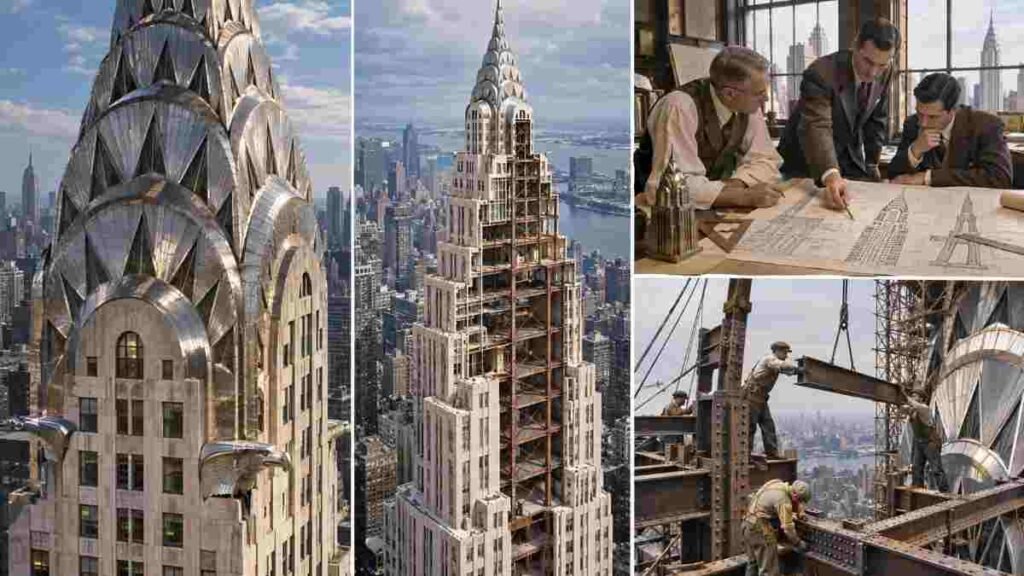
The opening of the Chrysler Building on May 27, 1930 should have been a coronation. Instead it landed in the teeth of the Depression. Chrysler himself never occupied the top floors, and the building’s ownership passed through a series of hands over the following decades, eventually landing with a series of investors whose interest in the tower was more financial than architectural.
The current building site and its tenant roster reflect the modern reality: the crown is a brand, the office floors are rented to media and financial firms, and the observation deck that Walter Chrysler never really wanted is not open to the public.
The lobby remains one of the finest art deco interiors in the country, and its restoration has been documented in preservation press for years. The building was designated a National Historic Landmark in 1976, two years before the city landmark designation.
So when was the Chrysler Building built compared to the Empire State? Earlier by less than twelve months, but the Chrysler tower has had almost a century to be reinterpreted as a piece of art rather than a piece of real estate, and that reinterpretation has been kind to the building’s reputation.
Roughly twenty-six months from the start of demolition in 1928 to the opening in May 1930, with structural steel erection concentrated in the fall of 1928 through the fall of 1929.
Yes, briefly. It passed the Eiffel Tower and the Bank of Manhattan tower in 1929 and held the record until the Empire State Building topped out in 1931, roughly eleven months later.
Walter P. Chrysler funded the project personally, and he reportedly paid William Van Alen’s architectural fee only after a bitter public dispute over credit and compensation.
The spire sections were assembled in October 1929 and raised through the building’s interior, which is exactly the detail that makes the answer to when was the Chrysler Building built more interesting than the calendar date suggests.
The answer to when was the Chrysler Building built is straightforward: construction began in 1928 and ended in 1930. However, the story behind its completion is more complicated.
The project faced intense competition, ambitious deadlines, and the economic challenges of the Great Depression. Walter Chrysler wanted to build the world’s tallest skyscraper, making the height race a major priority.
This history highlights the risks of construction schedules driven by personal ambition rather than practical planning. Rushed projects may finish on time but struggle financially afterward.
Today, the Chrysler Building remains an iconic Art Deco landmark. Its distinctive crown reflects the ambition and intense competition that shaped its construction.