 11
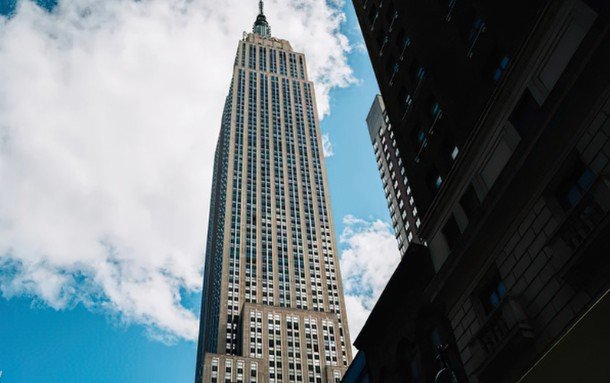
The Empire State Building rose between March 17, 1930, and May 1, 1931, and the question of when was the Empire State Building built matters to contractors for reasons that have nothing to do with trivia night. The project moved from demolition of the old Waldorf-Astoria to a completed 102-story tower in roughly 410 days of structural work, a schedule that reshaped how American builders thought about sequencing, labor shifts, and material logistics for the next century.
What the record actually shows is a job run on winter concrete, rail delivery, and a tolerance for risk that no modern permit office would sign off on.
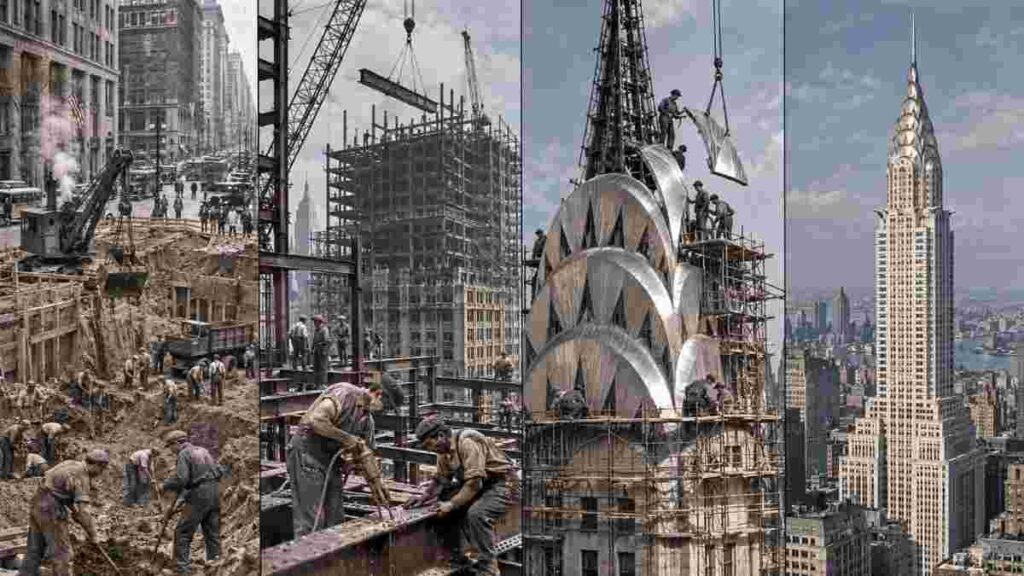
Excavation and foundation work started in January 1930 on the site at Fifth Avenue and West 34th Street, with the general contractor Starrett Brothers and Eken running the job for the ownership group led by John J. Raskob and Pierre du Pont. Steel erection began on March 17, 1930, according to the building’s own institutional history maintained at ESBNYC.com, and the structural frame topped out in about 23 weeks.
The formal opening came on May 1, 1931, when President Herbert Hoover pressed a button in Washington that switched on the tower’s lights. Anyone who asks when was the Empire State Building built gets a spread of dates because the answer depends on which milestone you count: first shovel, first steel column, last rivet, or first tenant.
The timeline reads cleanly when you lay it out as a schedule rather than a story. Design work by the firm Shreve, Lamb and Harmon moved fast because the massing borrowed from an earlier project the partners had drawn in Winston-Salem, and the owner wanted the tower finished before the real estate market finished collapsing. What follows are the dates that show up in the primary record.
| Phase | Date | What It Means
|
|---|---|---|
| Demolition of the Waldorf-Astoria | Begins October 1929 | Clears the site while drawings are still moving |
| Foundation and excavation | January 1930 | Caissons and footings under the Fifth Avenue corner |
| Steel erection begins | March 17, 1930 | The date most often cited for when the tower was built |
| Top out of structural frame | September 1930 | 102 floors of steel in around 23 weeks |
| Masonry and exterior finish | Fall 1930 into spring 1931 | Limestone and brick skin closing the frame |
| Public opening | May 1, 1931 | Hoover button, lights on, doors open |
That table is the version to keep in your head, because the popular figure of “one year and 45 days” describes the structural phase and not the whole job. When was the Empire State Building built is a question with a clean answer only if you accept that construction is a series of overlapping tracks rather than a single event. That distinction also matters when evaluating development timelines through platforms for fractional real estate ownership, where construction progress can affect projected returns.
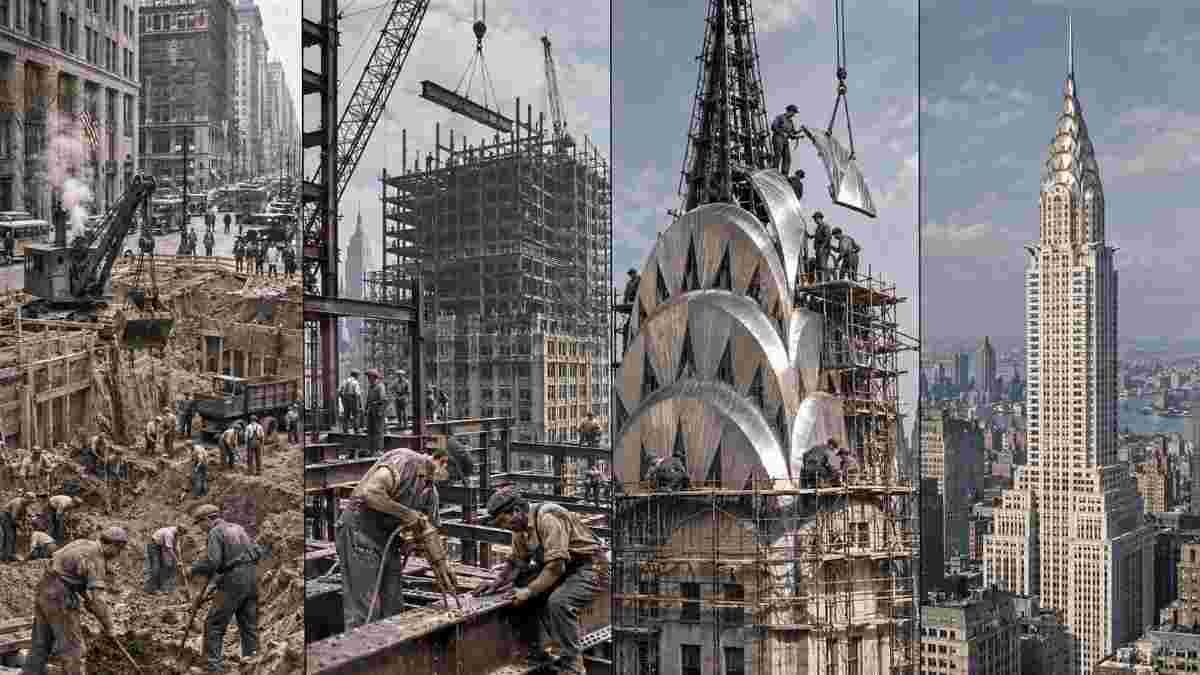
Starrett Brothers and Eken ran the job with a level of vertical coordination that reads today like a masterclass in trade sequencing. Steel arrived by rail and went up in a hoisting system that fed the derricks on multiple floors at once, with trucks unloading at a scheduled slot so the street never jammed.
Masonry crews worked behind the steel on a fixed lag, plumbing and electrical rough-in followed at a second lag, and the whole procession moved upward like a moving assembly line. The general contractor credited much of the speed to that lag discipline, and to a labor pool willing to work through a Depression winter because the alternative was no paycheck at all.
The National Park Service registration file for the building documents the structural specifics, including the limestone and granite exterior and the steel frame supplied by Bethlehem Steel, in the National Register of Historic Places record. The documentation also notes that the building held the title of world’s tallest for four decades, which gives you a sense of how far ahead of its era the schedule was.
Pouring concrete in New York in January is a hostile proposition, and the crews sped the cure by mixing in calcium chloride and heating the aggregates. That practice is now understood to cause long-term damage to reinforced concrete, and it would fail inspection in most jurisdictions today because of the corrosion risk inside the pour.
Contractors who ask when was the Empire State Building built and then wonder whether they can match the schedule should note that the winter work on this job carried a durability cost that showed up decades later.
The project employed around 3,400 workers at peak, and the pace was possible because the Depression had made skilled labor abundant and desperate. Men were hired off the street each morning in some trades, and the job shed workers as fast as it took them on when a phase closed.
Any modern estimator who reads the speed of this job and assumes it reflects superior method is ignoring the labor market that made it possible. When was the Empire State Building built is a question whose answer depends partly on the accident of a stock market crash that supplied the crew.
Building a comparable tower today takes far longer, and the gap is mostly about oversight rather than capability. A 100-story steel and concrete high rise in a dense American city commonly runs four to six years from groundbreaking to occupancy, with a large share of that taken by permitting, environmental review, and inspection holds that did not exist in 1930. The complexity of curtain wall systems, the fire rating requirements, and the elevator and life safety codes all add months that the original schedule never encountered.
The Bureau of Labor Statistics tracks the productivity and safety context of the industry today through the BLS occupational injury case data, and the contrast with 1930 conditions is stark. The crews on the Empire State job worked without fall protection, hard hats, or the scaffold standards that now apply on every floor, and the project still finished with a fatality record that later historians have debated. Speed in that era carried a human cost that no contemporary contractor markets as a selling point.
| Factor | Empire State (1930-1931) | Modern High Rise
|
|---|---|---|
| Structural frame duration | About 23 weeks | 12 to 20 months typical |
| Permitting and review | Minimal, municipal sign off only | Multi agency, 12 to 24 months |
| Worker protection | None of the current standards | OSHA mandated fall and scaffold systems |
| Material delivery | Rail and scheduled truck slots | Just in time with staged laydown yards |
| Curtain wall and facade | Masonry over steel, simple geometry | Custom unitized systems, months of shop drawing |
The tower’s shape was driven by the New York zoning envelope of 1916, which required setbacks as buildings rose so that light and air reached the street. Shreve, Lamb and Harmon satisfied the rule by tapering the mass in a series of steps, which also cut the amount of facade area that had to be clad and therefore shortened the exterior schedule.
Every design decision on the job was in service of opening before the competition, and the ownership had a rival tower at 40 Wall Street to beat. When was the Empire State Building built turns partly on that rivalry, because the height race itself dictated the pace.
The famous mooring mast at the top was a marketing device more than a functioning airship dock, though the design did include the wind and load assumptions that a docking attempt would have required. While modern methods such as buildblock building systems serve different structural purposes, the underlying lesson remains relevant: ambitious designs must account for real operating conditions.
Engineers who look at the drawings today note that a dirigible could not realistically have moored there in the prevailing winds, but the mast gave the building its final height and its silhouette. Anyone reconstructing the build sequence needs to place the mast in the exterior finish phase of late 1930 and early 1931, not in the steel frame.

The building’s opening year gets confused with the stock market crash of October 1929, because the financing and the timing overlap. The crash hit before demolition was finished, and the ownership pushed forward anyway, which is why the tower opened into a vacancy crisis and did not turn a profit for years. Some sources place the start of construction at the demolition phase and cite 1929, which is technically true for site work and false for the structure. When was the Empire State Building built gets answered in different years depending on which milestone the source chose to feature.
The 1931 opening date is also sometimes confused with the observation deck opening, which came slightly later, and with the completion of interior tenant fit out, which dragged on for years as leases filled slowly. The distinction is the same one a general contractor makes today between certificate of occupancy and substantial completion. When was the Empire State Building built is a question best answered by naming the milestone rather than picking a single year and defending it.
Elevator installation on a tower this size was a job in itself, and the original banks of Otis equipment moved passengers at speeds that were record setting for the period. The machinery rooms sat in the upper floors and the penthouse, which meant the hoistway shafts had to be framed into the steel sequence rather than added later.
That coordination is one reason the structural phase ran so efficiently, because the shafts were planned into the frame from the first drawing. Anyone tracing when was the Empire State Building built should follow the shaft schedule as a clue to how tightly the trades were interlocked.
Pacific Construction Builders and firms like it draw on this project as a teaching case for a reason that has nothing to do with nostalgia. The job shows what a well sequenced schedule can do when the constructor controls material flow, trade lag, and the vertical procession of work, and it shows the cost of ignoring durability in winter concrete and worker protection. A modern contractor can borrow the sequencing discipline without borrowing the shortcuts, and the distinction matters because a job that finishes fast and then fails inspection is not a success.
The other lesson is about documentation. The reason we can answer when was the Empire State Building built with any confidence is that the general contractor, the architect, and the steel supplier all kept records that survived and were later indexed. A builder who wants to defend a schedule on a modern project or a dispute over a delay needs the same discipline of dated photographs, daily logs, and material delivery tickets. When was the Empire State Building built is easy to answer today because the people who built it wrote things down.
The building still operates, still holds tenants, and still sits in the New York skyline as the reference point for every question about how tall, how fast, and how it was done. The construction dates are settled, the records are public, and the schedule remains the benchmark against which every ambitious tower gets measured. If a client asks when was the Empire State Building built, hand them the dates and then hand them the caveat: nobody can replicate that pace in a modern code environment, and nobody should try.