 11

The official count is five documented worker deaths across the thirteen months of construction, though the figure demands qualification because the project’s own record keeping was uneven and the popular mythology around the building has inflated and deflated that number for nearly a century.
Anyone asking how many people died building the Empire State Building deserves more than a number, because the story of those fatalities is really a story about how construction safety was administered in 1930 versus how it is administered now, and what changed in the trade between then and the present day.
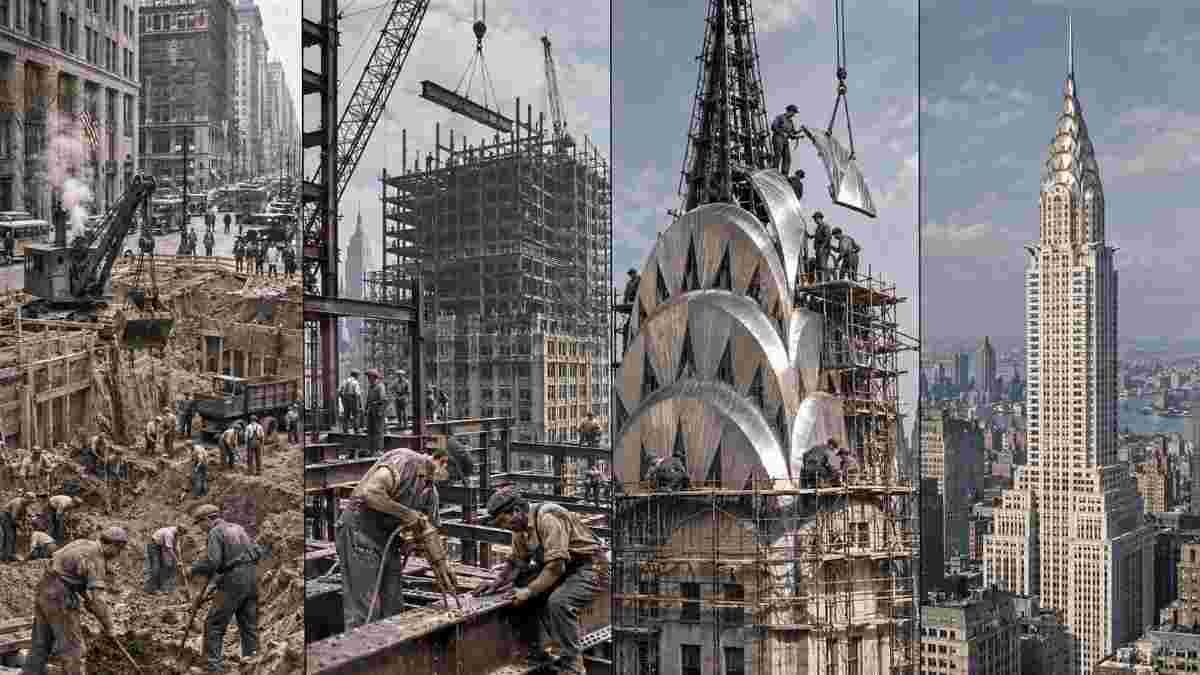
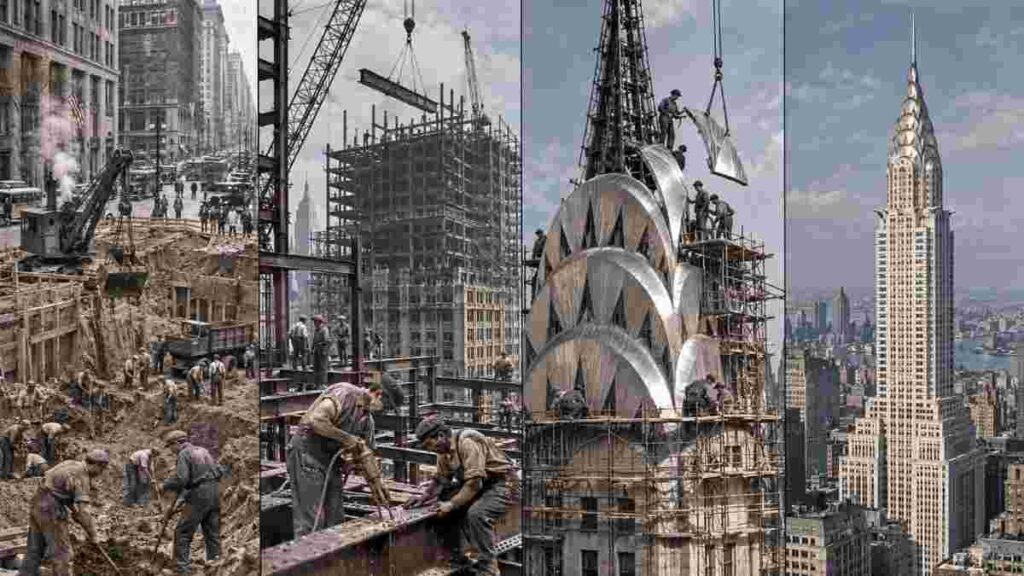
The building rose from a cleared Waldorf-Astoria site in January 1930 to a completed tower in May 1931, a schedule that still stands as one of the fastest major high-rise erections ever recorded, and the casualty ledger attached to that schedule is the part most retrospective accounts skip past.
The five deaths most often cited in the historical record break down into a handful of specific incidents that occurred at different points in the rise of the steel frame. A rigger named John Jakofsky fell from the upper floors during steel erection. A worker identified in contemporary accounts as William Lloyd drowned in the East River near the pier where materials were staged, having fallen from a barge while moving hoisting equipment. A carpenter named Peter Lennon was crushed by a hoist.
A mason named Frank Amendola was killed when struck by falling debris. A fifth worker, identified in some records as a laborer doing cleanup work, died in an incidental site accident that was logged with less detail than the others. None of these men fell from the building in the way the famous photograph of the lunching ironworkers suggests, and none were lost to a single catastrophic event, which is why the death toll rarely makes headlines the way disasters do.
The figure of five is the number most often repeated by the building’s own historical custodians, and it aligns with the New York State Department of Labor’s record of the era, which tracked fatalities by project and reported them in annual industrial reports. A reasonable reader asking how many people died building the Empire State Building should treat five as the well documented lower bound and acknowledge that any figure above it enters speculation.
For modern owners, this history also highlights the importance of understanding what commercial building insurance covers and how worker injuries fall under separate workers’ compensation policies.
The confusion around the death count traces to three separate problems in the source record. The first is that contemporary newspapers in New York did not uniformly report construction fatalities in a single aggregated ledger, so a death on one day’s shift might appear in the Times while a death in another week appeared only in a trade publication.
The second is that the building’s publicists had a strong incentive to understate casualties as a point of civic and corporate pride during the Depression, so early marketing materials leaned toward the minimum. The third is that later retellings, particularly in the internet era, took single anecdotal references and multiplied them into a broader narrative of hidden carnage, sometimes citing numbers as high as fifteen or even forty.
None of those inflated numbers survive serious archival research, and the New York Public Library’s holdings on the Empire State Building contain photographs and correspondence that corroborate the smaller documented count. That does not mean the project was safe by modern standards. It means the workers were extraordinarily careful in an era before the Occupational Safety and Health Act existed, and that the speed of the project was itself a risk factor the trade unions had to manage daily.
The men who built the tower worked at a pace modern contractors would consider reckless if proposed on a schedule today. The structural steel rose at roughly four and a half floors per week at peak, and the masonry trades followed behind at a rate of roughly one floor per day.
The project used a workforce of about 3,400 people at peak, drawn from the deep Depression era labor pool in New York, and the willingness of those men to accept the conditions available was shaped by the fact that steady work of any kind was scarce. Asking how many people died building the Empire State Building without asking why the workforce tolerated the exposure misses the central fact of the era.
The New Deal labor framework that eventually produced modern safety standards did not exist when the first steel columns were set. The Occupational Safety and Health Administration’s own historical timeline notes that federal workplace safety enforcement did not begin in earnest until the OSH Act of 1970, four decades after the tower opened. The Empire State Building was built in a regulatory vacuum, and the five deaths attached to it reflect conditions that were common rather than exceptional for a 1930 high-rise of that scale.
The death toll at the Empire State Building looks modest when placed beside other signature skyscraper projects of the twentieth century, and looks tragic when placed beside any major commercial project executed under current safety enforcement. The table below sets the record straight on the more frequently cited numbers.
| Project | Construction Years | Documented Worker Deaths | Notes
|
|---|---|---|---|
| Empire State Building | 1930 to 1931 | 5 | Well documented in state labor records and building archives |
| Golden Gate Bridge | 1933 to 1937 | 11 | Ten lost in a single scaffold failure; safety net saved 19 others |
| Hoover Dam | 1931 to 1936 | 96 | Includes deaths from heat, blasting, and industrial accidents |
| Brooklyn Bridge | 1869 to 1883 | 20 or more | Caisson disease and falls were the leading causes |
| World Trade Center (original) | 1966 to 1973 | 60 | Includes deaths among ironworkers and trades |
The question of how many people died building the Empire State Building becomes sharper when read against that table, because the tower’s low count against far larger projects is a function of duration and workforce size as much as it is a function of luck. Smaller crews, fewer years, and tightly coordinated trades kept the exposure narrower than a dam or a suspension bridge could.
The general contractor, Starrett Brothers and Dime, ran a tighter ship than most of its peers, and that discipline is why the death toll stayed low despite the schedule pressure. Site management grouped trades into carefully sequenced waves, used purpose built hoisting equipment rather than improvised rigging, and maintained a formal first aid station staffed by a nurse. The project also ran a daily review of near misses, and workers who refused unsafe assignments were reassigned rather than dismissed, a practice that was unusual in the Depression when labor had little bargaining power.
These practices did not eliminate risk, and the five documented deaths prove that. But they are the reason why the number did not climb higher, and any builder today studying the Empire State Building as a case study in production scheduling should note that safety discipline and schedule discipline were treated as the same problem rather than separate ones. The documentation of that practice is preserved in the New York City Landmarks Preservation Commission designation report for the building, which covers the construction methodology in detail.
The men who worked the steel during the Empire State Building construction faced risks that modern ironworkers would recognize but no longer accept. Falls from the frame were the leading cause of fatalities on projects of that era, but they were not the only hazard the workforce worried about.
Swinging loads from the derrick hoists, cold rivets driven by hand, exposure to lead paint and coal smoke on the lower floors, and the sheer pace of material movement across a very narrow site all contributed to the casualty profile. The site occupied a full city block at Thirty-Fourth Street and Fifth Avenue, and the pedestrian and vehicular traffic on that block was never closed during the build, meaning workers were moving steel overhead of live city traffic every day.
Knowing how many people died building the Empire State Building is only useful if the answer is placed against the hazards those workers were actually exposed to. A builder reading that death toll today will recognize the hazards the ironworkers accepted as the same hazards modern OSHA standards were written to address, and will understand why the standards are not arbitrary.
The five documented deaths are not the whole of the story, because the men who were injured and survived the project do not appear in any tally. Serious injuries in the 1930 era were logged inconsistently, and the workers who lived with broken bones or lost limbs after a fall from the frame left no reliable aggregate record. That means the fatality count understates the human cost even when it is accurate.
Anyone researching how many people died building the Empire State Building should hold both facts at once: five is the documented figure, and the documented figure is not the same as the total number of men hurt on that site. Understanding the full scope of worker safety also means considering hazards across every construction phase, from erecting the steel frame to installing the building envelope.
The building trades still use the Empire State Building project as a reference point when they argue about schedule compression on contemporary high-rise work. Every conference session on fast track construction eventually reaches the moment when someone cites the tower’s thirteen month timeline as proof that aggressive scheduling is achievable, and the response from the safety side of the room is always the five names on the historical ledger. The tension between those two positions is the reason modern safety standards exist, and the reason the standards are enforced by federal inspectors rather than left to contractor discretion.
Anyone curious about how many people died building the Empire State Building can also consult the Bureau of Labor Statistics injury and illness data for a modern comparison: construction fatalities in the United States are tracked now at a granularity that no 1930 record keeper could have imagined, and the gap between that data and the sparse documentation of the Empire State Building site is the clearest measure of what the industry gained in the decades that followed.
Each of the five deaths deserves its own accounting, because bundling them into a single figure erases the specific failures that produced them. The first occurred in the early months of steel erection, when a rigger working with the derrick team at the upper floors lost his footing and fell through an opening that had not been decked in time.
The second happened at the river staging area, where a worker moving hoisting gear slipped off a barge and drowned before he could be pulled from the water. The third and fourth were crushed or struck by material during the masonry and stone setting phases. The fifth, recorded in less detail, is attributed to an incidental site accident in the final months before the tower was finished.
Reading those five accounts is the most instructive way to answer how many people died building the Empire State Building, because the pattern is clear. Nearly all of the fatalities trace to failures of edge protection, material handling discipline, or staging area management, and all of those categories now have specific OSHA standards and inspection protocols written around them. The five deaths at the tower are, in a real sense, the reason those protocols exist.
The Empire State Building has been described as the tower where nobody died so many times that the myth has become harder to dislodge than the fact. That rescuers pulled a woman named Elvita Adams off the eighty-sixth floor ledge in 1979 after she survived a fall from the eighty-sixth floor observation deck, and that a B-25 bomber struck the building in 1945 killing fourteen people, has blurred into a broader cultural sense that the building carries no fatality record at all. The truth is messier. The tower has a documented construction death toll and a documented operational death toll, and neither of them is zero.
For the working builder, the useful takeaway is not the number itself but the insistence on keeping records in the first place. The fact that we can answer how many people died building the Empire State Building at all is because Starrett Brothers and Dime kept a site log, and because state labor officials preserved the reports. Projects that do not keep those records produce exactly the kind of myth and counter myth that has surrounded this tower for ninety years.
The construction industry now measures safety performance in leading indicators rather than body counts, and the transition from one to the other took most of the twentieth century to complete. What remains for the trade is the harder work of maintaining those records under schedule pressure, because the next generation of builders will ask the same question about the towers going up now, and they will deserve a documented answer rather than a myth.