 11
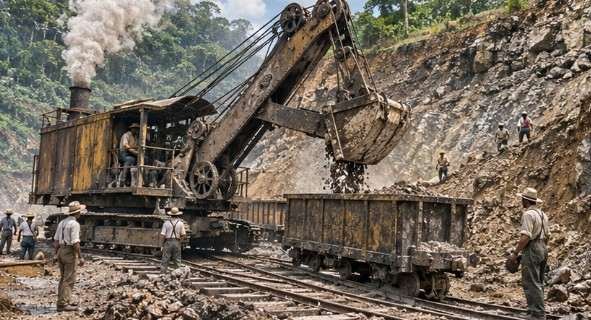
Ask what challenges did workers face building the Panama Canal and the honest answer starts with incompetence before it ever gets to geography. The French attempt between 1881 and 1889 failed for reasons that had almost nothing to do with engineering skill and almost everything to do with disease, weather, and a management culture that treated labor as a consumable material.
When the United States took over the concession in 1904, the Army Corps of Engineers inherited a graveyard of rusted machinery, several thousand unburied bodies, and a public relations disaster that made recruitment a strategic problem rather than an administrative one.
The labor history of the canal is a case study in how construction projects collapse when the supply chain for human beings breaks down, and any contractor who has ever lost a crew to a bad site will recognize the pattern.
The scale of the undertaking dwarfs most modern mega-projects. Roughly 56,000 people worked on the American canal at its peak, according to the Library of Congress record of the construction era, and the combined French and American efforts moved more than 200 million cubic yards of earth and rock.
What challenges did workers face building the Panama Canal across those years? The list runs from yellow fever to dynamite to a company town system that policed behavior as closely as it scheduled shifts.
Yellow fever and malaria did more damage to the French workforce than any landslide, and the medical establishment of the 1880s did not understand the vector. French engineers assumed disease came from foul air and miasma rising off the swamps, so they built hospitals uphill and drained nothing.
The actual transmission route ran through mosquitoes, a fact that Walter Reed’s Cuban experiments confirmed in 1900, well after the French company had already collapsed. Ferdinand de Lesseps, the celebrity engineer behind the Suez Canal, had staked his reputation and the savings of thousands of French households on a sea-level canal that the Chagres River would flood every rainy season.
The Encyclopaedia Britannica entry on the canal records that the French lost roughly 20,000 workers to disease during their attempt, a figure that includes engineers, clerks, and laborers from Barbados, Jamaica, and Martinique.
The American response, once William Gorgas arrived in 1904, was essentially a public health construction project. Gorgas ordered swamp drainage, oiling of standing water, window screens on every barracks, and fumigation of buildings where fever cases appeared.
His budget requests were repeatedly denied until John Stevens, the chief engineer who preceded George Goethals, backed him directly. The lesson for anyone running a remote job site is uncomfortable and obvious: the sanitation plan is a schedule item, not a welfare gesture, and the cost of ignoring it compounds faster than any line of work on the critical path.
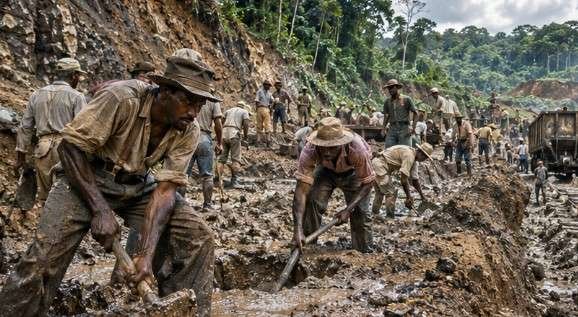
The Culebra Cut, later renamed the Gaillard Cut, is where what challenges did workers face building the Panama Canal becomes a question of geology. The cut runs roughly nine miles through the continental divide, and the excavation slopes were steeper than the rock could tolerate.
Saturated clay and volcanic material slid into the trench repeatedly, burying steam shovels and track, sometimes overnight. The Cucaracha slide moved continuously for months, and crews eventually resorted to pumping water and mud out of the cut with dredges while steam shovels worked the benches above.
Rainfall in the canal zone averages well over eight feet annually, concentrated into a wet season that turns every exposed slope into a moving surface. Anyone who has managed earthwork in clay understands the sequence: cut too steep, saturate the face, watch the toe heave, then spend the rest of the budget fighting the slope instead of advancing the grade.
The Isthmian Canal Commission’s own records, preserved through the National Archives record group for the canal commission, document repeated slope failures that forced design changes mid-excavation.
The working conditions in the cut were brutal in ways that modern heat safety standards barely address. Temperatures in the excavation sat in the nineties with near-total humidity, and men worked ten-hour shifts six days a week under direct sun with limited shade and heavy wool or canvas clothing.
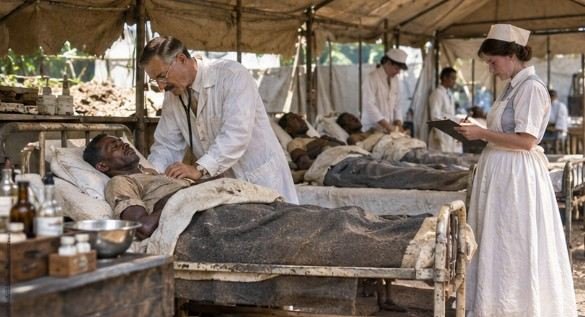
Steam shovels threw dust and coal smoke into the same air the laborers breathed, and the noise of drills, blasts, and locomotives made verbal coordination nearly impossible. Heat illness was routine, and the hospitals at Ancon and Colon processed thousands of admissions monthly.
What challenges did workers face building the Panama Canal that rarely appear in the engineering histories? Dehydration, foot rot from constant wet boots, intestinal parasites from contaminated water, and the simple exhaustion of moving rock by hand when a shovel crew went ahead of the machinery.
The commissary system that fed the workforce was itself a logistical achievement, importing cattle, flour, and fresh produce on a scale that rivaled feeding a small city, but the quality varied by camp and the men on the lowest pay grades ate worst.
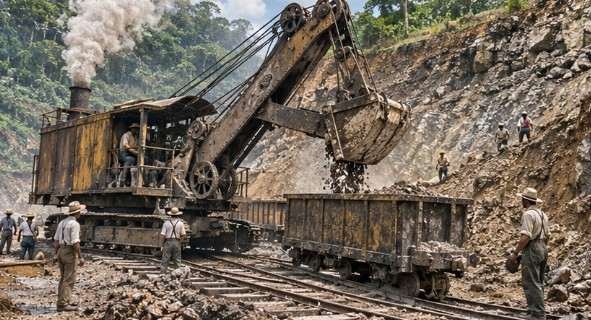
Dynamite did the heavy work in the cut, and the accident record reflects how crude the handling procedures were by contemporary standards.
Powder crews tamped charges with wooden poles, but premature detonations still killed men regularly, and misfires were sometimes approached before the required wait. The American Society of Mechanical Engineers landmark designation for the canal notes the sheer volume of blasting required to move the cut, and the fatality counts attached to the American era alone run into the hundreds before disease is even counted.
| Hazard Category | French Era (1881 to 1889) | American Era (1904 to 1914)
|
|---|---|---|
| Disease (yellow fever, malaria) | Dominant cause of death | Sharply reduced after 1905 mosquito campaign |
| Landslides and slope failure | Recurring, poorly documented | Continuous in Culebra Cut, forced redesign |
| Blasting accidents | Frequent, little oversight | Frequent, formal reporting established |
| Heat and exhaustion | Unmanaged | Tracked through hospital admissions |
| Housing and sanitation | Barracks, poor drainage | Screened quarters, piped water, commissaries |
These dangerous working conditions contributed to a devastating loss of life. Understanding how many people died building the Panama Canal reveals the human cost of this historic engineering project.
The recruitment problem was severe enough that the Isthmian Canal Commission sent agents across the Caribbean and Europe to sign men up. What challenges did workers face building the Panama Canal once they arrived often had less to do with the work itself than with the pay structure.
The Gold Roll and Silver Roll system split the workforce by race and nationality, with white American skilled trades on gold payroll receiving higher wages, subsidized housing, and access to separate clubs, while Black Caribbean laborers on silver payroll earned a fraction of that and lived in barracks with inferior food and medical care. The system was formalized in 1904 and persisted through the entire construction period.
Barbados alone sent tens of thousands of men across more than a decade of recruitment, and the return flow of sick and injured workers created social strain on the island. Labor unrest appeared periodically, and the commission responded with surveillance, deportation threats, and rules restricting movement between camps.
The historian Julie Greene’s work on the canal workforce, summarized through public domain canal commission reports on Project Gutenberg, documents how thoroughly the payroll system shaped daily life, down to the quality of the mattress a man slept on.
The canal zone operated as a company town with police powers, and the housing hierarchy mapped directly onto the payroll hierarchy. Gold Roll employees got cottages with furniture, ice delivery, and screened porches.
Silver Roll workers got barracks with communal latrines and shared bunks, sometimes assigned by shift so that one bed served two men across a twenty-four hour cycle. Commissaries sold goods at company-set prices, and wages were frequently paid partly in scrip redeemable only at those stores.
What challenges did workers face building the Panama Canal inside the camps themselves? Alcohol restrictions, curfews, mandatory vaccination, and a pass system that limited travel outside the zone. The commission viewed all of this as necessary for disease control and productivity, and there is a defensible argument that the sanitation rules saved lives that would otherwise have been lost to fever.
The wage disparity, though, had nothing to do with public health and everything to do with the racial assumptions of the era, and it shaped the labor relations of the entire project.
Every piece of equipment on the canal arrived by ship and had to be repaired on site, which meant the commission built its own foundries, machine shops, and rail network just to keep the excavation moving.
Steam shovels broke constantly under the load, locomotives derailed on temporary track laid across saturated fill, and the dirt trains that hauled spoil to the dump sites required a dispatching system as complex as any modern yard operation. When a shovel went down in the cut, the entire sequence behind it stalled, and the schedule absorbed the loss.
This is the part of the story that resonates hardest for anyone in heavy civil work today. The canal’s success depended less on any single engineering breakthrough than on industrial logistics: keeping spare parts in stock, training mechanics to rebuild a steam engine in the field, and running a supply chain that reached from Pittsburgh steel mills to a jungle depot within weeks.
What challenges did workers face building the Panama Canal when a pump failed at the bottom of a flooded cut? They waited for a replacement to clear customs in Colon, and the water kept rising while they waited.
The construction industry still runs the same failure modes, just with better documentation. Disease control has become heat illness prevention and silica exposure management. Landslide prediction has become geotechnical instrumentation and slope monitoring.
Segregated payrolls have become subcontractor labor compliance and prevailing wage audits. The Panama Canal construction record is useful precisely because the mistakes are so legible in hindsight.
What challenges did workers face building the Panama Canal that a modern project manager would recognize immediately? A workforce recruited from distant labor markets with no local support network, a medical plan bolted on after the first crisis, equipment maintenance deferred to protect schedule, and a cost accounting system that hid the true labor burden behind a segregated payroll.
Every one of those is a live risk category on a contemporary job site. The canal got built because the Americans eventually treated sanitation, housing, and logistics as core construction scope rather than overhead to be trimmed, and the projects that fail today usually fail for the opposite reason.
The final excavation numbers from the Gaillard Cut stand as the project’s real monument, and the men who moved that rock did so under conditions that no modern safety regulator would permit for a single shift.
The canal opened in 1914 because a generation of engineers learned, mostly the hard way, that the ground and the workforce are the same problem and have to be planned together. Contractors who separate those two questions are still losing schedules to the same oversight a century later.