 11
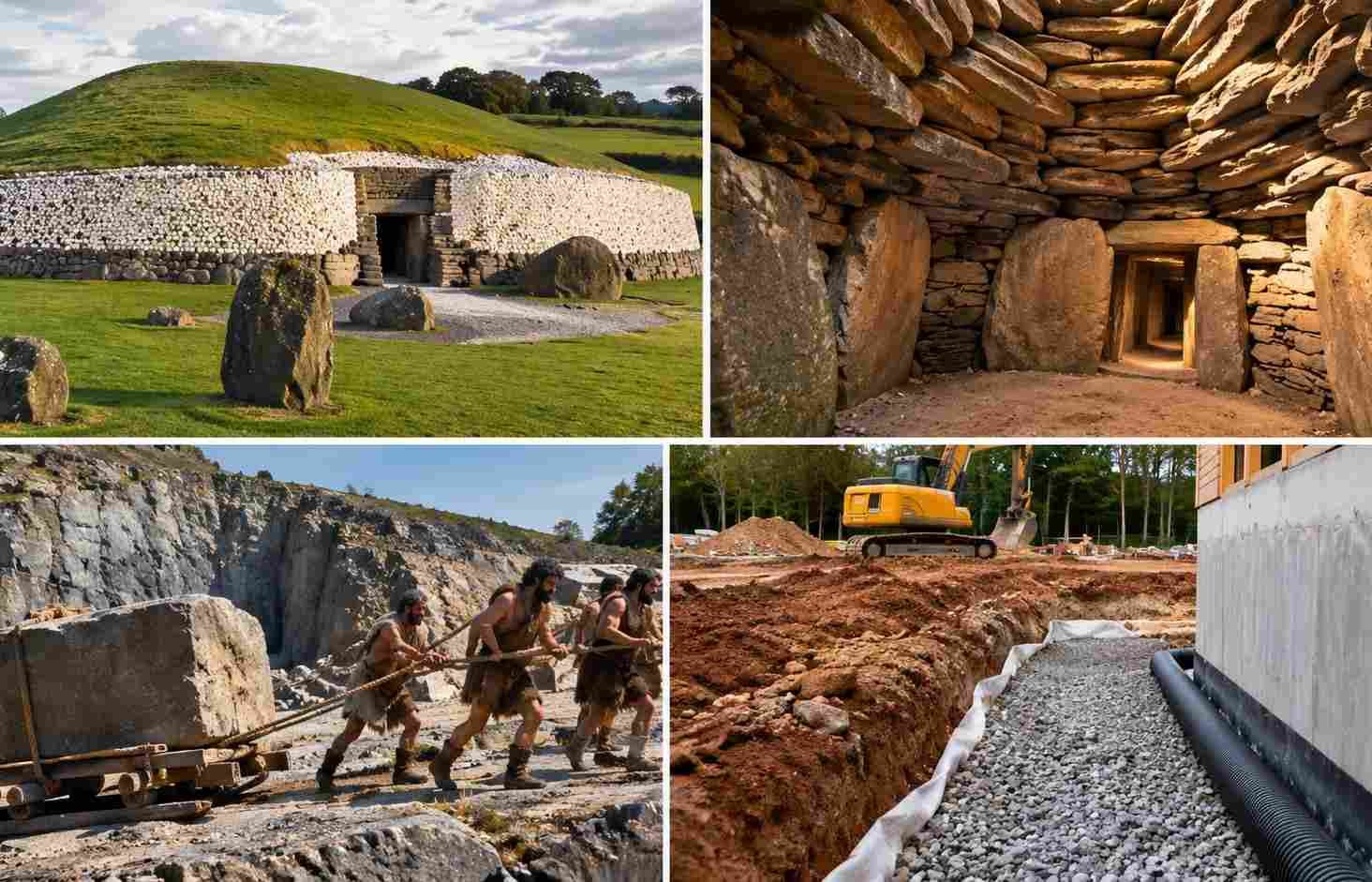
The answer to the question of what is the oldest building in the world depends on a definition most people never stop to consider: whether a stacked pile of stones counts as a building or just a pile. Archaeologists generally settle on a working threshold, which is that a structure must show deliberate walls, a defined interior, and evidence that someone meant it to stand long enough to be used.
By that standard, the oldest building in the world sits in southeastern Turkey, at a site called Göbekli Tepe, where hunter-gatherers raised limestone pillars with carved animal reliefs roughly 11,000 years ago, several millennia before anyone in the region had figured out pottery or farming. Construction crews who spend their days reading shop drawings tend to find that timeline bracing, because it means the trade of moving heavy stone predates agriculture, writing, and the wheel by a comfortable margin.
Definition fights consume most of the archaeology on this subject, and the fights are not academic trivia. A circular arrangement of stones on a hillside might be a foundation, a tomb marker, a windbreak, or a ceremonial ring, and each answer pushes the date and the location of the oldest building in the world somewhere different.
The UNESCO World Heritage listing for Göbekli Tepe describes the site as a series of monumental circular structures built by hunter-gatherers, which is the language of architecture rather than the language of artifact scatter. That distinction matters because a structure has load paths, and load paths mean someone solved a problem in compression and bearing capacity without steel, mortar, or a single line of engineering notation.
Three tests separate a building from a suggestive rubble field. First, the walls have to enclose a volume. Second, the construction has to show intent, meaning a consistent method applied across more than one element. Third, the whole thing has to survive long enough to be studied, which is the brutal filter that eliminates most of the ancient world’s timber structures from consideration entirely.
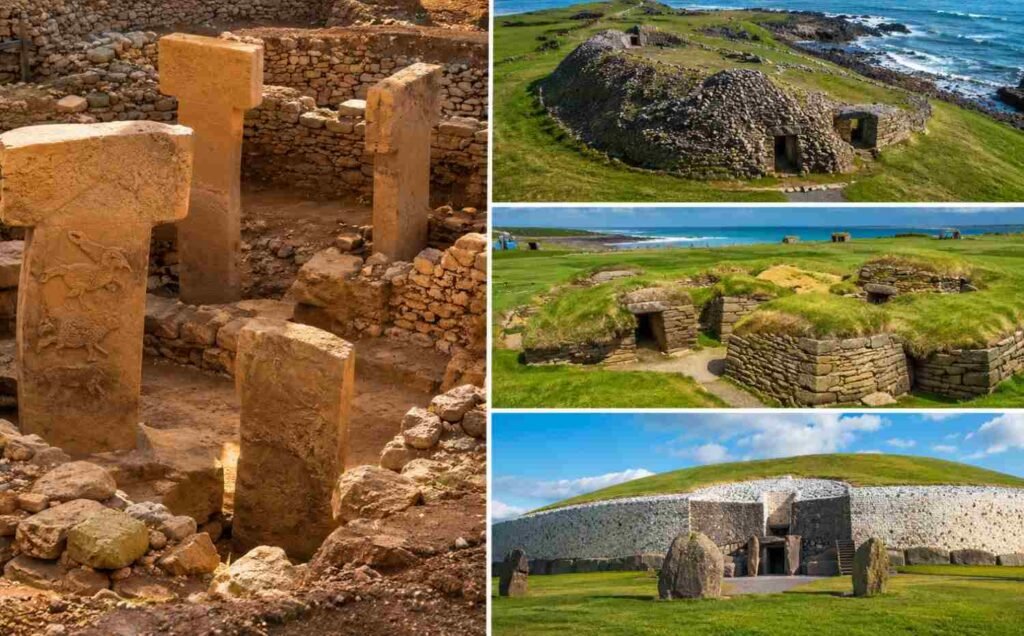
Six sites carry most of the weight in this argument, and each one shifts the answer depending on which criteria you weight heaviest. The table below lays out the practical comparison, including the construction characteristics that a field crew would actually notice.
| Site | Location | Approximate Age | Construction Method | Status in the Debate
|
|---|---|---|---|---|
| Göbekli Tepe | Şanlıurfa Province, Turkey | c. 9500 to 8000 BCE | Carved limestone T pillars set in circular enclosures | Leading candidate for oldest building in the world |
| Tower of Jericho | West Bank | c. 8000 BCE | Stacked fieldstone, 8.5 meters tall | Oldest known tower, part of a wider settlement |
| Barnenez Cairn | Brittany, France | c. 4800 BCE | Dry stone masonry, 11 chambers | Oldest monumental building in Europe |
| Newgrange | County Meath, Ireland | c. 3200 BCE | Corbelled stone with earth covering | Oldest surviving roofed structure of scale |
| Pyramid of Djoser | Saqqara, Egypt | c. 2650 BCE | Cut limestone courses | Oldest large cut-stone building |
| Knap of Howar | Orkney, Scotland | c. 3700 BCE | Dry stone walls with slab partitions | Oldest standing stone house in northern Europe |
The table exposes why the question of what is the oldest building in the world refuses a single clean answer. Göbekli Tepe is older than everything else on the list by thousands of years, but its enclosures were deliberately buried and abandoned, which raises the question of whether a structure built to be backfilled qualifies as a building or as a monument. The Tower of Jericho is more conventionally architectural and considerably better understood, but it is one component of a settlement rather than a freestanding structure. Barnenez and Newgrange are both unmistakably buildings in any modern sense, with walls, chambers, and roofs, and they hold the crown for the oldest intact roofed construction anywhere in the world.
Quarrying limestone pillars that weigh between ten and twenty tons, dragging them uphill, and setting them upright in prepared sockets is not a task that happens by accident. The builders at Göbekli Tepe worked without draft animals, metal tools, or the wheel, which means the entire operation ran on human muscle, rope, leverage, and an organizing intelligence that could plan a build season. Researchers publishing through the Archaeological Institute of America have documented how the site’s construction predates settled agriculture in the region, which challenges the long-standing assumption that complex building projects require a farming surplus to feed the workforce.
The pillars themselves carry the evidence of planning. Many were carved from bedrock outcrops and shaped in place before extraction, a sequence that requires the crew to know the final dimensions before the first cut. The sockets in the enclosure floors are cut to receive specific pillar bases, which means the layout existed on paper or in somebody’s head before any stone moved. That is the same preconstruction logic that governs a modern job site, just executed with flint and antler instead of a total station and a set of stamped drawings.
Anyone who has ever set a heavy post in a hole will recognize the difficulty. The socket has to be plumb, the base has to bear evenly, and the backfill needs to lock the element in place without tipping it during the process. Doing that with a twenty-ton carved pillar and no mechanical advantage is a different order of problem, and the fact that the pillars at Göbekli Tepe are still standing after eleven thousand years says everything about the quality of the bearing preparation. If you want a single practical takeaway from the oldest building in the world, it is that foundations decided the outcome then exactly as they do now.
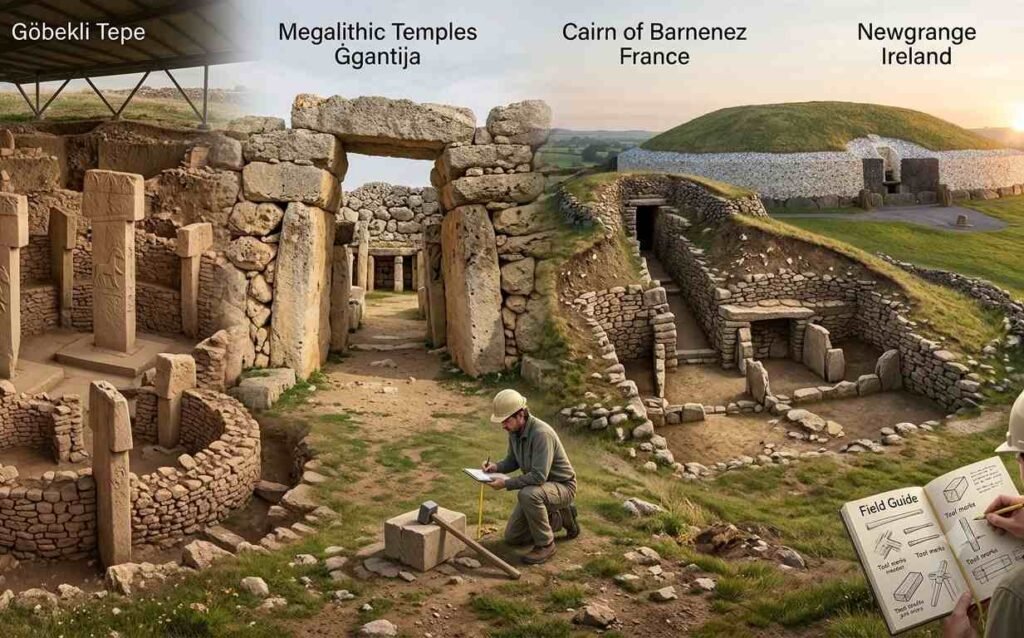
Every few years, a new dig pushes the boundary back and forces a rewrite of the standard answer. The reason is straightforward: most of the ancient world’s construction has been recycled. Stone gets quarried from old structures and reused, timber rots, mudbrick dissolves in rain, and the sites that survive are the ones built from material durable enough to outlast the climate and the scavengers. That survival bias means the record we have is not a representative sample of what ancient people built, and the true first building may well have been a post-frame shelter in a wet climate that vanished six thousand years before Göbekli Tepe’s pillars were carved.
Radiocarbon dating drives the revisions. Charcoal recovered from enclosure fills gives a date range rather than a single year, and the range for Göbekli Tepe has been narrowed repeatedly as new samples come out of the ground. The University of Kansas research on the site’s construction sequence illustrates how the enclosures were built, used, and then deliberately entombed in a pattern that spans centuries rather than a single generation. That finding matters for the question of what is the oldest building in the world because it suggests the site was a project sustained across many working lifetimes, not a one-off erection.
Comparable pressure is building on other candidates. Excavations in the Levant and Anatolia continue to surface circular structures that date to roughly the same window, and each discovery adds a data point to a distribution rather than replacing the top of the list. The oldest building in the world is not a fixed title so much as a moving frontier, and anyone who quotes a single site and a single date as settled fact has stopped reading the literature.
Three practices from these sites translate directly to jobs that break ground this month, and none of them require romanticizing the past. The first is bearing capacity. The dry stone walls at Barnenez and the slab partitions at Knap of Howar are stable because the masons distributed load across the full footprint instead of concentrating it on isolated points, which is why those walls have not settled into the ground after five thousand years of Atlantic weather.
The second is material sourcing. The builders at Newgrange hauled greywacke from the coast and quartz from the Wicklow Mountains, which means they ran a supply chain with a defined quarry, a known haul route, and a placement sequence. The World History Encyclopedia entry on Newgrange documents the scale of that material movement and the corbelled roof technique that kept the chamber dry without a single arch or mortar joint. Modern crews do the same thing with a different logistics stack, and the failure modes are identical when the material shows up in the wrong sequence.
The third is moisture management. Every one of these structures sits above the water table, drains away from its footings, and uses stone that tolerates freeze and thaw. The corbelled roofs at Newgrange and the cairn passages at Barnenez both shed water outward, and none of them rely on a sealant or a membrane that has to be maintained. That is a stubborn point worth repeating to any owner who wants to value-engineer the drainage detail out of a foundation plan. The oldest surviving buildings on earth got there because nobody cut the waterproofing scope.
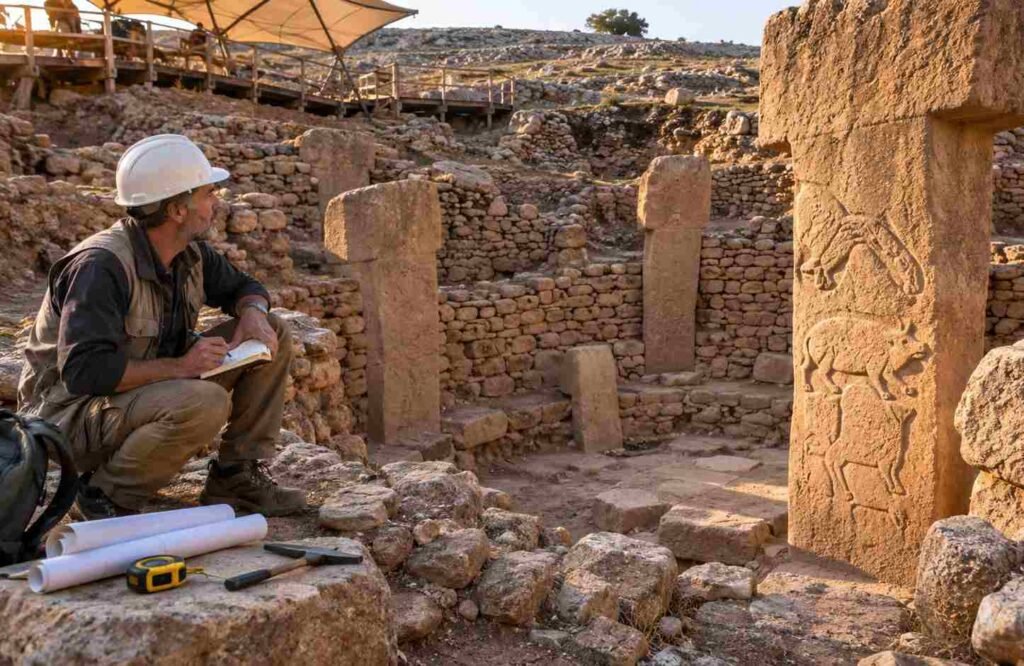
Site selection drove survival more than construction skill did. Göbekli Tepe sits on a limestone plateau, Barnenez sits on a granite headland, and the Orkney houses sit on bedrock with good drainage, which is why those sites have anything left to excavate. Builders who pick a site with poor drainage and unstable subgrade are fighting history, because the record shows clearly that geography outlasts workmanship every time.
Repair history is part of the building history. Newgrange was reconstructed in the twentieth century, the Tower of Jericho has been stabilized more than once, and every one of these sites has been altered by the people who excavated it. Treat any claim about the oldest building in the world as a claim about the oldest surviving evidence, with the caveat that the current form of the structure is partly a modern intervention. That habit of reading a building as a record of every phase it passed through, including the bad ones, is what separates a competent field assessment from a brochure.
The frontier will keep moving outward as ground-penetrating radar and lidar survey more of the Anatolian plateau and the Levantine corridor, and the next candidate for the oldest building in the world probably has not been excavated yet. As researchers continue investigating what is the oldest building in the world, new discoveries may challenge existing records and reshape our understanding of ancient construction.
What will not change is the operative principle the sites demonstrate: plan the layout before you cut the stone, prepare the bearing surface before you set the element, and drain the footing before you call the job finished. The crews that got that right eleven thousand years ago are still standing in the archaeological record, and the ones that skipped it are gone without a trace.