 11
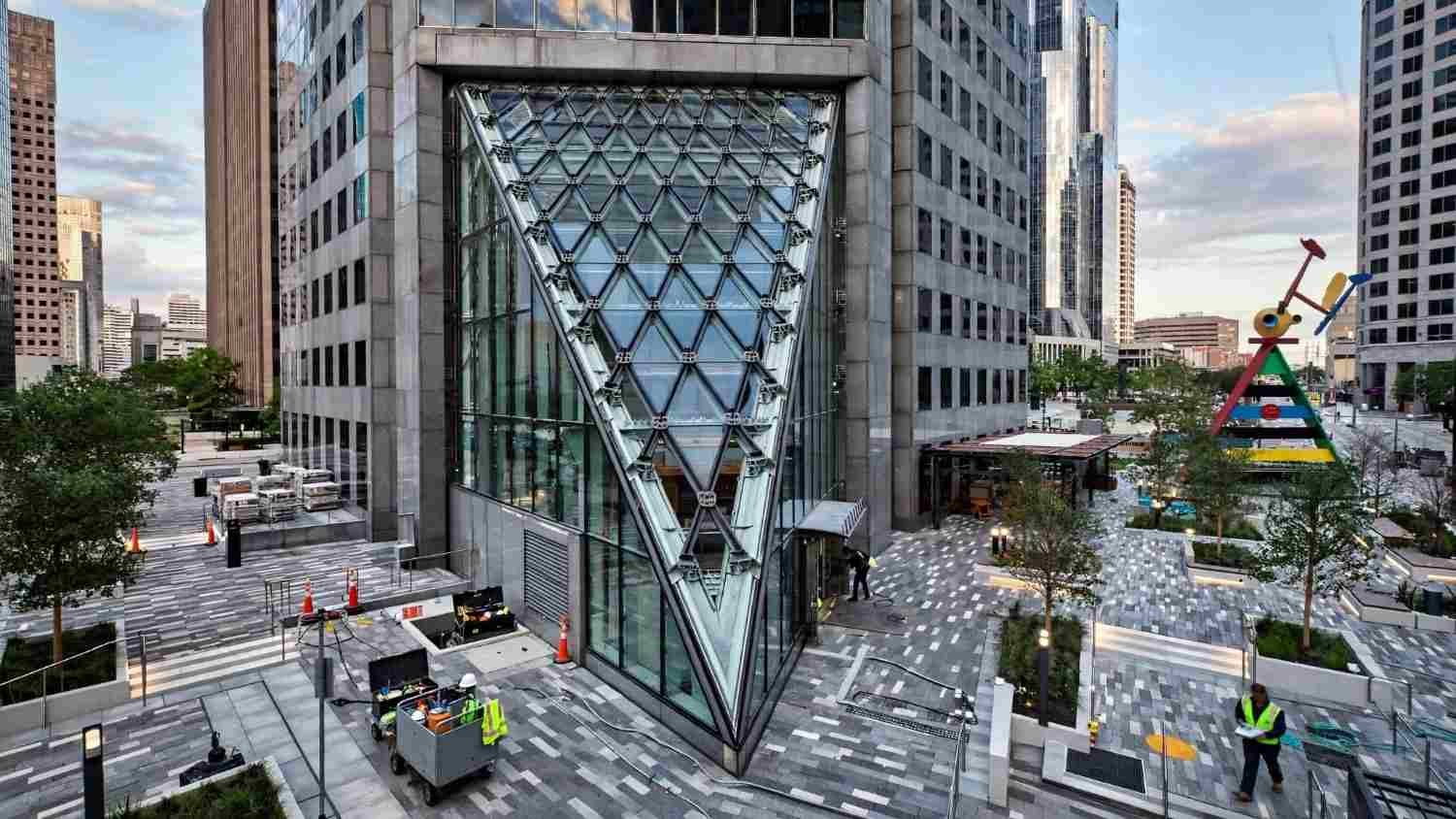
The answer to what is the tallest building in Atlanta is Bank of America Plaza, a 55-story spire-topped tower at 600 Peachtree Street Northeast that rises 1,023 feet and has held the city crown since 1992. Most people stop at the height number and move on, which is a mistake if you actually work in construction, because the story behind that figure explains more about how Atlanta builds than any skyline photo ever will.
The building is not the newest tower in the city, it is not the widest, and it is not the one with the best lobby, yet it has outlasted every challenger for more than three decades. Understanding why requires digging into the structural choices, the zoning fights, and the economics that shaped the downtown core, and that is exactly what this guide does for contractors, developers, and owners who read skylines the way other people read spreadsheets.
Bank of America Plaza tops out at 1,023 feet according to the Council on Tall Buildings and Urban Habitat, the organization that maintains the global height database most of the industry treats as authoritative. You can verify the entry directly through the CTBUH Skyscraper Center, which lists the tower at 55 floors with an architectural top of 1,023 feet, an occupied roof below that, and a distinctive pyramid and spire assembly that pushes the official measurement well past the usable building envelope. That distinction matters in construction terms, because architectural height and occupiable height are two different numbers and developers argue about which one counts depending on who is paying for the signage.
When someone asks what is the tallest building in Atlanta, the honest answer depends slightly on the measurement method, and any field guide worth reading says so up front. By architectural height, Bank of America Plaza wins without argument. By roof height, the gap narrows considerably because a meaningful chunk of that 1,023 feet is ornamental spire rather than rentable floor area. By floor count, the Truist Plaza tower comes in at 60 stories, which is more than Bank of America Plaza’s 55, meaning a pedestrian looking up from the street could reasonably conclude the wrong building is taller. This is the sort of ambiguity that shows up in every skyline argument and every construction dispute over what “height” actually means in a contract.
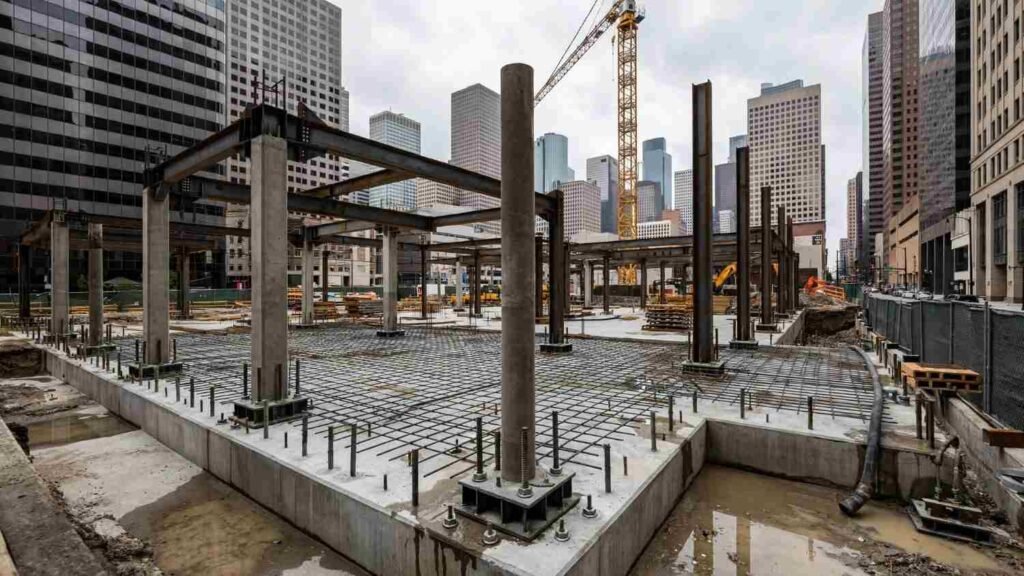
Construction began in 1991 and the tower opened in 1992, which means the entire project moved from groundbreaking to occupancy in roughly the time it takes a modern mid-rise to clear its entitlement phase. The design came from Kevin Roche John Dinkelo and Associates, and the structural work was handled by a team that had to solve a specific problem: putting a very tall, very slender tower on a downtown Atlanta site with the soil conditions and adjacent infrastructure that come with a dense urban block. The result is a building with a footprint that looks modest relative to its height, an architectural choice that gives the tower its distinctive verticality and that also constrained how much floor plate the developer could lease on any given level.
What is the tallest building in Atlanta has remained a fixed answer for a simple economic reason. After the early 1990s, Atlanta’s office construction appetite shifted toward Midtown and Buckhead, where land was cheaper and where a new generation of tenants wanted to be near transit, restaurants, and residential density rather than the older downtown core. The towers that went up in those districts, including the 50-story One Atlantic Center and the 60-story Truist Plaza, were substantial buildings by any measure, but none of them cleared the 1,023-foot mark. A challenger would need a downtown site, a tenant willing to anchor a speculative tower, and a financing package that survived the 2008 downturn, the 2020 office shock, and the current period of elevated vacancy. Nobody has assembled all three at once.
The table below lays out the major contenders so you can see exactly where the gap sits, using figures consistent with the CTBUH database and publicly reported project records. Notice that floor count and height do not track together, which is the single most common source of confusion when people debate what is the tallest building in Atlanta at a job site or a dinner party.
| Building | Location | Floors | Architectural Height | Year Completed
|
|---|---|---|---|---|
| Bank of America Plaza | Downtown | 55 | 1,023 ft | 1992 |
| Truist Plaza (formerly SunTrust Plaza) | Downtown | 60 | 871 ft | 1992 |
| One Atlantic Center | Midtown | 50 | 820 ft | 1987 |
| 191 Peachtree Tower | Downtown | 50 | 770 ft | 1990 |
| Three Alliance Center | Buckhead | 30 | 500 ft | 2016 |

A meaningful portion of Bank of America Plaza’s official height is the spire assembly at the top, and it is worth being precise about the percentages because this is where the “which building is really taller” debates originate. The CTBUH measurement standard distinguishes between architectural top, which includes spires and other permanent structural elements, and roof height, which excludes them.
The organization publishes its criteria openly through its height criteria documentation, and it is worth reading if you ever find yourself in a contract negotiation where the word “height” appears without a definition. Antennas, flagpoles, and other non-architectural appendages do not count under the standard, which is why some buildings that look enormous from a distance rank surprisingly low in the database.
For what is the tallest building in Atlanta purposes, the spire counts, and the building wins under the criteria the industry actually uses. That said, a construction professional reading the plans needs to distinguish between the structural top of the occupied tower, the mechanical penthouse, and the decorative assembly, because those elements are built by different trades, permitted under different scopes, and maintained by different budgets over the life of the building. The spire on this particular tower has been a maintenance item for decades, and its condition is one of the reasons the building’s ownership group has invested in restoration work over the years.
The absence of a taller tower in Atlanta is not an accident of ambition, it is a product of the city’s unusually dispersed growth pattern and a development culture that has historically favored spreading outward over stacking upward. Atlanta’s zoning and land use framework, administered through the Department of City Planning, has accommodated a tremendous amount of low and mid-rise development across the metro, which reduces the economic pressure to build supertall towers. When land is available at reasonable cost and the entitlement process is more predictable for six-to-eight-story projects than for fifty-story ones, the marginal return on going taller drops fast.
There is also an infrastructure constraint that rarely gets mentioned in skyline articles. Very tall towers require specialized elevator systems, fire suppression at pressures that demand bespoke engineering, and structural damping or mass tuning in some cases, all of which add cost in a way that is difficult to recover through lease rates in a market where downtown rents do not command the premium that similar towers fetch in Manhattan or Chicago. Nobody wants to hear that the reason Atlanta’s skyline has a ceiling is partly financial, but that is the honest explanation, and it is the same explanation a contractor would give a client who wants to know why the tallest thing in their neighborhood is not as tall as the tallest thing in the next city over.
Set alongside other major metros, Bank of America Plaza sits comfortably in the middle tier of American skyscrapers and roughly in line with what a southern city of Atlanta’s population and economic profile would be expected to support. It is shorter than One World Trade Center, shorter than the Willis Tower, and shorter than the Wilshire Grand Center in Los Angeles, but taller than most towers in the Southeast and taller than anything in Charlotte, Nashville, or Tampa. Anyone who asks what is the tallest building in Atlanta and then expects a figure in the 1,500-foot range is usually drawing on New York or Chicago intuition, and the regional context corrects that quickly.
The comparison that matters more for development purposes is the ratio of height to occupied floor area. Atlanta’s tallest tower spreads a relatively constrained floor plate across its occupied floors, and that geometry makes it less efficient on a square-foot-per-dollar basis than the wider towers common in newer construction. Contractors and cost estimators who work on high-rise projects understand this well: a tower that goes up narrow is not always a tower that leases cheaply, and the operating cost per square foot on a slender 1990s tower can be meaningfully higher than on a modern, wider building of similar floor area. That reality has shaped how the building has been repositioned and renovated over the years.
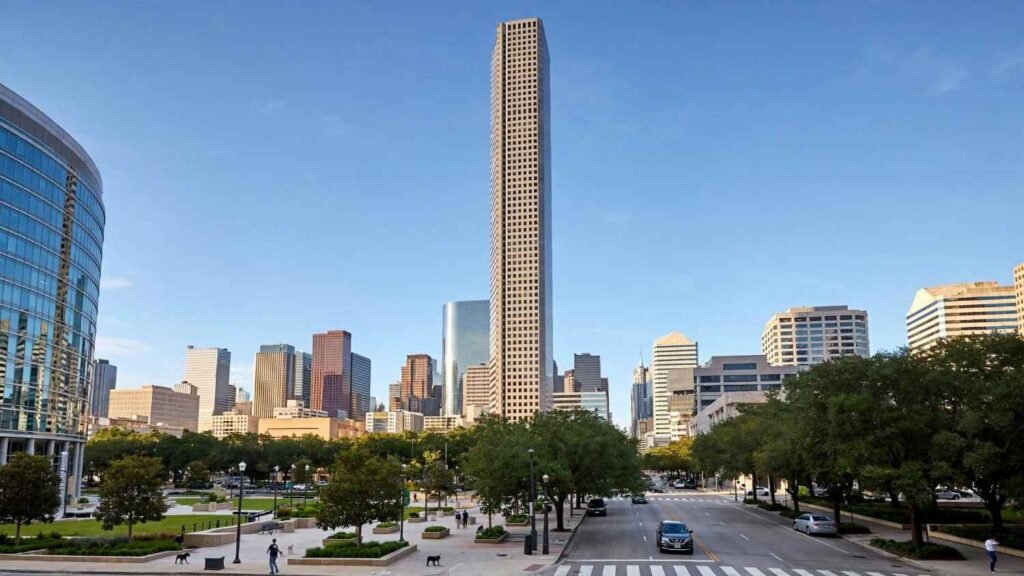
Reaching 1,023 feet in 1991 required a structural system tuned to the site. The tower’s concrete core and perimeter framing combination, its foundation work on a downtown Atlanta block, and its construction sequencing all reflected the engineering limits of the era, which is why the building’s structural drawings remain a useful reference for anyone studying how high-rise projects of that period were assembled. The ongoing maintenance and renovation work on the tower has been documented through building industry channels and property records, and the building’s ownership has funded periodic capital improvements consistent with a 1990s asset that has to compete with newer towers for tenants.
The projects happening now in Atlanta tend to be far shorter than the skyline record holder, and that is the clearest signal about what the construction market actually rewards. Recent work has concentrated on residential towers of 20 to 40 stories, mixed-use buildings in Midtown, and mid-rise developments across the metro, all of which deliver better returns per dollar invested than a speculative supertall. Anyone who wants to know what is the tallest building in Atlanta because they are considering a high-rise project should understand that the market answer and the record answer have been different for a very long time, and that gap is not a market failure, it is a rational response to what actually pencils.
Bank of America Plaza will remain the answer to what is the tallest building in Atlanta for the foreseeable future, and the reason is simple: no funded project currently on any planning board, public or private, would clear its height, and the conditions for a challenger are not favorable in the current office market. The building’s continued dominance is a useful reminder that in construction, the record holder is not usually the most profitable building in a market, and it is not usually the one that other developers study as a template.
It is the one that happened to combine a particular site, a particular era, and a particular tenant mix at a moment when all of those aligned, and that alignment has not recurred in Atlanta in more than thirty years. For those comparing skyscraper development across major U.S. markets, exploring what is the tallest building in texas offers another perspective on how regional economic conditions, construction demand, and urban development influence building heights. A contractor watching the skyline for the next record should be watching the capital markets and the entitlement calendars far more closely than the elevation drawings.