 11
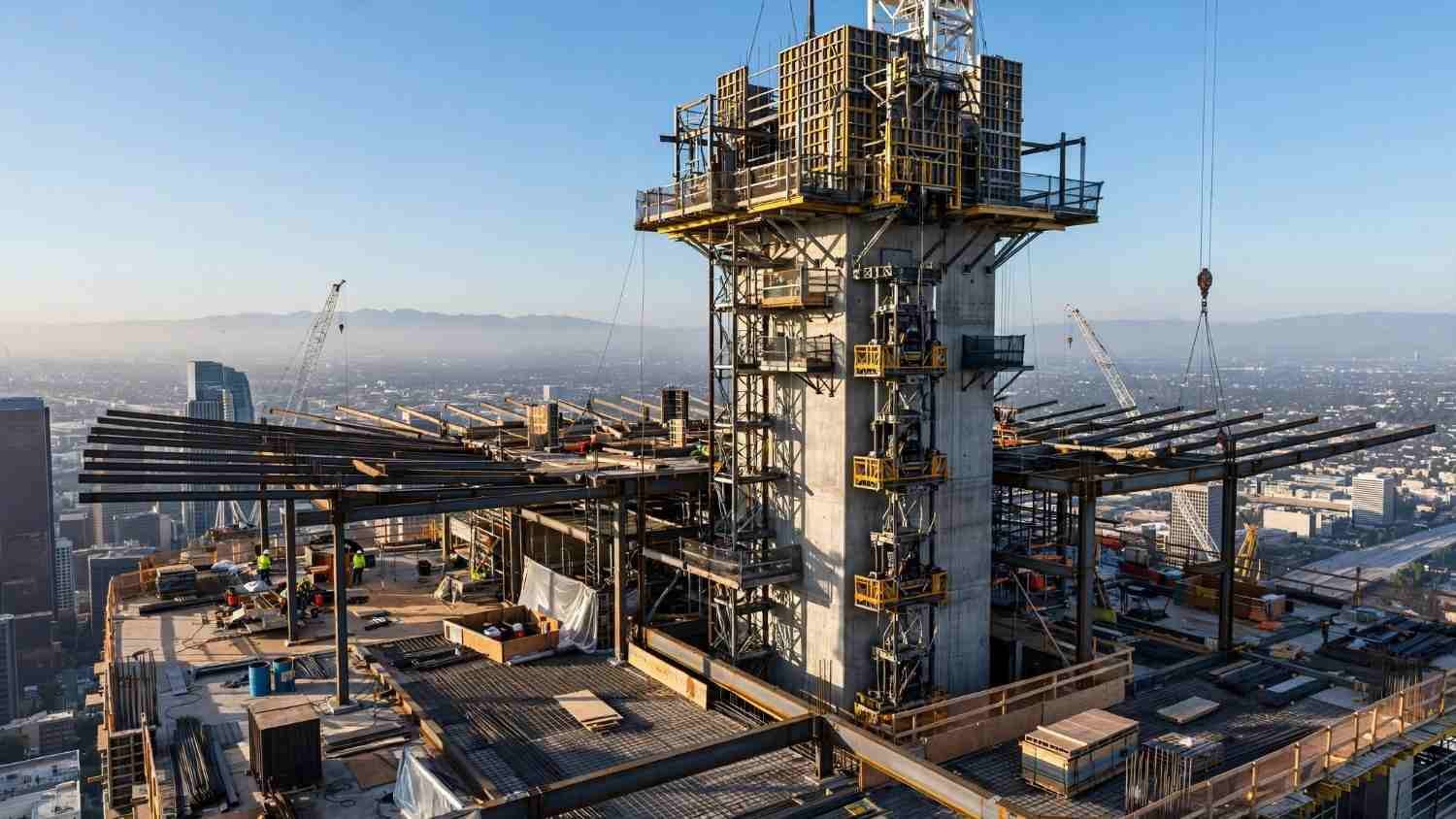
The answer to what is the tallest building in California is the Wilshire Grand Center in downtown Los Angeles, a 1,100-foot tower topped by a 160-foot architectural spire that pushes its official height past every other structure in the state. That spire is not decoration added after the fact. It exists because of a zoning calculation, a fire code exemption, and a developer who understood exactly how the city measures a building. For anyone who works in construction, the Wilshire Grand is less a landmark than a case study in how height is defined, permitted, financed, and built in a state that makes all four of those things difficult on purpose.
Most people searching for what is the tallest building in California want a name and a number. The name is easy. The number is where the story gets interesting, because the gap between the Wilshire Grand and its nearest rival is roughly 82 feet, and almost all of that gap is the spire. Strip the spire away and the roof heights of the two tallest towers in the state sit within a few dozen feet of each other. That detail matters to architects, engineers, and the contractors who bid on high-rise work, because it reveals that bragging rights in California are settled by paperwork as much as by structural steel.
California has a small club of supertall and near-supertall towers, and the ranking among them is tighter than most headlines suggest. For those comparing skyscraper heights across major U.S. cities, exploring what the tallest building in Chicago is provides useful context for understanding how California’s high-rise landmarks measure up against other iconic structures. The table below lays out the buildings that occupy the top of the state’s height list, along with their completion years and the construction systems that made them possible.
| Building | City | Height (ft) | Floors | Completed
|
|---|---|---|---|---|
| Wilshire Grand Center | Los Angeles | 1,100 | 73 | 2017 |
| Salesforce Tower | San Francisco | 1,070 | 61 | 2018 |
| U.S. Bank Tower | Los Angeles | 1,018 | 73 | 1990 |
| Aon Center | Los Angeles | 858 | 62 | 1973 |
| Transamerica Pyramid | San Francisco | 853 | 48 | 1972 |
The height figures above follow the Council on Tall Buildings and Urban Habitat standard, which counts architectural spires toward total height but excludes antennas and other non-architectural elements. That distinction is why the Wilshire Grand edges out Salesforce Tower by 30 feet even though the San Francisco tower carries more occupied floor area.
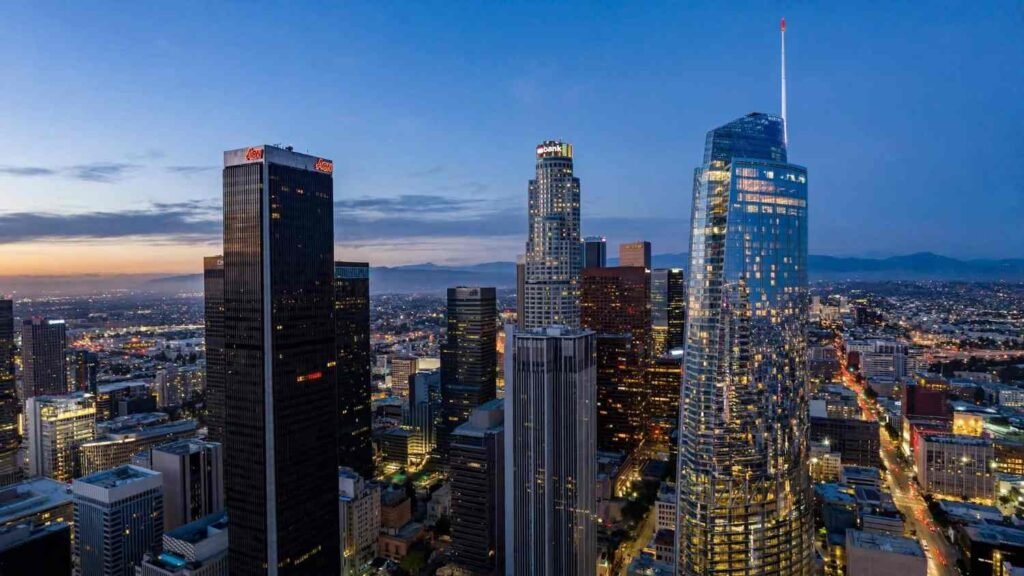
The Wilshire Grand replaced the old Wilshire Grand Hotel, a 1950s property that had decayed into a liability for its owners. The redevelopment was led by Korean Air and designed by AC Martin, a Los Angeles firm with deep roots in the city’s commercial core. The project broke ground in 2014 and topped out in 2016, with the building opening to tenants and hotel guests in 2017. The spire that pushes the tower to 1,100 feet is a lit, architectural crown, which is the distinction that lets it count under the CTBUH rules.
Anyone who wants to verify the official measurement can check the CTBUH Skyscraper Center entry for the Wilshire Grand Center, which lists the height, the number of floors, and the structural classification. The same database publishes the standing for every tall building in the world, and it remains the reference most general contractors and architects use when a client asks where a given tower ranks.
The Wilshire Grand is not just the tallest building in California. It is the first major tower in Los Angeles built under a 2014 revision to the city’s fire code that allowed high-rises to include an occupiable rooftop deck rather than the traditional flat, unoccupied roof. The change came after years of lobbying by developers who argued that the flat roofs required by older code were wasted space. The redesigned roof includes a skylight lobby and an open-air terrace that sits more than 900 feet above the street.
That code change also allowed the tower to be built with a concrete core and a steel frame instead of the all-steel or all-concrete systems that dominated earlier generations of Los Angeles high-rises. The hybrid approach shaved months off the schedule and reduced the steel tonnage required. For builders who work anywhere in the state, that precedent matters more than the building’s height, because it opened the door for similar rooftop amenities on future towers in Los Angeles and other California cities.
Nobody who asks what is the tallest building in California is going to commission one next quarter. But the cost structure of the Wilshire Grand is instructive for anyone who works on multifamily or commercial projects in the state, because the same line items that appear on a 73-story tower show up, scaled down, on a 20-story apartment building or a mid-rise office conversion. The site was constrained by a dense downtown block, which forced the contractor to use a top-down construction method for the basement levels and a crawler crane staged on a neighboring parcel.
California’s high-rise construction costs run well above the national average, driven by seismic detailing, fire-rated assemblies, and the soft costs of entitlements and environmental review. The state’s building code, published through the California Building Standards Commission, layers seismic provisions on top of the national model codes, and each update adds engineering hours to every project. The state’s seismic risk is well documented by the U.S. Geological Survey Earthquake Hazards Program, which maintains the fault maps that shape how every tall building in California is designed and sited.
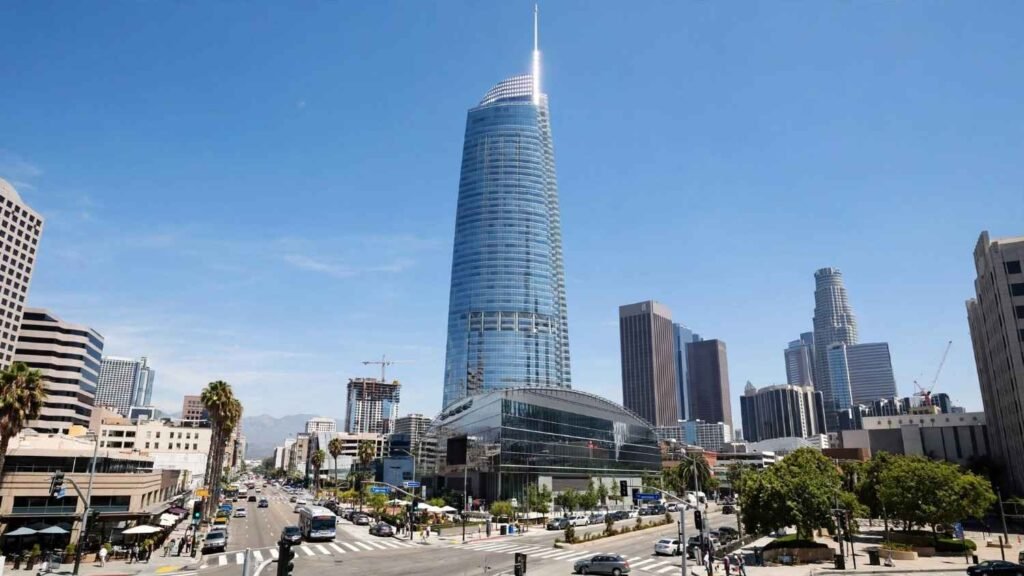
Salesforce Tower is the other building most people have in mind when they search for what is the tallest building in California, and its 1,070-foot height makes it a close second. The tower was designed by Pelli Clarke Pelli and developed by Boston Properties, and it opened in 2018 as the anchor of the Transbay redevelopment district. Its crown is a perforated aluminum veil that houses mechanical equipment, which is why the CTBUH measurement stops short of the Wilshire Grand’s spire.
The difference between the two cities’ approaches to tall buildings is worth understanding for anyone who works in either market. San Francisco ties tall building approvals to a specific redevelopment plan with fixed height limits by parcel, while Los Angeles relies more heavily on project-by-project discretionary review and the density bonus system. A developer who can navigate one city’s process will not automatically know how to navigate the other’s, and the fee structures and review timelines diverge sharply.
The search results for what is the tallest building in California are cluttered with outdated answers, and a few of those errors keep circulating in forum threads and social posts. Straightening them out saves time for anyone who has to cite a building in a report, a bid document, or a planning memo.
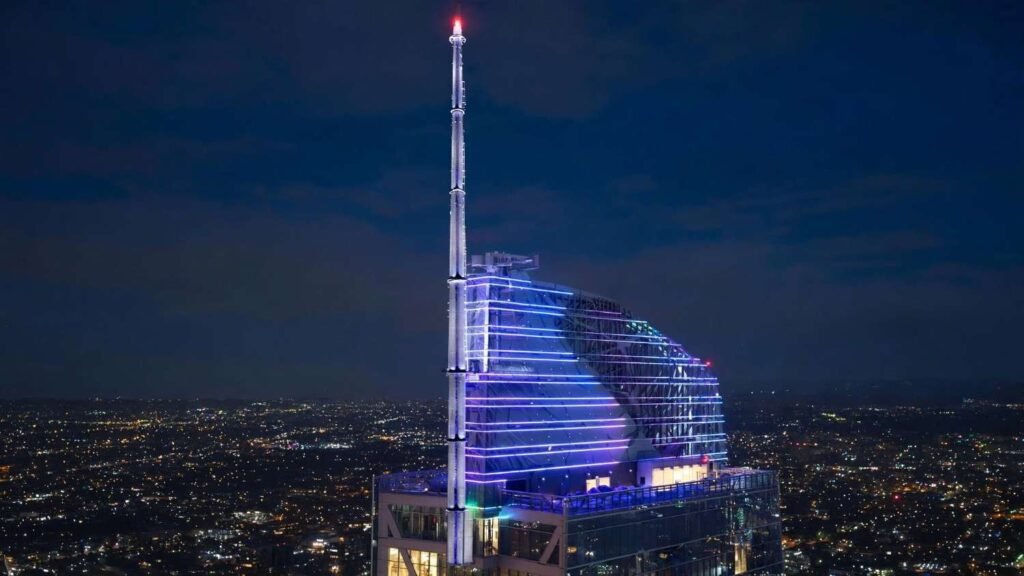
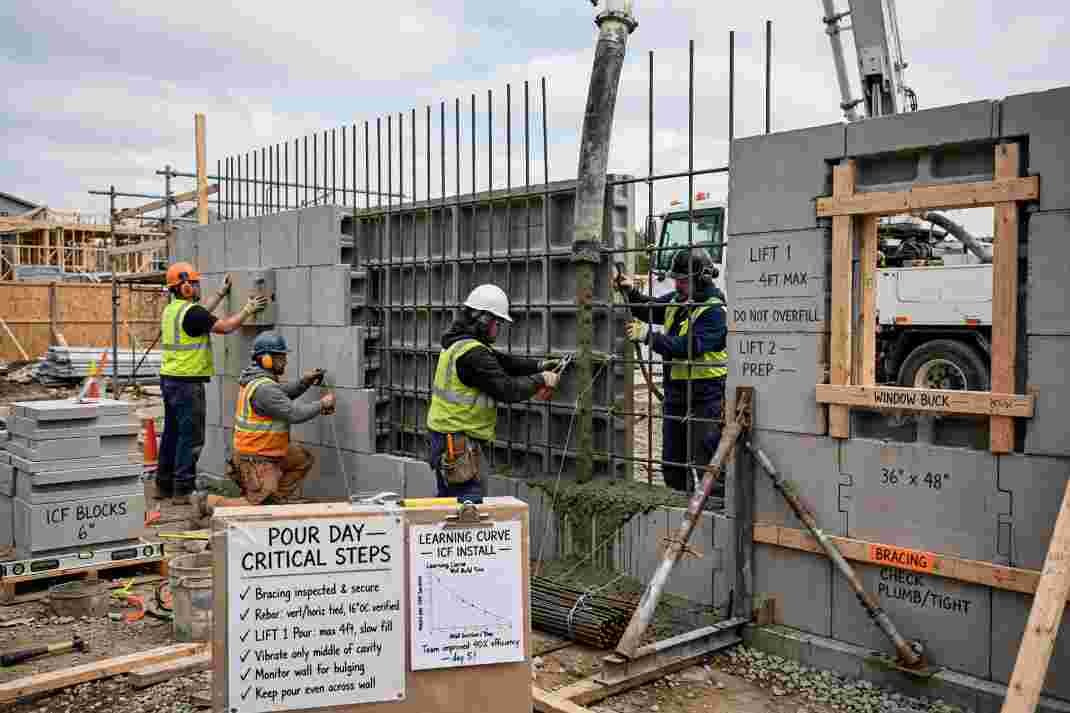
The project took about three years from groundbreaking to opening, which is fast by California standards for a tower of that scale. The schedule was helped by the decision to use a concrete core built with a self-climbing formwork system, a method that lets the core rise ahead of the steel frame and keeps the trades working in parallel rather than in sequence. The tower also used a post-tensioned mat foundation that spread the load across a deep excavation rather than driving piles to bedrock, which reduced the foundation cost on a site hemmed in by existing buildings.
Those choices were not driven by aesthetics. They were driven by the reality that in downtown Los Angeles, a project either solves the logistics of a tight urban site or it does not get built. The Wilshire Grand’s success has made it a reference point for the next wave of towers in the city, several of which are in planning or entitlement stages and are aiming at similar or greater heights.
For anyone who works in construction, the useful lesson from what is the tallest building in California is not the number at the top of the list. It is that height in California is a product of code, entitlement, and careful measurement, not just engineering ambition. A spire that counts, a rooftop deck that the fire code now permits, and a hybrid structural system that saved months on the schedule all combined to push the Wilshire Grand past its rivals. The next tower that claims the title will need the same combination, plus a site, a financing structure, and a review process that can survive the scrutiny that any project of that scale attracts.
The title currently belongs to the Wilshire Grand Center, and it will hold until a new project clears entitlement in Los Angeles or San Francisco. Any developer planning to challenge it should start with the CTBUH measurement rules and the local fire code, not the architecture. The building that tops the list next time will likely win on paperwork as much as on steel.