 11
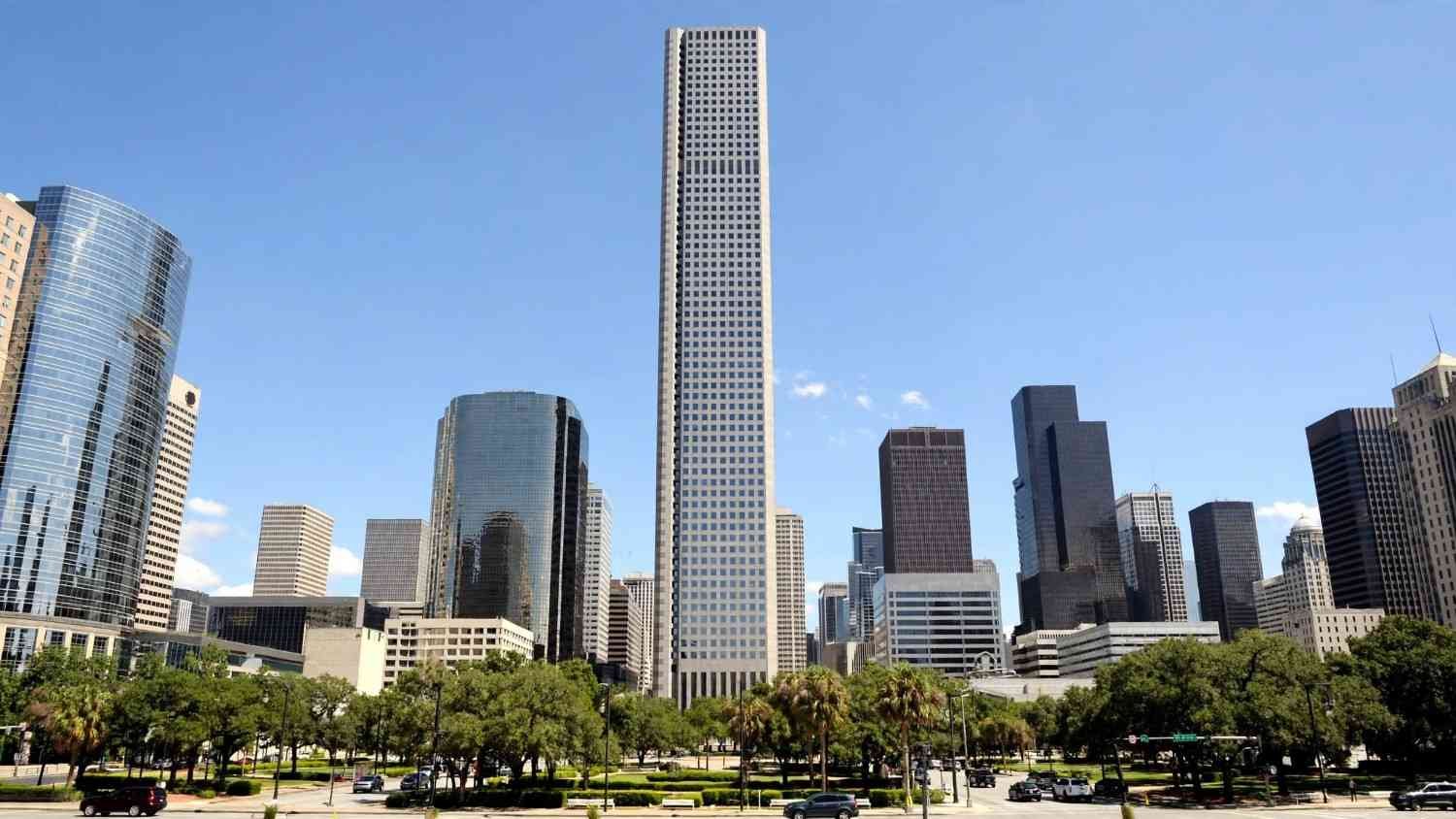
The tallest building in Texas is the JPMorgan Chase Tower in downtown Houston, a 75 story shaft of travertine and glass that tops out at 1,002 feet and has held the state record since 1982. If you are asking what is the tallest building in Texas because you are pricing a high rise bid, studying structural systems, or settling an argument at a job site, the short answer is Houston. The longer answer involves a tower that was designed by I. M. Pei, sat on the skyline before most of the current downtown towers existed, and still outranks everything Dallas and Austin have managed to put in the ground.
What follows is not a tourism brochure. It is a builder’s read on the record holder, the buildings chasing it, and the engineering and code realities that explain why Texas skylines look the way they do. Anyone who has walked a tower core or priced a curtain wall will recognize the constraints at work here.
The JPMorgan Chase Tower occupies a full block bounded by Travis, Milam, Texas, and Capital in downtown Houston. It was completed in 1982 for Texas Commerce Bancshares, which is why long time Houston contractors still call it the Texas Commerce Tower out of habit. The building rises 75 floors to a structural height of 1,002 feet, and the figure most often cited for architectural height matches that number because the tower has no spire or antenna counted separately. Its height comes entirely from occupied and mechanical floors stacked in a straight vertical run.
When you are verifying what is the tallest building in Texas, the source to trust is the Council on Tall Buildings and Urban Habitat, the body that arbitrates height disputes worldwide. CTBUH measures to the architectural top, which includes parapets but excludes antennas and flagpoles. That methodology matters because the runner up in Houston, the Wells Fargo Plaza at 992 feet, loses by ten feet. Ten feet across a 75 story tower is less than the thickness of a single floor slab plus its structural zone, which tells you how tight the race at the top actually is. The Texas Commerce Tower held the title of tallest building in Texas on its own terms for decades, and the next Texas tower to beat it will need roughly another full floor of height plus a parapet.
The gap between first and second place in Texas is small enough that a parapet decision at the design phase could have flipped the ranking. Here is how the top of the Texas stack actually reads, using published architectural heights from CTBUH and the buildings’ own specifications.
| Building | City | Height (ft) | Floors | Completed
|
|---|---|---|---|---|
| JPMorgan Chase Tower | Houston | 1,002 | 75 | 1982 |
| Wells Fargo Plaza | Houston | 992 | 71 | 1983 |
| Williams Tower | Houston | 901 | 64 | 1983 |
| Bank of America Plaza | Dallas | 921 | 72 | 1985 |
| Frost Bank Tower | Austin | 516 | 44 | 2004 |
Notice the dates. Four of the five tallest towers in Texas went up between 1982 and 1985, a three year burst of speculative office construction that reshaped Houston and Dallas at a pace nobody has matched since. The reason is not mysterious. Texas oil money, loose lending, and a downtown office boom collided in the early eighties, and developers built as tall as the zoning allowed because height was the product. When the savings and loan crisis hit and oil collapsed in 1986, the pipeline froze. Houston spent the next two decades absorbing empty floor plates rather than adding new ones.
The other thing worth reading off that table is the city split. Dallas has the fourth tallest building in Texas at 921 feet, which is a strong tower by any measure, but it never came within 80 feet of the Houston record. Austin’s tallest is barely half the height of the JPMorgan Chase Tower. If you are asking what is the tallest building in Texas because you are curious about skyline bragging rights, the answer is really about Houston’s head start and not about any inherent limit on Dallas or Austin.
The JPMorgan Chase Tower was designed by I. M. Pei and Partners with structural engineering by CBM Engineers, and the system is a steel frame with a composite deck and concrete filled columns that carries lateral loads through a hybrid of moment frames and a central core. That combination was standard for office towers of that era. What was not standard is the base. The tower sits on a concrete mat foundation bearing directly on the Beaumont Clay that underlies downtown Houston, a deep, overconsolidated clay formation that gives up bearing capacity slowly but predictably. Houston has no bedrock worth mentioning within reachable depth, so tall buildings here are friction and mat jobs, not caisson jobs driven to rock. When you ask what is the tallest building in Texas and why it can stand, the answer is that it sits on a carefully engineered mat spreading 1,002 feet of steel and concrete over a clay plate that has been consolidating since the last ice age.
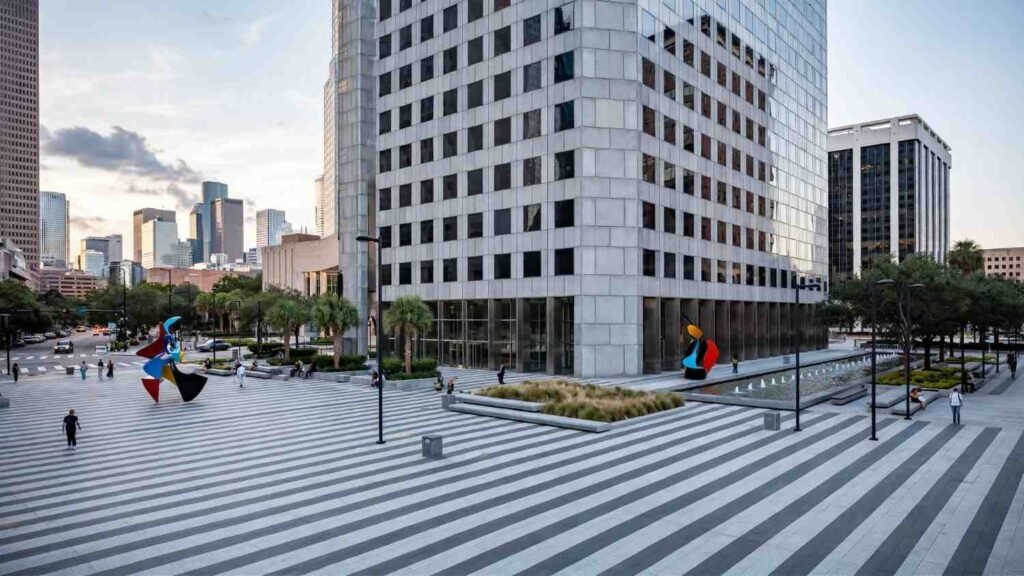
Pei’s design also introduced a structural quirk at the base. The tower’s southeast corner is chamfered, and the ground level opens into a large plaza with a pair of horizontal walkways crossing the site. Those lower level penetrations meant the tower’s lateral system had to transfer loads around the open corner, which is the kind of detailing that makes structural engineers wince when they see the drawings and admire when they see it stand. The building has been through several major renovations, including a facade recladding and lobby rebuild in the early 2010s, and the current ownership has kept the mechanical systems current enough that the tower still leases well against newer competitors.
For anyone pricing what is the tallest building in Texas as a benchmark, the per square foot numbers on a 1,002 foot tower are not directly comparable to a mid rise. Curtain wall cost scales with height because the wall has to resist higher wind pressures, and the American Society of Civil Engineers load provisions in ASCE 7 drive the wind and seismic criteria that translate into heavier mullions and thicker glass as you climb. Above roughly 40 stories, the structural system usually shifts from a simple frame to a belt and outrigger scheme or a core plus frame hybrid, because the drift limits in code start to govern the design rather than the gravity loads.
The single largest reason Houston holds the record for what is the tallest building in Texas is that Houston has no zoning. The city has deed restrictions and building codes but no municipal zoning ordinance, which means height is limited by economics and FAA airspace around Hobby Airport rather than by a planning commission’s floor area ratio cap. Dallas, by contrast, has a full zoning code and downtown height limits that, while generous, are still enforceable. When a developer in Houston wants 75 stories, the only question is whether the pro forma supports it. In Dallas the same developer has to clear a planning process that can trim height as a condition of approval.
Houston also had the right soil and the right tenant. A single anchor bank, Texas Commerce, needed a headquarters large enough to justify the floor plate, and the anchor lease underwrote the construction loan. That is the classic pattern for supertall construction in any Texas city: no anchor, no tower. If you want to understand what is the tallest building in Texas from a developer’s chair, the answer is that the tower is a consequence of a bank and an oil cycle rather than a civic ambition. That pattern holds whether you are looking at the eighties towers or the current wave of mixed use high rises going up in Austin and Dallas right now.
The current tallest building in Texas record has held for over four decades, and nothing in the current Texas construction pipeline looks likely to beat it in the near term. Dallas and Austin have both announced residential and office towers in the 700 to 900 foot range, but the financing and anchor tenant math for a 1,002 foot tower has not been run seriously in either city since the eighties. The record holder has survived because it was built during a narrow window when the speculative office market could absorb that much vertical space, and no Texas market has offered the same window since.
Verifying the answer to what is the tallest building in Texas is more complicated than it should be, because height gets cited three different ways: to the architectural top, to the highest occupied floor, and to the tip of whatever antenna happens to be bolted to the roof. The Council on Tall Buildings and Urban Habitat publishes a formal measurement standard, and any serious ranking should follow it. Under that standard, the JPMorgan Chase Tower wins on all three counts within Texas because it has no antenna to inflate its height and its occupied area runs nearly to the top.
If you are pulling a height figure for a bid package, a marketing brochure, or an article, ask three questions before you quote the number. First, does the source specify architectural height versus roof height? Second, does the source include a spire or antenna? Third, is the building measured from grade or from a base elevation above sea level? The answers will separate a credible citation from a marketing claim. Most of the confusion about what is the tallest building in Texas traces back to sources that mix measurement conventions, which is why a tower that is clearly number one becomes disputed in conversation.
The same discipline applies when you are checking the tallest building in any state. A tower can hold a height record but not a floor count record, or vice versa, and Texas has one of those situations too. The JPMorgan Chase Tower has 75 floors but the Wells Fargo Plaza has 71, which puts the floor count ranking in the same order as the height ranking. In other states the two rankings diverge, and that is when the arguments start.
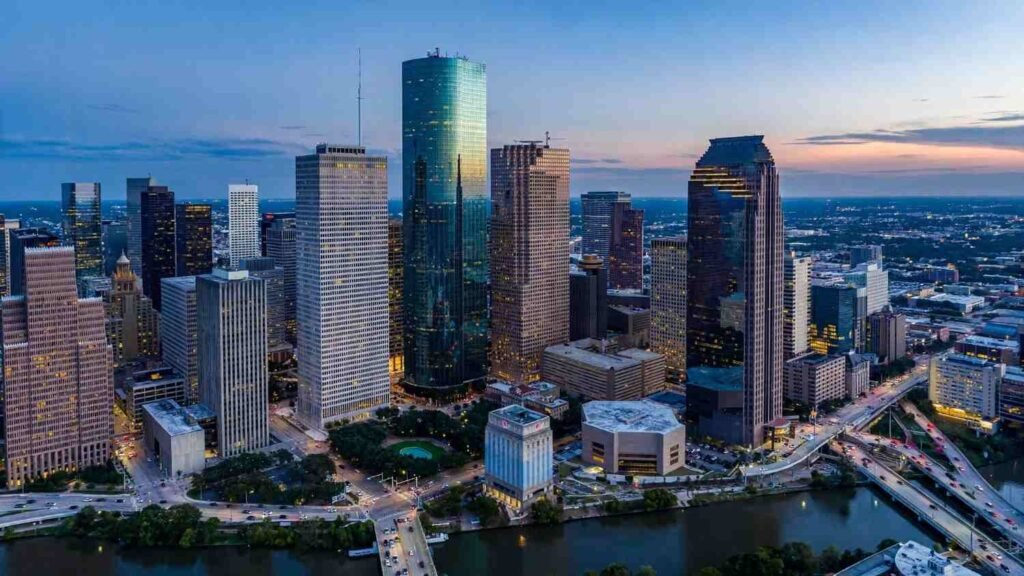
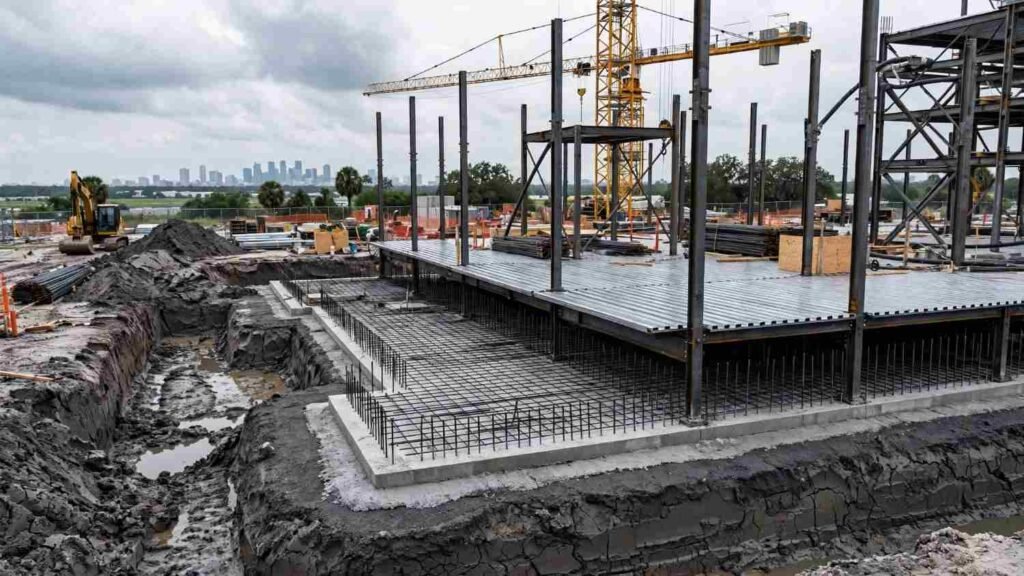
If you are contracted to do work on or near any of the towers on that list, the practical realities are worth knowing before mobilization. Work in and around the JPMorgan Chase Tower requires coordination with building management on a freight elevator schedule, a loading dock booking, and a crane swing plan that will almost certainly be constrained by surrounding towers and by the downtown Houston street grid. There is no laydown space at grade worth the name. Every material delivery has to be scheduled to the minute, and every piece of equipment that goes up has to fit the freight car or be rigged through a roof hatch that was never designed for modern tooling.
For anyone using the record holder as a benchmark on a new project, the key lesson is that the tower is a consequence of financing and anchor leasing more than of engineering heroics. The structural system is well executed but not exotic for its era. What made the tower possible was a development team that could underwrite 75 floors of office space and a city that refused to cap the height. If you want to build tall in Texas, pick a market without zoning, find an anchor tenant who will sign a 20 year lease, and time your financing to an upcycle.
Nothing about the record for what is the tallest building in Texas is going to fall in the current cycle, and the next tower to take it will need more than 1,002 feet of height, a flat parapet, and a developer with the balance sheet to walk a ten-figure construction loan through a Texas summer without blinking. For comparison, anyone asking what is the tallest building in chicago will find that Willis Tower holds the title at 1,451 feet, demonstrating just how much higher Texas developers would need to build to compete with Chicago’s most recognizable skyscraper.