 11

The Empire State Building stands 1,250 feet to the roof and 1,454 feet to the top of its antenna mast, and that gap of 204 feet is where most of the confusion starts. Ask how tall is the Empire State Building at a dinner party and you will get a number, but rarely the same number twice, because the building has several legitimate heights depending on where you stop measuring.
The pencil pushed through the clouds in 1931, held the world record for four decades, and still functions as a working office tower with roughly 2.7 million square feet of rentable floor area. For anyone in the construction trades, the interesting answer is not the number itself but what the number required: riveted steel, fast elevators, and a schedule that moved at a floor per day.
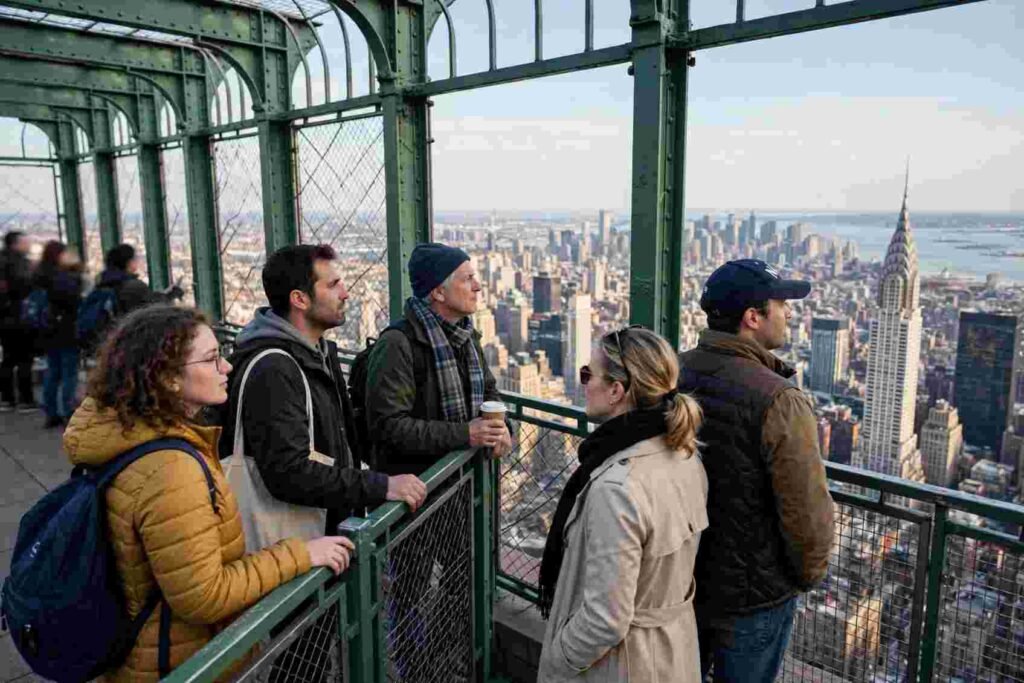
Height claims collapse into arguments when nobody defines the endpoint. The Empire State Building gives you at least four defensible answers, and the Council on Tall Buildings and Urban Habitat, the body that arbitrates these questions globally, publishes its criteria for measuring height to a structural top, an occupied floor, and a tip. That framework explains why the antenna counts for bragging rights in some tables and gets excluded in others.
| Measurement | Feet | Meters | What It Includes
|
|---|---|---|---|
| Ground to structural roof | 1,250 | 381 | Top of the 102nd floor slab and parapet |
| Ground to antenna tip | 1,454 | 443 | Broadcast mast added in the 1950s |
| Highest occupied floor | 1,224 | 373 | 102nd floor observation deck |
| Ground to original mooring mast top | 1,250 | 381 | 1931 airship terminal, later enclosed |
| Total floor count | 102 | n/a | Including the mast levels |
So how tall is the Empire State Building if a tenant asks? Point them to 1,224 feet, the highest floor a person can stand on.
If a broadcaster asks, the antenna tip sits at 1,454 feet. If a structural engineer asks, the roof at 1,250 feet is the honest number, because the mast is a piece of equipment bolted to a building rather than the building itself. When somebody quotes 1,454 and somebody else quotes 1,250 in the same meeting, both are right and neither is arguing about the steel.
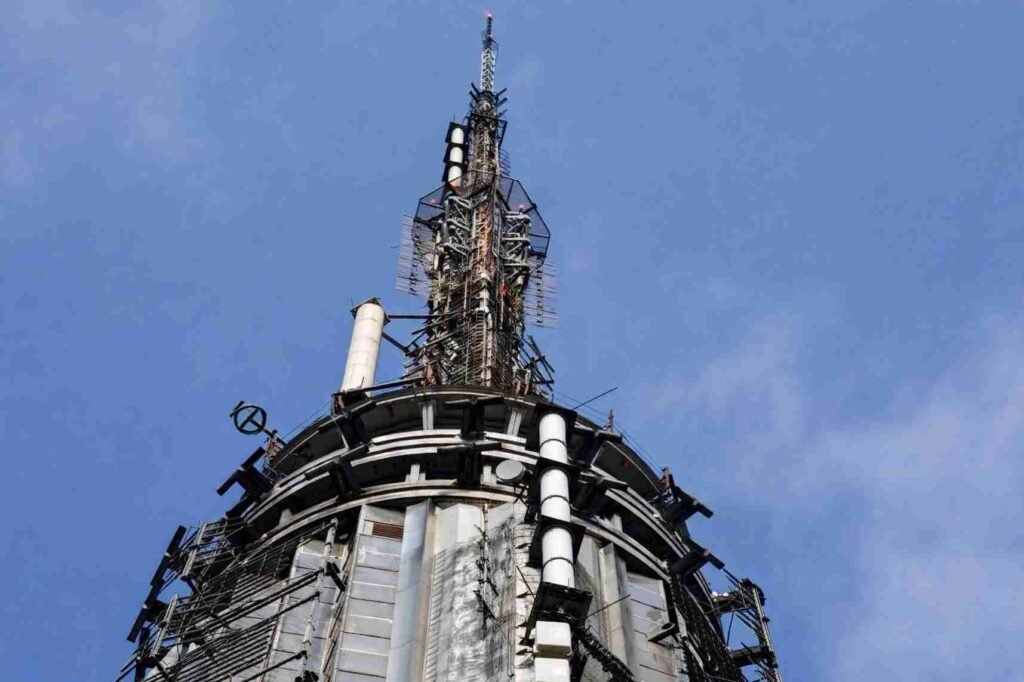
The building opened without most of what sits on top of it today. The original crown was a mooring mast for dirigibles, a 200 foot stub meant to let passengers disembark from airships, and the scheme died quickly because wind at that elevation made mooring a fantasy.
Over the following decades the stub received radio and television antennas, and the total height crept upward until it landed at 1,454 feet. That distinction matters in construction because the mast is nonstructural equipment: it does not carry floor loads, it carries wind and ice loads, and it can be replaced or extended without touching the tower’s frame.
The contrast with One World Trade Center sharpens the point. That tower reaches 1,776 feet to its spire, and the Council on Tall Buildings and Urban Habitat counts spires as part of the height while excluding antennas, a ruling that handed the American record to downtown Manhattan in 2013. The Empire State Building’s mast was judged an antenna rather than an architectural spire, so its official height sits at 1,250 feet under that standard.
The full record of these classifications is documented in the Council on Tall Buildings and Urban Habitat’s height criteria reference, which is the document to cite when a client insists the antenna should count.
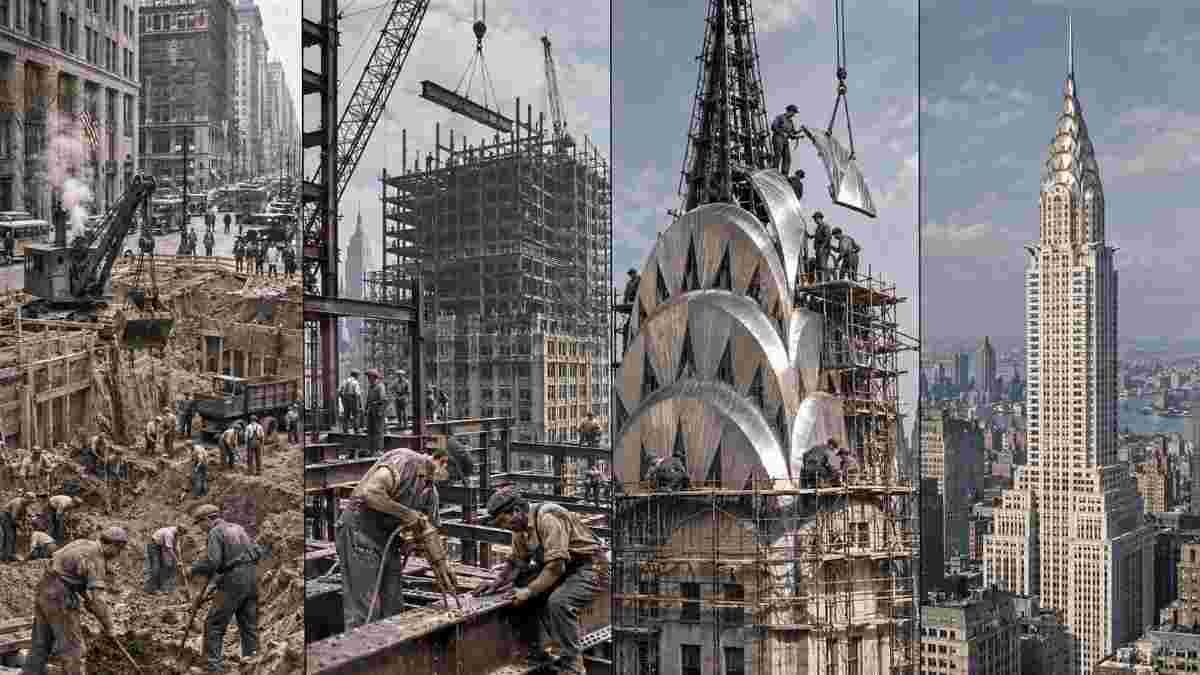
Reaching 1,250 feet in 1930 required decisions that still look aggressive. The frame is structural steel with riveted connections, erected in a sequence that let crews raise roughly a floor per day during the peak of the build, and the whole tower went up in about 13 months of actual construction.
The building’s own engineers sized the frame for the loads of the era, then the owners spent the 1990s and 2000s retrofitting elevators and mechanical systems around a structure that could not be altered without enormous cost.
The building authority’s official facts and figures page tracks the numbers that get referenced in leasing documents, and it confirms 102 floors, 6,500 windows, and 73 elevators serving a tower that still runs on a working day schedule.
Elevator technology was the real limit on height in that period. A building can grow only as tall as its vertical transportation allows before the shaft area eats the rentable floor plate, and the Empire State Building sat near the practical ceiling for a single elevator bank until the midcentury.
Modern towers solve this with sky lobbies and double deck cars, which is why a 102 floor building from 1931 and a 102 floor building from 2020 are not remotely the same engineering problem.
Place the tower against its neighbors and the ranking changes fast. The table below uses published heights for well known Manhattan structures, and the pattern is clear: the 1931 record holder now sits below several buildings finished in the past decade.
| Building | Roof Height (ft) | Tip Height (ft) | Completed
|
|---|---|---|---|
| Empire State Building | 1,250 | 1,454 | 1931 |
| Chrysler Building | 925 | 1,046 | 1930 |
| 432 Park Avenue | 1,397 | 1,397 | 2015 |
| One World Trade Center | 1,368 | 1,776 | 2014 |
| Central Park Tower | 1,550 | 1,550 | 2020 |
Central Park Tower passes the Empire State Building on roof height alone, and 432 Park Avenue comes within a few hundred feet despite carrying only 96 floors, which shows how much floor to floor height has grown in residential towers.
Understanding what makes a building a skyscraper also helps explain how height classifications, architectural features, and structural design determine whether a tower qualifies as a skyscraper.
Anyone asking how tall is the Empire State Building in a comparative sense should be told it is no longer the tallest in its own city, and has not been since the 1970s. That does not diminish the achievement. It reframes it: the tower was built with hand riveting and slide rules, and it took nearly 40 years for another building to pass it.
The number that matters on a site visit is the base. The five story podium sits on a footprint of roughly two acres, and the setbacks begin at the fifth floor before the tower narrows toward the observation deck. For a contractor working nearby, that footprint creates real logistical constraints: sidewalk sheds must be engineered for wind loads that funnel between the building and its neighbors, hoisting windows requires scheduling around observation deck traffic, and facade access on a landmark this monitored runs through the Landmarks Preservation Commission before anything gets bolted on.
Lightning protection on a 1,454 foot tower is also not a decorative detail. The mast and crown carry a coordinated system of air terminals and grounding paths, and the building has absorbed thousands of strikes since the 1930s.
Any rooftop work up there is planned around weather windows and controlled access, not just because of the height but because the top of the building is a broadcast facility with tenants who cannot tolerate downtime.
Height translates to rent, and the Empire State Building has been a case study in that math for nearly a century. Roughly 2.7 million square feet of rentable space spread across 102 floors means the tower has to keep elevators, mechanical systems, and facade maintenance running continuously to justify its lease rates, and the building completed a multiyear retrofit that cut energy use substantially while preserving the original windows.
Owners of tall buildings face the same tradeoff the Empire State Building did in the 1990s: the structure outlives every system inside it, and the systems are where the operating cost lives.
Tenants on high floors pay for views, and the building monetizes those views twice, once through office leases and once through observation deck tickets.
That dual revenue model is why the tower survived the decades when Midtown office stock struggled. The height that once made it a record now makes it a destination, and the destination funds the maintenance the structure demands.
The search query usually hides a second question. Somebody planning a trip wants to know how many stairs they have to climb if the elevators are packed, and the answer is 1,860 steps from the lobby to the 102nd floor, the figure used by the annual Empire State Building Run-Up. Somebody in construction wants to know the floor count and the height per floor, which averages out to about 12 feet from slab to slab across the office floors, generous by modern standards and a direct consequence of 1930s mechanical and ceiling tolerances.
A third group wants to know whether the building could have gone higher. It could have, and the developers deliberately stopped.
The original scheme included a flat roof sized for future additions, and the mast itself was partly a hedge against future needs. Height in 1931 also collided with the Depression, and the upper floors sat largely vacant for years after opening, which is a reminder that the tallest building in the world is a financial instrument as much as an engineering one.
The National Register of Historic Places listing documents the building’s architectural significance for anyone researching that history for a project or a report.
Several numbers circulate that do not survive contact with a source. The building is not 1,454 feet to the roof, it is 1,454 feet to the antenna tip. It does not have 103 floors in any official count, though the mast contains enclosed levels that some accounts round upward.
It is not the tallest building in New York City, a title now held by Central Park Tower on roof height and One World Trade Center on tip height. And the observation deck on the 86th floor is not the highest point open to the public, since the 102nd floor deck sits above it. Each of these errors comes from the same root cause: nobody defined the endpoint before comparing figures.
Every tall building dispute begins in the same place, which is a drawing without a defined datum. When the question of how tall is the Empire State Building comes up on a project, treat it as a spec question rather than trivia: state the reference plane, state whether equipment counts, and state which authority’s criteria govern.
Accurate building measurements also depend on learning how to square a building, since establishing precise right angles and reference points is essential for maintaining dimensional accuracy during construction.
The building gives you a clean lesson in why that matters, since 1,250 and 1,454 describe the same tower and neither is a lie. Modern towers with spires, parapets, and rooftop mechanical penthouses will generate exactly the same arguments, and the party who writes the definition into the contract wins the argument before it starts.
The tower also shows what happens when a structure outlives its own record. Strip away the world championship and what remains is a 102 floor office building that has been rewired, re-glazed, and re-leased for nearly a century while its frame never moved. The height was the headline in 1931, and the maintenance schedule is what the building actually runs on now.